Whidbey Island Clinic to Receive Lead Screening Machine, Boosting Low Testing Rates
Island County tests fewer than 3 in 100 children for lead, far below state and national rates. A free rapid-testing machine is headed to Pediatric Associates clinics in Oak Harbor and Freeland.
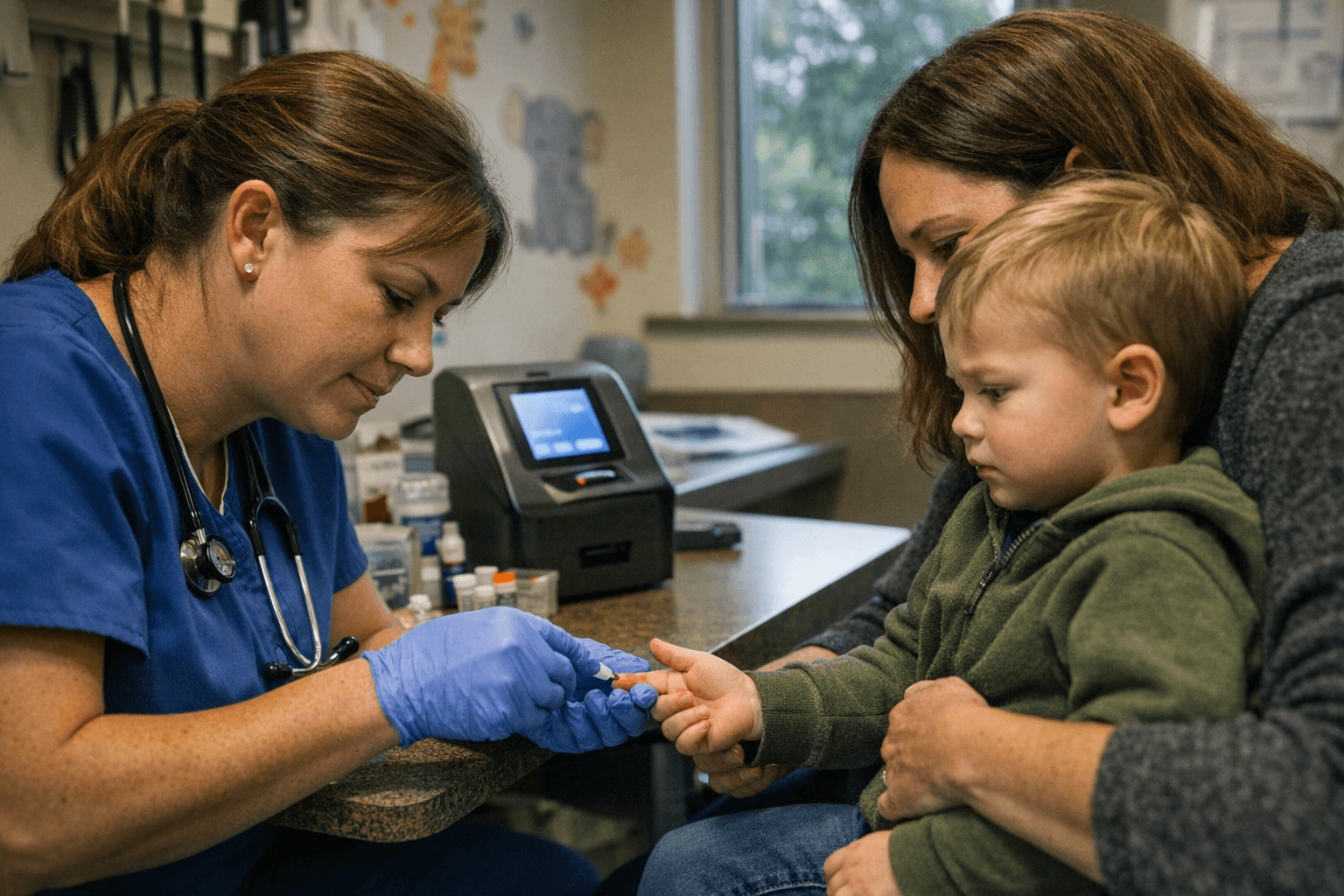
Of every hundred children under six living in Island County, fewer than three have ever been screened for lead. That figure, 2.36% according to the Washington Tracking Network, is less than half the state average of 7% and a fraction of the national rate of 18%. A free, rapid-testing machine is now on its way to Pediatric Associates of Whidbey Island, funded by a $40,000 grant from the Molina Healthcare Foundation.
The device will be placed at whichever PAWI location clinic staff determine has the greatest patient need. PAWI's dual-island reach was a central factor in its selection: as part of the Seattle Children's Care Network, it serves families from across the length of Whidbey through its Oak Harbor and Freeland clinics, making it a natural hub for point-of-care testing that has not previously been available in-office.
"Given the lifelong impacts of lead exposure, it is critical that we increase access to testing for newborns and children," said Dr. Kenisha Campbell, chief medical officer at Seattle Children's Care Network.
The urgency behind that statement is amplified by Whidbey's physical landscape. Island County's housing stock includes a substantial share of homes built before 1978, when the federal government banned lead-based paint in residential construction. Washington State Department of Health guidelines recommend lead screening specifically for children living in or regularly visiting pre-1978 homes that have undergone recent renovation, making remodel dust from older neighborhoods in Oak Harbor, Coupeville, and Langley a documented pathway for exposure.
Molina Healthcare Public Relations Director Rhonda Frazier underscored the developmental stakes in the project announcement: "Childhood exposure to lead can have adverse long-term effects on physical health and brain development. Even at low levels, lead exposure can lead to behavioral challenges in children and contribute to lower academic performance."
The point-of-care machine performs a standard blood test and delivers results within the same clinic visit, eliminating the wait for off-island lab processing that has historically slowed detection. When a positive result is identified, the setup is designed to immediately connect families to follow-up care and environmental investigation resources that can trace and remediate the exposure source.
The Whidbey placement is one of seven machines SCCN is distributing to clinics in underserved communities across western Washington through the Molina initiative. State guidelines recommend testing at 12 and 24 months of age and for any child under six with identifiable risk factors. PAWI's Oak Harbor clinic serves north island families; the Freeland office covers the south end.
If Island County's screening rate rises toward state or national averages, the increase in detected cases is expected to trigger more environmental investigations and housing remediation referrals, addressing lead hazards at their source rather than only after developmental harm has already occurred.
This article was produced by Prism’s automated news system from verified source data, official records, and press releases, then run through automated quality and moderation checks before publishing. The system is built and supervised by the people who set the standards it runs under. Read our full AI policy.
Did this article answer your question?