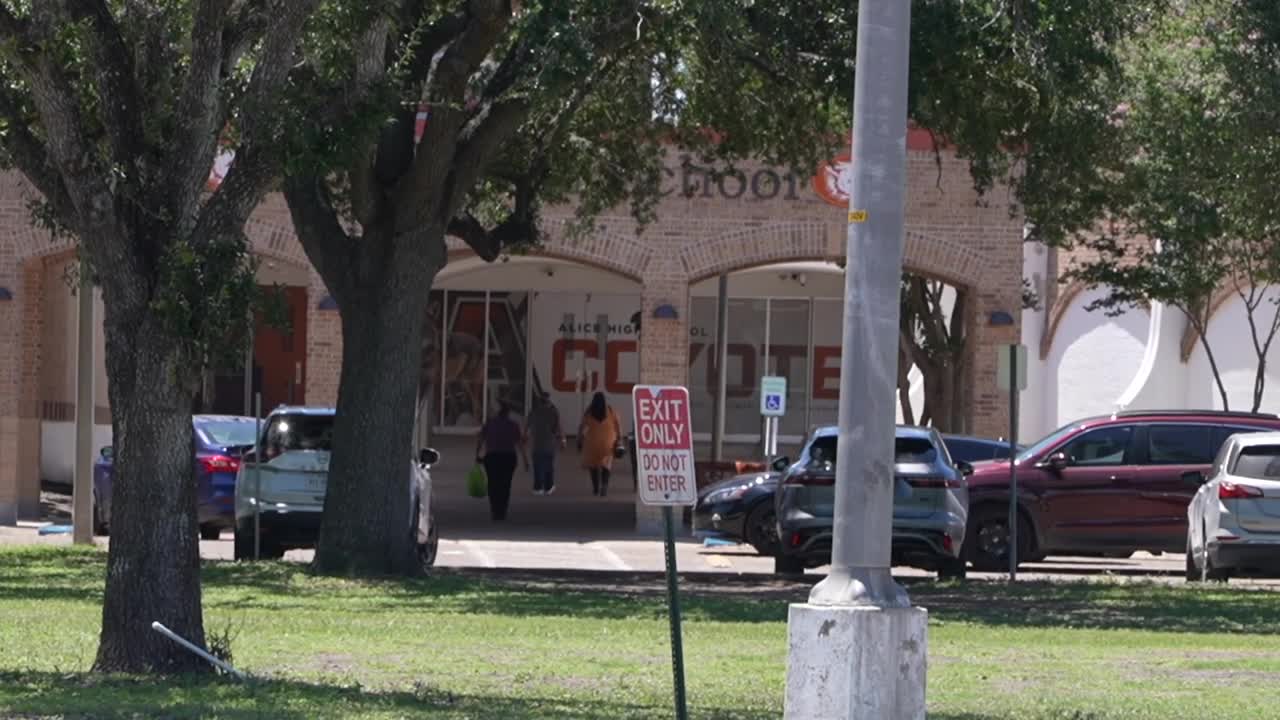
Alice shaped J. Frank Dobie’s rise from ranch boy to Texas writer
Alice is where J. Frank Dobie left ranch life, finished school, and began the path to Texas letters. Jim Wells County still has the history to turn that origin into civic value.
Alice was the place where J. Frank Dobie stopped being only a ranch boy and started becoming a Texas writer. He left a Live Oak County ranch at 16, moved to Alice, lived with his grandparents, and finished high school there before heading to Southwestern University. That makes Jim Wells County more than a stop in his life story, it is the setting where education, identity, and literary ambition began to take shape.
Alice as the turning point
Dobie’s birth on a ranch in Live Oak County in 1888 often leads the story, but Alice is where the deeper change happened. He enrolled at Southwestern University in Georgetown in 1906 and graduated in 1910, yet the groundwork for that path was laid in Jim Wells County, where he completed high school after leaving ranch life behind. For local schools and libraries, that detail matters because it turns Dobie from a distant Texas name into a student whose formative years passed through Alice classrooms.
That shift also gives Jim Wells County a cleaner civic story than a generic heritage tribute. Dobie did not merely visit the county or pass through on the way to somewhere else. He lived there long enough for Alice to shape the way he saw himself and the larger Texas world he later wrote about.
The classroom that connects Dobie to local history
The Alice connection becomes sharper through educator Elena Zamora O’Shea. Her first city job was in Alice in 1907-08, where she served as a school principal and taught Dobie. That single classroom link is one of the strongest local handles in his biography because it places a major Texas literary figure inside a real Jim Wells County school under the direction of a South Texas educator with her own long teaching career.
O’Shea’s background makes the connection even more useful for local interpretation. She began teaching at 15 at a rancho in Hidalgo County, later studied at Southwest Texas State Normal School at age 24, and spent 23 years in the classroom. In other words, Dobie’s Alice years were not shaped by one isolated mentor or one narrow school experience. They were part of a broader border-region education network that linked ranch country, bilingual South Texas culture, and formal schooling.
Why this belongs to Jim Wells County now
Dobie’s later work grew directly from that early formation. He went on to join the University of Texas faculty and the Texas Folklore Society, where he became secretary and editor in 1922, helping turn the organization into a serious publishing operation. The society itself had been founded in 1909, and Dobie’s role in building it shows how far the Alice years reached: from a county seat classroom to statewide cultural preservation.
That is why Jim Wells County should treat Dobie as a civic-identity story, not just a literary one. He is proof that the county helped produce a writer who made Texas land, ranch life, and folk memory legible to a wider audience. If Alice wants a durable story that fits schools, libraries, and tourism, this one already has the right ingredients: a student, a teacher, a classroom, and a national-caliber Texas voice.
What still anchors the story in Alice
The county has a few concrete pieces of public history that can support that narrative. Alice is the county seat of Jim Wells County, which was created on March 11, 1911, from territory formerly part of Nueces County. That timing is useful because it means Dobie’s Alice school years predate the county’s formal creation, giving the story a deeper historical layer rather than a narrow county-line tale.
Alice also already has a visible heritage culture. Historical markers in town recognize Alonso S. Perales and the county courthouse, which means the city has a public-history framework that can hold a Dobie story without having to invent one from scratch. The missing piece is not memory itself, but coordination: the facts exist, yet they have not been tied together in a way that makes Dobie part of everyday local reference.
What a realistic local effort would look like
A practical Jim Wells County effort would not need a major capital project. It would need schools, libraries, and tourism leaders to agree on a simple narrative and repeat it consistently: Dobie’s Texas voice began in Alice. A small exhibit could pair his move to Alice at 16 with O’Shea’s teaching career, then use those details to show how one classroom helped shape a future folklorist.
- a school lesson on Dobie’s move from ranch life to Alice and then to Southwestern University
- a library display featuring Dobie, O’Shea, and the Texas Folklore Society
- a heritage stop that ties the county courthouse and existing Alice markers to the city’s literary history
A stronger version would connect three local uses at once:
That kind of effort would do more than celebrate a famous name. It would give residents a concrete way to see how education in Alice helped move a South Texas ranch boy into the wider current of Texas letters, and it would keep that link from fading into the background of county history.
The broader Texas literature context
Dobie belongs in the larger story of Texas writing because he helped define how the state tells itself. He found a calling in turning land, culture, and vaquero life into literature, and that made his early years in Alice essential rather than incidental. Texas literature has always drawn strength from place, and Dobie’s biography shows that a small county seat can shape a writer whose influence reaches far beyond it.
Jim Wells County has the raw material for a stronger literary identity. The challenge is not proving Dobie passed through Alice, because he lived there, studied there, and was taught there. The challenge is deciding whether the county wants to keep that fact in the public eye, where it can serve local schools, deepen civic memory, and give visitors a reason to see Alice as more than a point on the map.
This article was produced by Prism’s automated news system from verified source data, official records, and press releases, then run through automated quality and moderation checks before publishing. The system is built and supervised by the people who set the standards it runs under. Read our full AI policy.
Did this article answer your question?