Jim Wells County cities rush new wells as drought deepens
Alice, Mathis and Beeville are drilling new wells as Corpus Christi’s reservoirs stay near empty, putting Jim Wells County’s backup water supply on the clock.
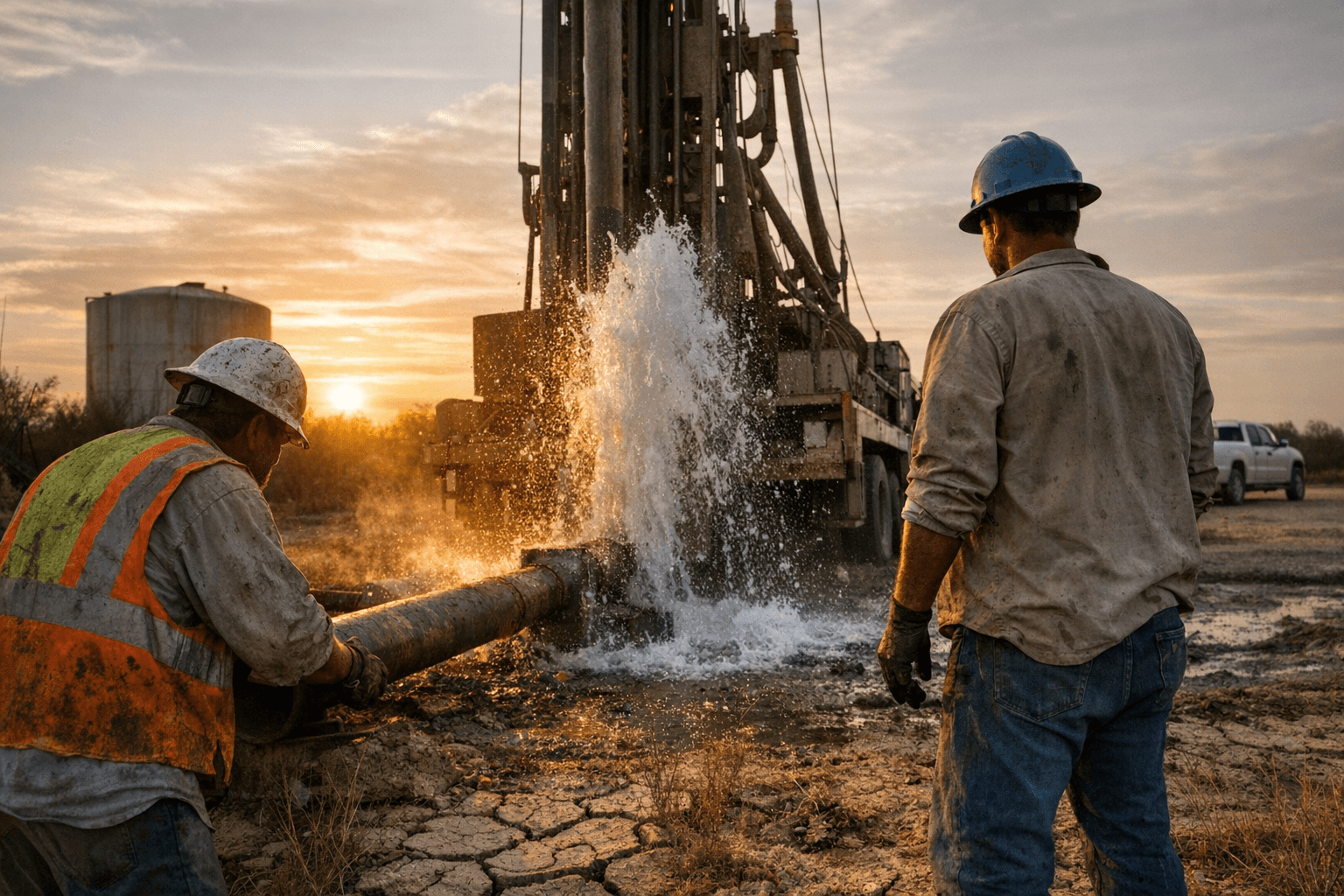
Jim Wells County’s water future is being decided miles beyond Alice, where the drought has pushed South Texas from conservation into emergency planning. The National Weather Service said exceptional drought expanded into portions of Jim Wells County on April 8, most of South Texas got less than half an inch of rain in March, and Stage 3 restrictions remained in effect across much of the region. Jim Wells County is also inside the Coastal Bend (N) Regional Water Planning Area, an 11-county district whose next plan was due to the Texas Water Development Board in October 2025 and is supposed to guide state water planning, financing, and surface-water permitting.
Alice has already tightened its response. The city posted Stage 3 water restrictions in March 2025 and updated its drought contingency plan in August, and it is now working to get a second well online by May. Mathis is drilling two wells, which officials said would reach 600 to 900 feet, while Beeville finished drilling a new well this week and expects to begin pulling water from it by the end of the year. Those local moves sit beside Corpus Christi’s deeper crisis: the city’s combined reservoirs were 7.9% full on April 7, and its public dashboard showed the system at 14.8% full on April 16, after the city launched the dashboard and briefed the public on supply planning.
That rush to groundwater is not a clean solution. The Texas Water Development Board says the Gulf Coast Aquifer system includes the Jasper, Evangeline, and Chicot aquifers, and South Texas hydrogeology experts warn that pumping more water out than goes back in will deplete the resource. In practical terms, that makes each new well a bridge across the drought, not a permanent answer. It also explains why the crisis is reaching private landowners: the more cities lean on aquifers for municipal supply, the more pressure rises on nearby rural wells and the more expensive fallback drilling becomes.
For Jim Wells County, the accountability test is straightforward. Alice is not just a customer of the regional system; it is the county seat, with 17,891 residents in the 2020 census, inside a county of 38,891 people, while Beeville, at 13,669, is also drilling to keep its taps on. If the region keeps treating wells as the fast answer, water reliability will depend on how long the aquifers can hold out, and future rates and growth will increasingly follow the cost of borrowing time.
This article was produced by Prism’s automated news system from verified source data, official records, and press releases, then run through automated quality and moderation checks before publishing. The system is built and supervised by the people who set the standards it runs under. Read our full AI policy.
Did this article answer your question?