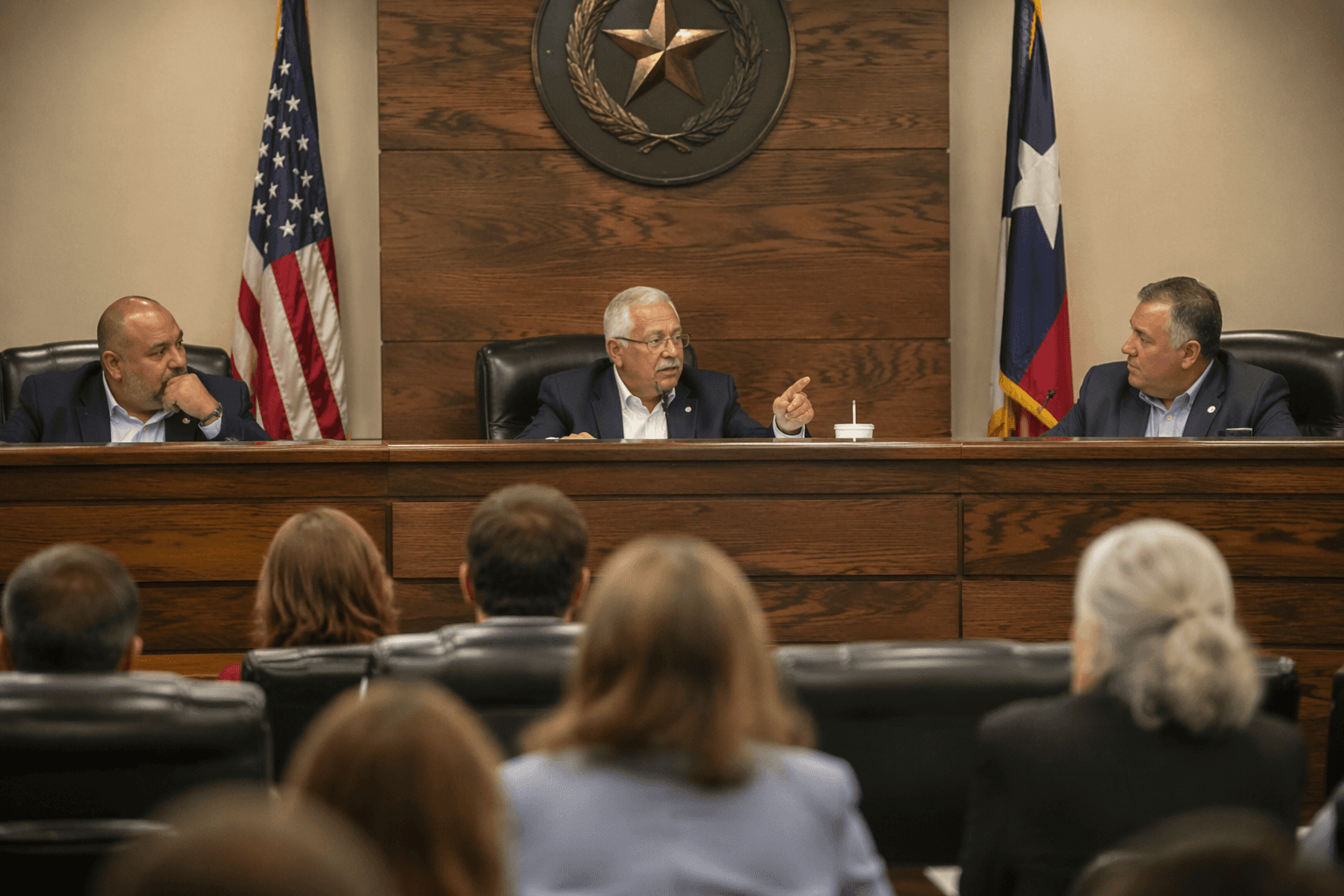
Jim Wells County clerk preserves records for history and property research
The clerk’s office in Alice is the county’s main gateway to deeds, probate, vital records, and family history, with online search tools and in-person requests.

Jim Wells County residents who need proof of ownership, a birth certificate, a marriage record, or a trail through an old probate file usually end up at one place first, the county clerk’s office in Alice. It is the county’s records center, with online search tools for document history and in-person services for certified copies, filings, and requests that carry legal or family weight.
The office behind the records
The Jim Wells County Clerk is J.C. Perez, III, and the office is located at 200 N. Almond Street, Suite 103, in Alice, Texas 78332. It is open Monday through Friday from 8:00 a.m. to 12:00 p.m. and from 1:00 p.m. to 5:00 p.m., with a mailing address at P.O. Box 1459, Alice, Texas 78333, and a phone number of 361-668-5702, press 3.
U.S. Census Bureau figures show a 2020 population of 38,891, a July 1, 2025 estimate of 38,804, and 865.2 square miles of land area. The county was founded in 1911 and is named for James B. Wells Jr., the South Texas judge and political boss whose name still marks the county seal and, through the clerk’s files, much of its paper trail.
What residents can search online
The county’s official record search portal lets residents look for recorded documents without stepping inside the building. It allows searches by grantor, grantee, subdivision, document type, document number, and recorded date. Users can also choose between index only and index plus full-text OCR, which gives researchers a better shot at finding names in scanned older documents, not just in the basic index.
That difference can help trace a chain of title, confirm whether a deed was filed, or locate a document buried in older handwritten or scanned records. The portal’s searchable records are certified through a specific date, so users can see how current the database is before they rely on it for a title review, a family project, or a property question. For land and property work, deeds, surveys, liens, and tax records stay at the county where the property is located.
What residents still need to handle in person
Several clerk services are still tied to office forms, identity checks, or filing steps. The county clerk page links residents to criminal case payments, criminal, civil, and probate searches, certified copies of birth and death records, military discharge forms such as DD-214, marriage license copies, filing fee schedules, assumed name certificates, mark and brand applications, abandonment forms, and campaign finance reports.
The fee schedule lists the costs. A certified copy of a birth certificate costs $23, the first death certificate copy costs $21, and additional copies ordered at the same time are $4 each. The birth and death application requires a valid government-issued photo ID. An assumed name certificate costs $25 to file.
Military discharge records follow a different rule. DD-214 forms are confidential for 75 years from the initial recorded date, and requests are limited to the veteran or eligible relatives.
Why the clerk’s archive reaches beyond paperwork
Texas county clerks are the county recorders, and the office’s reach goes well beyond deeds. County records can include deed and property transactions, probate and wills, naturalizations, vital statistics, voter registrations, school records, tax payments, court records, and more. In Jim Wells County, that means the clerk’s office can help with a ranch boundary question one day and a family succession file the next.
The marriage record is the oldest of the principal vital records kept by county clerks, dating to 1837. The office was abolished under the Constitution of 1869 and restored under the Constitution of 1876.
A deed search can help settle a property boundary or confirm who sold a tract. Probate records can help heirs sort out land, mineral interests, or family estates. Marriage records can anchor genealogy work, while vital records, court files, and old brand registrations can connect a family line to a ranch, a business, or a place name that no longer appears on modern maps.
Why local history shapes the search
The county’s older geography still matters when people look for records. Alice grew out of the defunct community of Collins, and the San Antonio and Aransas Pass Railway tried to build through Collins around 1880, when the community had about 2,000 inhabitants. That kind of history can affect how a name appears in an old filing, especially when families, ranches, or land descriptions were recorded under a place name that later disappeared.
The Jim Wells County Historical Commission’s mission is to protect, preserve, and promote the county’s historic resources.
This article was produced by Prism’s automated news system from verified source data, official records, and press releases, then run through automated quality and moderation checks before publishing. The system is built and supervised by the people who set the standards it runs under. Read our full AI policy.
Did this article answer your question?