Jim Wells County courthouse remains active landmark in Alice
The Jim Wells County Courthouse still handles county business at 200 N. Almond St., tying daily court needs to a 1912 landmark in downtown Alice.
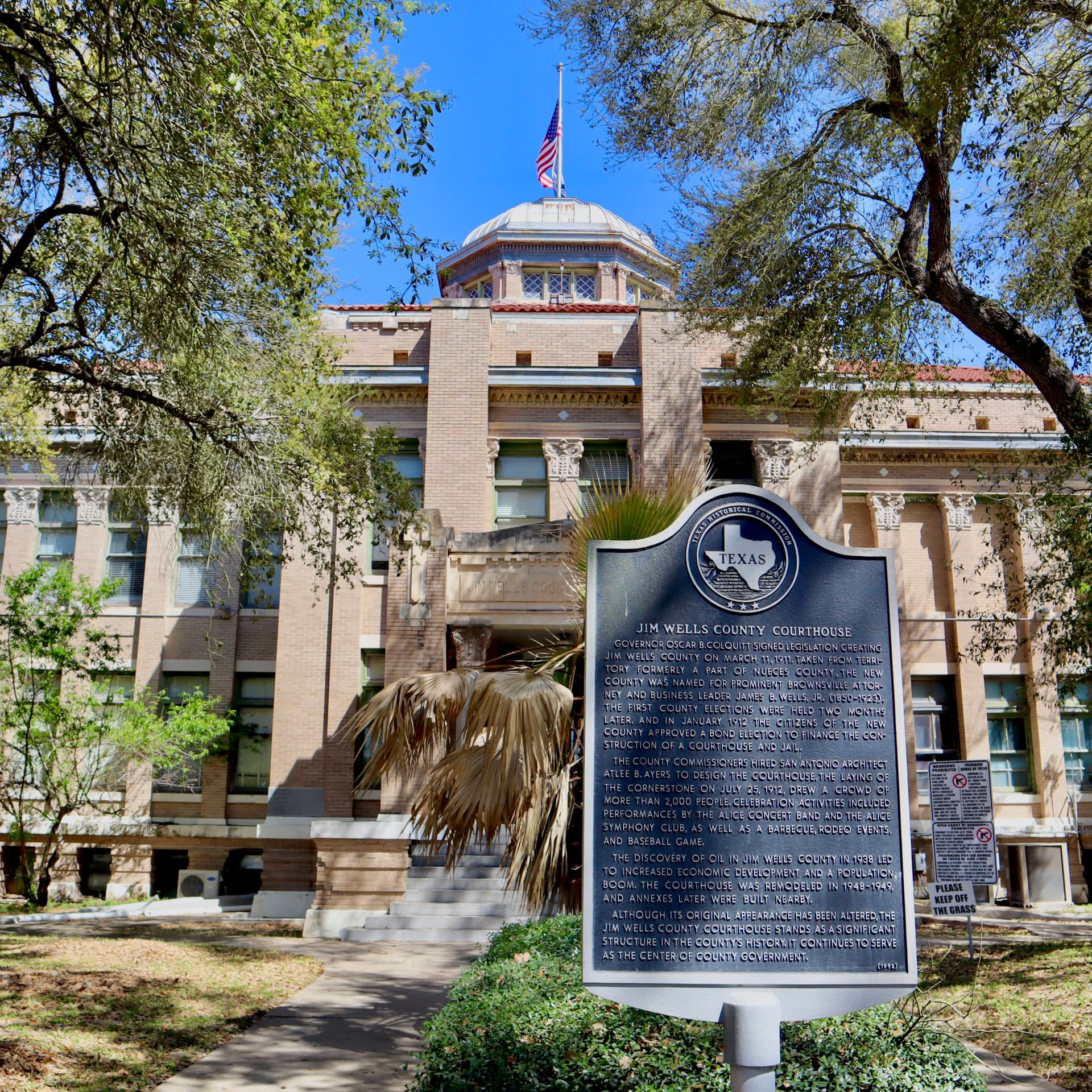
The Jim Wells County Courthouse still anchors county government at 200 N. Almond St. in Alice, where residents encounter the practical side of local power in a building that is both historic and active. The Texas Historical Commission lists the courthouse as the county’s active courthouse, a rare kind of continuity that makes the structure more than a preserved façade. It remains the place where the county’s public business still takes shape in the middle of the county seat.
Built as Jim Wells County was taking form
The courthouse belongs to the first chapter of Jim Wells County itself. The Texas Legislature created the county on March 11, 1911, carving it from territory that had been part of Nueces County and naming it for James B. Wells, Jr., the Brownsville attorney and business leader who lived from 1850 to 1923. The county’s first elections came two months later, a sign of how quickly a new local government had to be built after the county was established.
That speed carried directly into the courthouse decision. On Dec. 12, 1911, the Jim Wells County Commissioners Court voted to propose a $70,000 courthouse bond issue, and citizens approved a bond election in January 1912 to finance construction of a courthouse and jail. The cornerstone was laid on July 25, 1912, fixing the building in the county’s earliest period of self-definition and giving Alice a permanent county seat before the county had even reached its second year.
A civic building that still does civic work
The courthouse’s relevance today comes from its continued use, not just its age. At 200 N. Almond St., it still serves as the daily center of county government, where the rhythms of public life run through court dates, records, and other business that locals expect to handle at the courthouse. In a county where government is meant to be visible and accessible, the building continues to function as the place where county authority is most concrete.
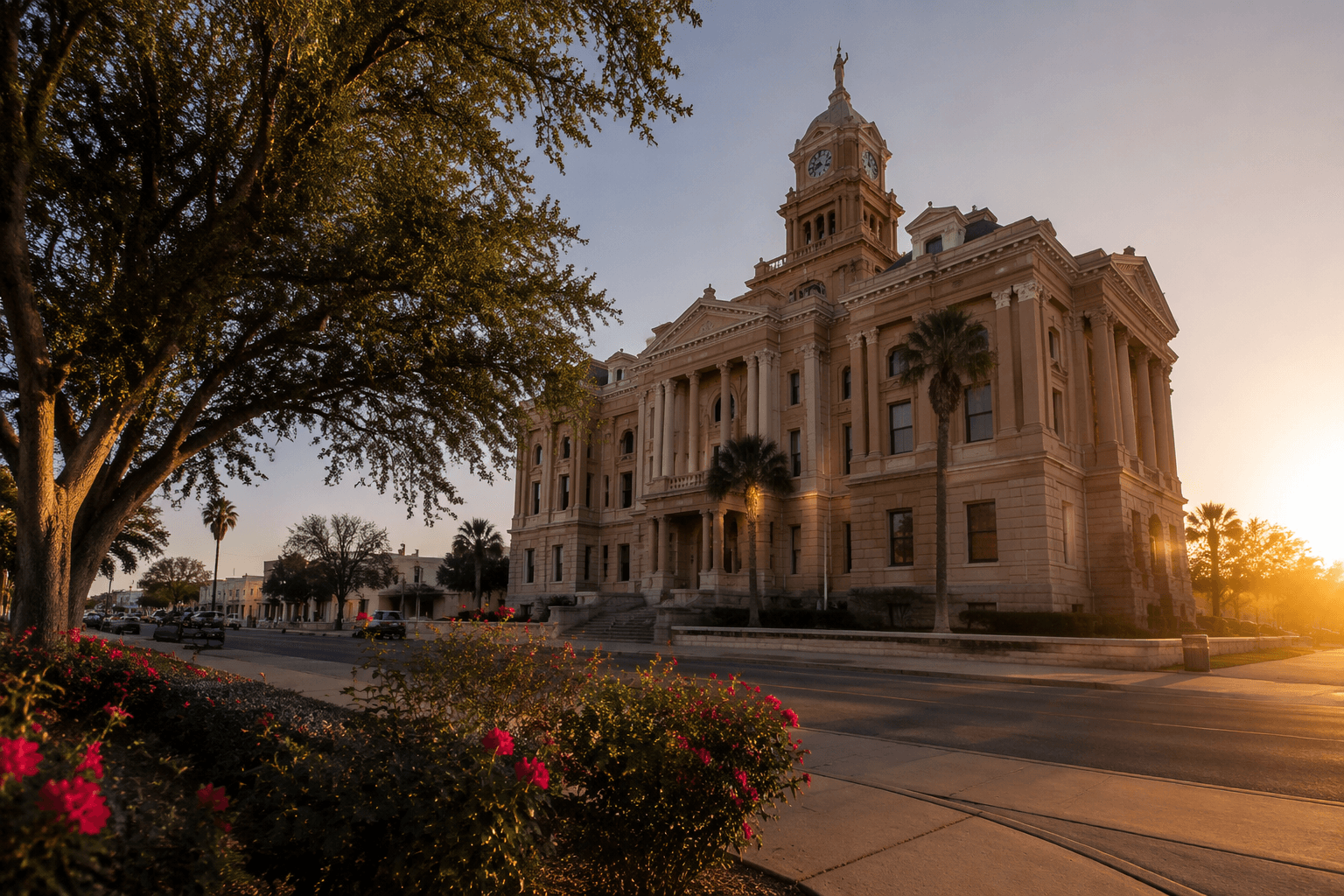
That practical role matters because it keeps the courthouse tied to real decisions and real schedules, not just ceremonial memory. For residents who need documents, answers, or a courtroom, the building is not a museum piece. It is the front door to Jim Wells County government, and that kind of use gives the 1912 structure a weight that architectural descriptions alone cannot capture.
Architecture that reflects a county seat
The Texas Historical Commission identifies the courthouse as the work of architect Atlee B. Ayres, and other descriptions place it within Texas Renaissance or Mediterranean Revival traditions, with Prairie influences. Those labels matter because they show how county leaders in the early 20th century used architecture to give public government a sense of permanence and stature. The courthouse was built to be seen, and its design still tells readers that county government was meant to occupy the center of town.
That architectural identity also helps explain why the building remains significant to people interested in Alice as a county seat. Courthouse squares across Texas often became the places where deeds, probate matters, taxes, and elections gathered into one public landscape. In Jim Wells County, the courthouse at 200 N. Almond St. still marks that tradition in physical form, linking downtown Alice to the county’s legal and administrative life.
Public memory, politics, and a century of attention
The courthouse’s first century brought public attention well beyond routine county business. In 2012, the building turned 100 years old, a milestone that drew local notice and put the courthouse’s long service into sharper focus. That centennial mattered because the building had not drifted into irrelevance with age; it was still doing the work it was built to do.
The courthouse also carries political memory. One account places it at the stage for events tied to the 1948 Texas Democratic Party U.S. Senate primary election, which adds a sharper edge to its history as a site where local power and wider state politics intersected. The building has therefore seen both ordinary government and moments that connected Jim Wells County to the larger political life of Texas.
Preservation now comes with practical questions
That mix of history and daily use creates the central question for taxpayers and county leaders: how do you preserve a landmark without losing sight of what it costs to keep it working? A 1912 courthouse can carry maintenance demands, accessibility concerns, and safety requirements that are different from those of a newer government building. Keeping the county seat in an older structure may preserve identity and continuity, but it also means the county must keep investing in a building that has to serve present-day needs.
The Jim Wells County Historical Commission frames that responsibility as part of a broader mission to protect, preserve, and promote the county’s historic resources for education, enjoyment, and economic benefit. The courthouse fits that mission because it is not only a symbol of the county’s past, but also a daily operating building in the middle of Alice. As long as Jim Wells County government remains open there, the courthouse will continue to ask the same balancing act of the county: preserve the landmark, and make sure it still works for the people who rely on it now.
This article was produced by Prism’s automated news system from verified source data, official records, and press releases, then run through automated quality and moderation checks before publishing. The system is built and supervised by the people who set the standards it runs under. Read our full AI policy.
Did this article answer your question?