Jim Wells County expands election transparency with ballot verifier tool
Jim Wells County now lets residents inspect cast ballots, results, and vote records through a public Ballot Verifier, cutting out the old clerk-request process.
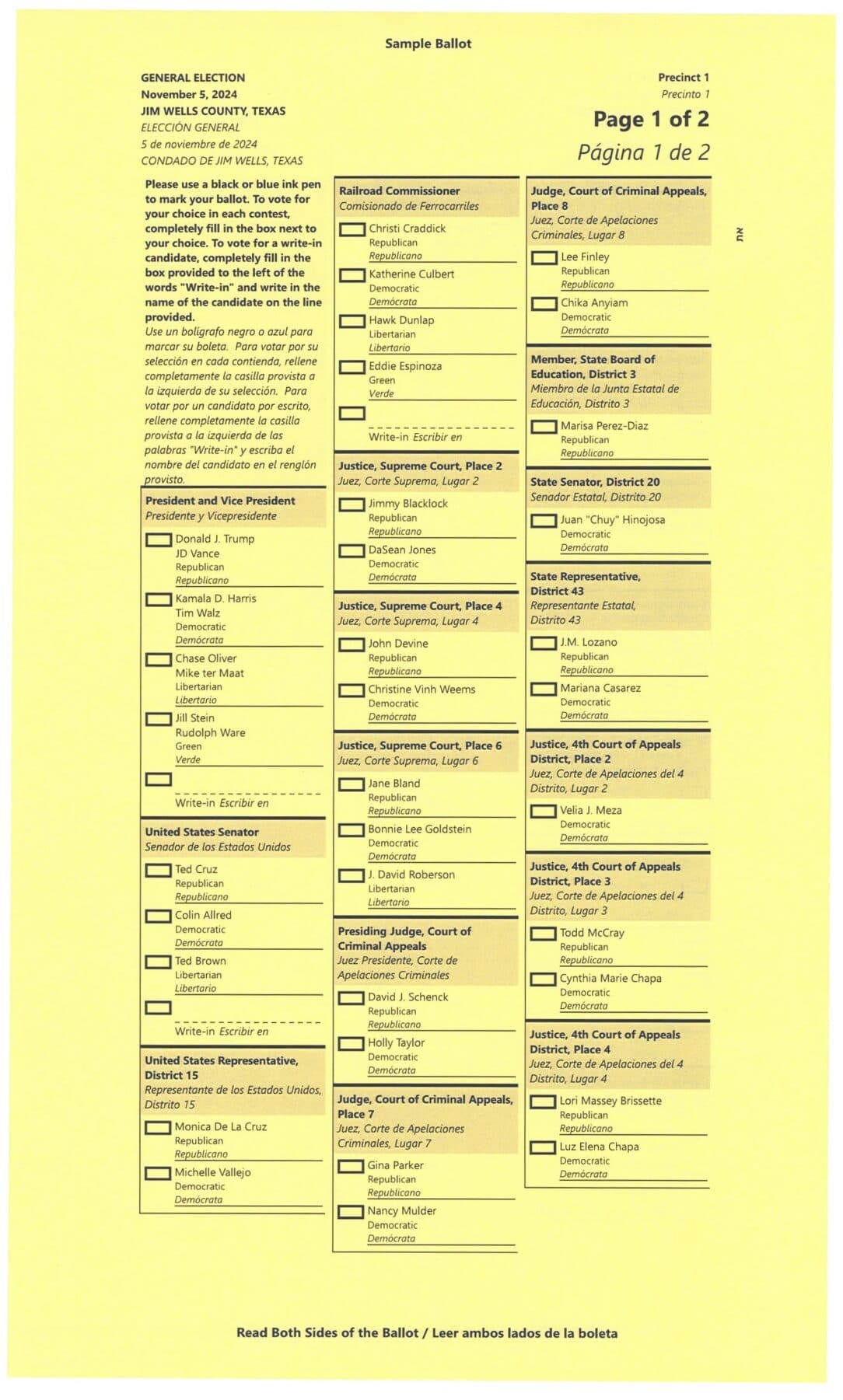
Jim Wells County is giving residents a direct way to inspect election records that used to sit behind a public-records request. The county’s Ballot Verifier opens access to every single cast ballot in every county election starting with July 17, 2026, turning election paperwork into something voters can review for themselves.
What the Ballot Verifier actually shows
The county says the Ballot Verifier lets the public view and download contest results, ballot images, and cast vote records. That matters because those three pieces together show not just the final tally, but the materials that document how the tally was built. For anyone who wants to check whether an outcome lines up with the underlying records, this is the clearest public window Jim Wells County has offered.
The county describes the new system as “a marked improvement” over what came before. Until now, residents who wanted election materials had to make public records requests to the Jim Wells County Clerk’s Office. That old process still sits in the background as the county’s records backbone, but the new verifier shifts the most useful election material into a public-facing tool that can be used without waiting for a separate request.
Why this changes local accountability
The practical effect is simple: more eyes can check the same records. If a voter, candidate, campaign worker, or journalist wants to compare what was cast with what was counted, the Ballot Verifier gives them the raw materials to do it in one place. That is the kind of transparency that makes election administration easier to audit after the fact and easier to trust in the moment.
It also changes the way residents can think about safeguards. Instead of relying only on a final election-night summary, people can inspect ballot images and cast vote records alongside contest results. That makes it easier to spot inconsistencies, ask sharper questions, and identify problems while the evidence is still visible in the county’s own system.
The numbers Jim Wells County is tracking year-round
The county’s official notices page lists 25,688 registered voters. That figure gives a useful snapshot of the scale election workers are managing from Alice across the rest of the county, including Orange Grove, Premont, San Diego, Sandia, Ben Bolt, and rural precincts. A county with that spread of communities has to keep notices, ballot access, and voter records organized long before voters arrive at a polling place.
Jim Wells County is also part of a longer administrative record. The Texas Secretary of State maintains historical voter-registration figures for the county, and those records stretch back across decades. That history matters because it shows registration and turnout are not static from one cycle to the next; they rise and fall with statewide contests, early voting patterns, and the competitiveness of the ballot.
For residents who want to see how the county has changed over time, that historical record is useful in its own right. It shows that the current 25,688 registered voters figure sits inside a much longer line of county election data, not a one-day snapshot detached from the past.
Where to check your own voter status and ballot information
The county’s official elections site is the best starting point for residents who want the practical details in one place. It centralizes voter information, official notices, and tools that go beyond a basic polling-place lookup. For day-to-day use, that means you can find the county’s own notices and the newer ballot-verification access point without having to piece together election information from multiple sources.
State rules still control some of the most important steps. The Texas Secretary of State maintains the statewide ballot-by-mail application process that governs how Texans request mail ballots, so Jim Wells County voters need to follow state deadlines and requirements when voting by mail. That statewide framework is especially important in a county like Jim Wells, where residents may rely on mail ballots for convenience, health, travel, or distance from a polling site.
- Jim Wells County Elections publishes notices and ballot-verification access
- the Texas Secretary of State maintains the county’s historical registration figures and ballot-by-mail rules
- the Jim Wells County Clerk’s Office still anchors the county’s record system for election materials
- the county’s Ballot Verifier now exposes many of those materials to the public directly
For voters who want to compare county and state records, the combination is straightforward:
How outside directories fit into the picture
Local election information does not stop with the county and the state. U.S. Vote Foundation maintains an election office directory entry for Jim Wells County, Texas, which helps connect residents to official local election contacts. BallotReady also provides a Jim Wells County voter guide that asks users to enter an address so they can see a personalized ballot and voter-registration information.
Those outside tools reinforce an important point about how voting works now: residents often begin with their address, then move back to the county’s official notices and state rules to confirm what applies. The county’s own materials remain the most important source for local election records, but address-based guides can help voters quickly find the precinct-specific information they need.
The county seat and the broader 2026 calendar
Alice remains the county seat and the main administrative center for election work, but the county’s voting system has to serve communities spread well beyond city limits. That is why the county’s public notices, historical records, and ballot-verification tools matter together. They are not isolated pages; they are part of the machinery that keeps election law usable across a county with both town centers and rural precincts.
The statewide calendar also adds urgency. Texas will hold its 2026 primary elections on March 3, and Jim Wells County is already included in Ballotpedia’s 2026 election coverage. For local administrators, that means notices, voter records, and ballot access all have to stay aligned with state deadlines. For residents, it means the county’s new verification tool is arriving inside a broader election cycle where accurate information is essential long before ballots are cast.
Jim Wells County is building a public record system that lets voters check what happened, not just accept the final result. With ballot images, cast vote records, contest results, registration figures, and county notices all available through official channels, the county is making election administration more visible to the people it serves.
This article was produced by Prism’s automated news system from verified source data, official records, and press releases, then run through automated quality and moderation checks before publishing. The system is built and supervised by the people who set the standards it runs under. Read our full AI policy.
Did this article answer your question?