Appeals Court Blocks Hawaii Cruise Fare Surcharge Amid Lawsuit
A federal appeals court on Dec. 31, 2025 issued an order stopping Hawaii from enforcing the portion of its new tourism "green fee" that targets cruise fares while litigation continues. The ruling pauses collection of the 11% cruise surcharge for now, creating uncertainty for local planning and the state programs the fee was meant to fund.
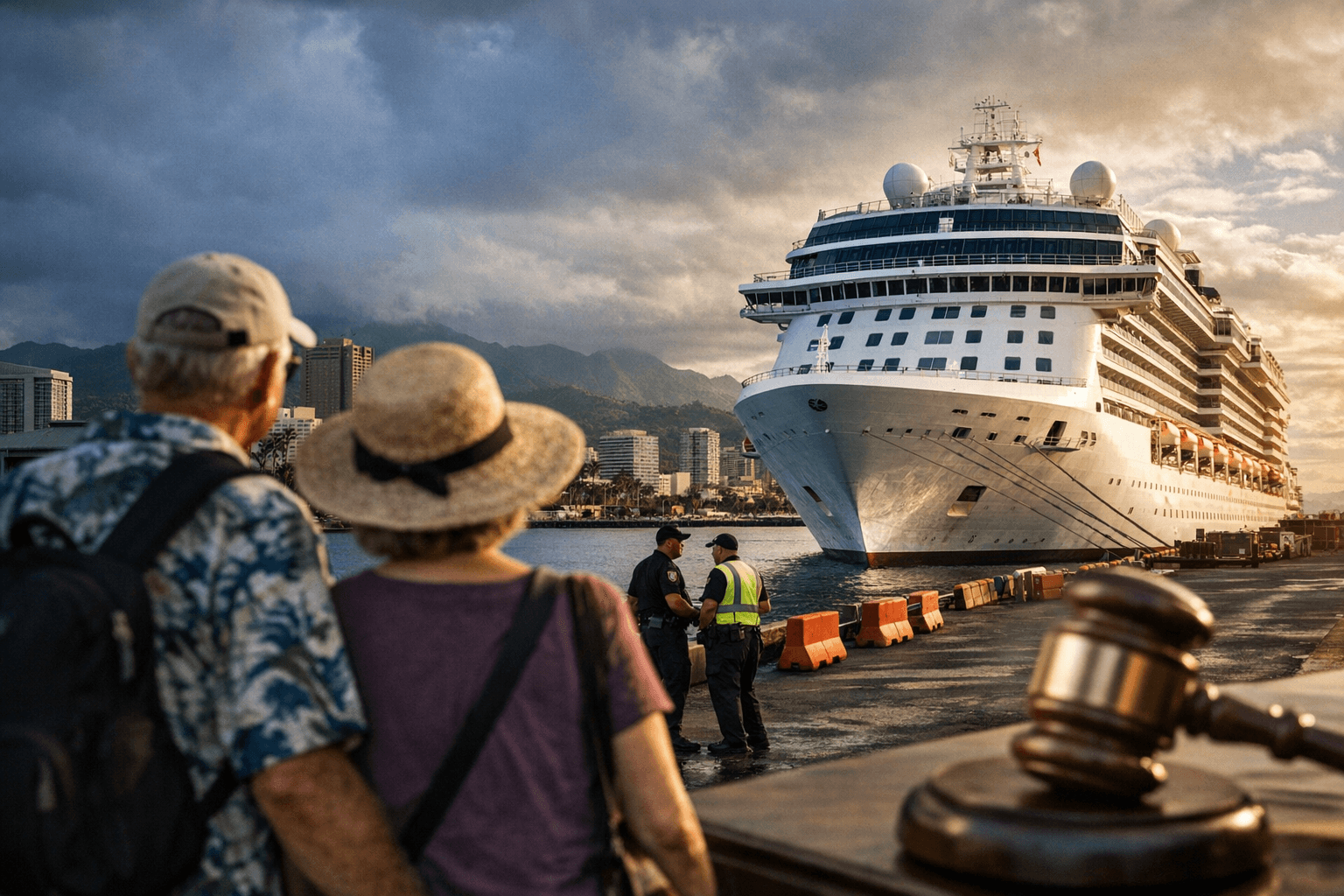
The U.S. Court of Appeals for the Ninth Circuit reinstated a temporary stay on the cruise-ship portion of Hawaii's recently enacted Act 96, preventing enforcement of an 11% levy on cruise fares prorated to days spent in Hawai‘i while a broader challenge proceeds in court. The order, issued Dec. 31, came after a federal judge earlier declined to block the law, allowing most of Act 96 to take effect on Jan. 1, 2026. The appeals court's action, however, means cruise operators and passengers will not be charged the new surcharge for the time being.
Act 96 bundled an increase in the state transient accommodations tax with, for the first time, a targeted surcharge on cruise fares. Plaintiffs representing the cruise industry and allied interests argued the cruise surcharge likely conflicts with federal maritime and constitutional limits, prompting the appeals court to restore a temporary injunction as the litigation proceeds. The ruling is preliminary and does not decide the ultimate legality of the surcharge.
For Kauai County residents and officials, the split enforcement of Act 96 has immediate policy and fiscal implications. The transient accommodations tax increase and levies on hotels and vacation rentals remain in force, meaning short-term rental operators and guests can expect the revised tax treatment to apply starting Jan. 1. By contrast, cruise-related collections are on hold, reducing near-term revenue the state had projected for climate resilience and environmental programs tied to the "green fee."
The pause complicates budgeting and program planning at the county level. State officials have said green-fee revenues are intended for climate resilience and environmental initiatives that affect Kauai - from shoreline protections to watershed and ecosystem work. With the cruise component stayed, the timing and scale of funding for those priorities are uncertain until courts resolve the legal challenge.
Institutionally, the case highlights tensions between state efforts to raise tourism-related funds and claims that federal maritime law or constitutional principles limit states' power to tax or regulate interstate and international shipping. The appeals court order keeps those questions in play, signaling a potentially lengthy review process that could reach higher federal courts.
Local leaders, planners, and stakeholders will need to monitor court developments closely and prepare for multiple outcomes. For now, cruise passengers and lines are exempt from the surcharge, hotels and vacation-rental operators continue under the new transient accommodations tax regime, and the debate over how best to fund Hawaii's climate and environmental response will remain unresolved as litigation proceeds.
This article was produced by Prism’s automated news system from verified source data, official records, and press releases, then run through automated quality and moderation checks before publishing. The system is built and supervised by the people who set the standards it runs under. Read our full AI policy.
Did this article answer your question?