EA Ecoversity Secures Federal Grant to Launch Hawaiian Language Program LEO
Only 5% of Native Hawaiians can hold a basic conversation in ʻōlelo Hawaiʻi. A new federal grant to EA Ecoversity aims to close that gap, and Kauaʻi could join the pilot.
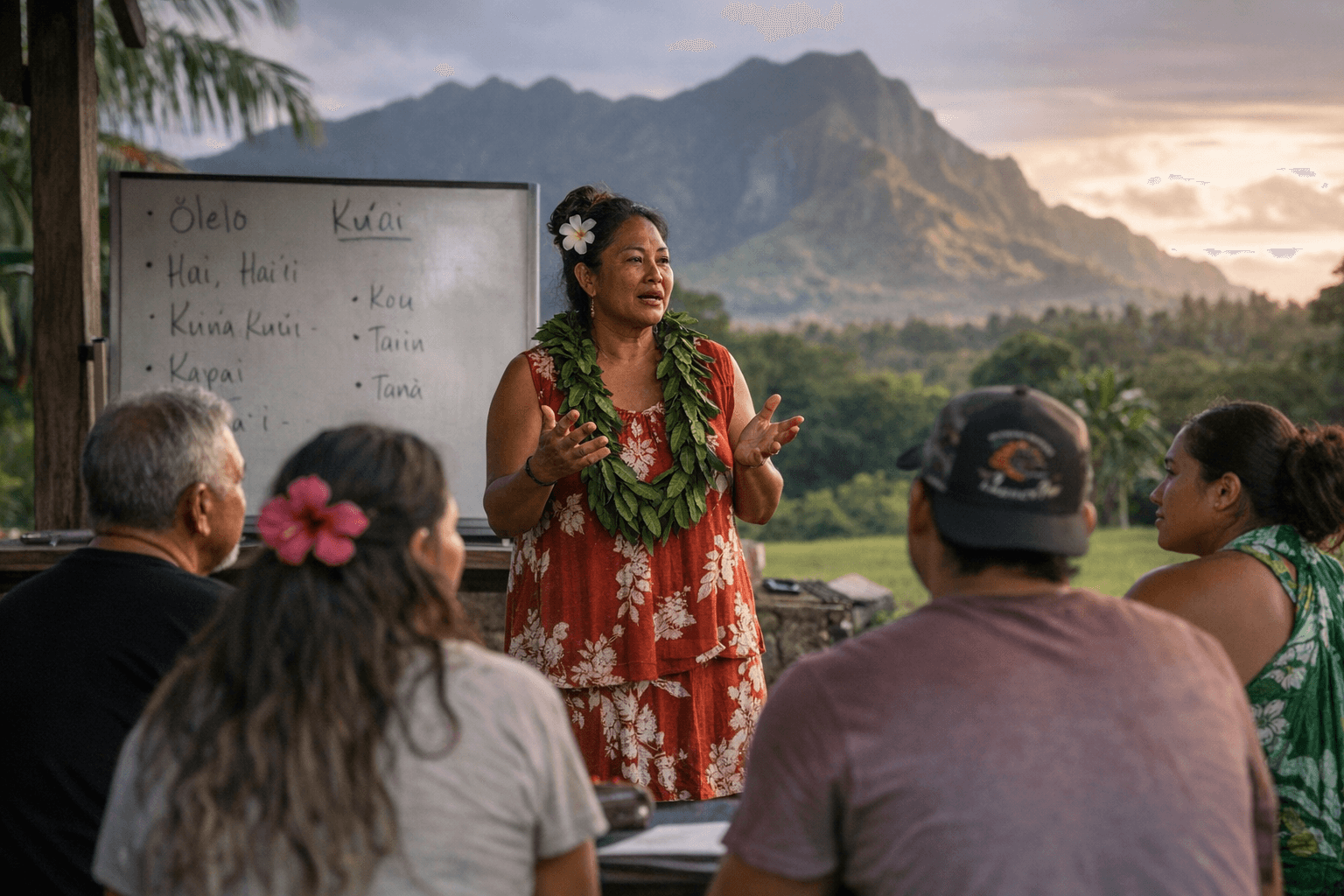
Only about 5% of Native Hawaiians can hold a simple conversation in ʻōlelo Hawaiʻi. A federal grant awarded to EA Ecoversity is now funding a three-year effort to push that number higher, and the mobile-first learning platform it will build carries direct implications for Kauaʻi schools, community organizations, and ʻohana already fighting to keep the language alive in their own backyard.
The Administration for Native Americans awarded EA Ecoversity the multi-year grant to design, test, and launch LEO, a Hawaiian word meaning "voice," "advice," or "verbal expression." The program is being built as a mobile-friendly, game-like platform that guides learners toward real-world, basic conversational fluency in ʻōlelo Hawaiʻi. Rather than conventional classroom modules, LEO routes users through four distinct cultural avatars: ʻAnakē Aloha, ʻAnakala Ikaika, Papa Pono, and Tūtū Mālama. Beta testers can visit those characters in any order, accumulating approximately 125 hours of interactive games, videos, activities, and assignments, each grounded in ʻike Hawaiʻi, or Hawaiian knowledge and cultural understanding.
EA Ecoversity, founded in 2020 and incorporated as a nonprofit in 2023, is based in Hilo and targets Native Hawaiian learners between the ages of 15 and 30. Despite being a relatively young organization, it brings together staff and advisors with decades of combined experience in Indigenous education, online learning infrastructure, and micro-credentialing. The three-year grant timeline is structured to allow for iterative development: curriculum design in the early phase, pilot testing with learners and feedback loops with kūpuna and kumu, and refinement before any broader statewide release.
For Kauaʻi, the stakes in that rollout are concrete. The island has existing Kula Kaiapuni infrastructure, Hawaiian-focused charter programs, and community practitioners actively seeking tools that meet learners where they are, including on a phone screen. LEO's mobile-first design addresses one of the most persistent barriers to language access in a state where learners are spread across rural and remote communities. If EA Ecoversity opens pilot participation to neighbor island programs during the testing phase, Kauaʻi educators and cultural organizations would be positioned to contribute both learners and critical feedback before the platform scales statewide.
The grant also illustrates what is possible for Kauaʻi-based Native Hawaiian nonprofits pursuing similar federal funding. The Administration for Native Americans, a program within the U.S. Department of Health and Human Services, funds language preservation and culture-based education through competitive grants available to tribal and Native Hawaiian organizations. EA Ecoversity's award demonstrates that a nonprofit with a specific, measurable program model, documented community need, and culturally grounded pedagogy can secure multi-year federal investment. For local organizations on Kauaʻi that have been running ʻōlelo Hawaiʻi programming on shoestring budgets, that pathway exists, though it demands grant-writing capacity and institutional infrastructure that many smaller nonprofits have yet to build.
The 5% conversational fluency figure is the number that concentrates the urgency. Decades of immersion schooling and community language programs have moved the needle, but not fast enough to outpace generational attrition. LEO is designed to reach learners who fall outside the immersion school pipeline: older teens, young adults, and families who want to engage with ʻōlelo Hawaiʻi but have no clear on-ramp. Whether Kauaʻi practitioners will have a seat at the advisory table as EA Ecoversity develops those on-ramps depends in part on how aggressively the island's cultural institutions and schools engage in the months ahead.
This article was produced by Prism’s automated news system from verified source data, official records, and press releases, then run through automated quality and moderation checks before publishing. The system is built and supervised by the people who set the standards it runs under. Read our full AI policy.
Did this article answer your question?