Gabriel I’s legacy shaped Kauai education across generations
Gabriel I’s work on Niihau turned Hawaiian fluency into school access, leaving a legacy that still shapes Kauai’s debates over culture and public education.
A Kauai life rooted in family, language, and place
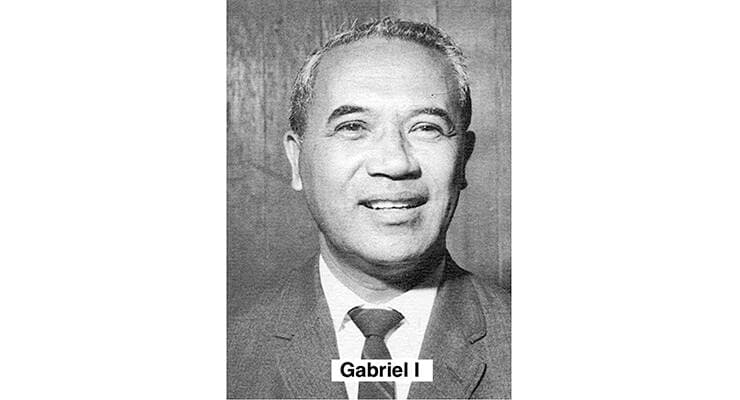
Gabriel I’s most enduring contribution was not a single title or post. It was the way he used his Native Hawaiian identity, his fluency in Hawaiian, and a career in public education to widen access for Kauai and Niihau families.
Born in Hanalei in 1909, the son of Joseph and Haleakalā I, he spent much of his life in Nawiliwili. His surname carried its own history: the column recounts that it was a truncation of his grandfather Daniel Imaikalani’s ancestral surname, linking him to Hawaiian chiefly lineage and to the Lovell ohana through an English ancestor. That background matters because Gabriel I’s life was never separate from the island community he served. It was shaped by it, and in turn helped shape how learning was delivered on Kauai.
One of the clearest images from his childhood comes from the road between Līhue and Hanalei. As a boy, he rode with his father, Joseph I, who was a postman, in a horse-drawn buggy during the 1910s and 1920s. When streams flooded, the trip could stretch into days, forcing the family to wait until the water dropped enough to cross safely. That memory captures an older Kauai in which geography, weather, and access were inseparable from daily life, including access to school.
Training for island classrooms
Gabriel I’s education followed a path that prepared him for leadership in island schools. He attended Līhue School, Kauai High School, Territorial Normal School, and Colorado State College of Education before dedicating his professional life to teaching and administration on Kauai.
Those institutions also reflect how teacher preparation connected Kauai to broader education systems. Territorial Normal and Training School later became part of the University of Hawaii system, and in 1931 it merged with the University of Hawaii’s School of Education to form Teachers College. Colorado State College of Education later became Colorado State College in 1957 and the University of Northern Colorado in 1970. Gabriel I’s own schooling therefore bridged local life and wider professional training, giving him the tools to move through the island’s public-school system as a teacher, counselor, vice-principal, and principal.
That mix of roles matters. He was not remembered only as a classroom teacher or only as an administrator. He worked across the structure of public education, where staffing, student support, and school leadership all shaped whether children could stay engaged in school and move forward academically.
Niihau became the decisive test of his knowledge
The clearest proof of Gabriel I’s importance came in 1966, when District Superintendent William Waters asked him to evaluate Niihau School. Niihau was owned at the time by Aylmer Robinson and Lester Robinson, who gave permission for him to access the island. That assignment placed him in a setting where language was not a side issue but the central condition of schooling.
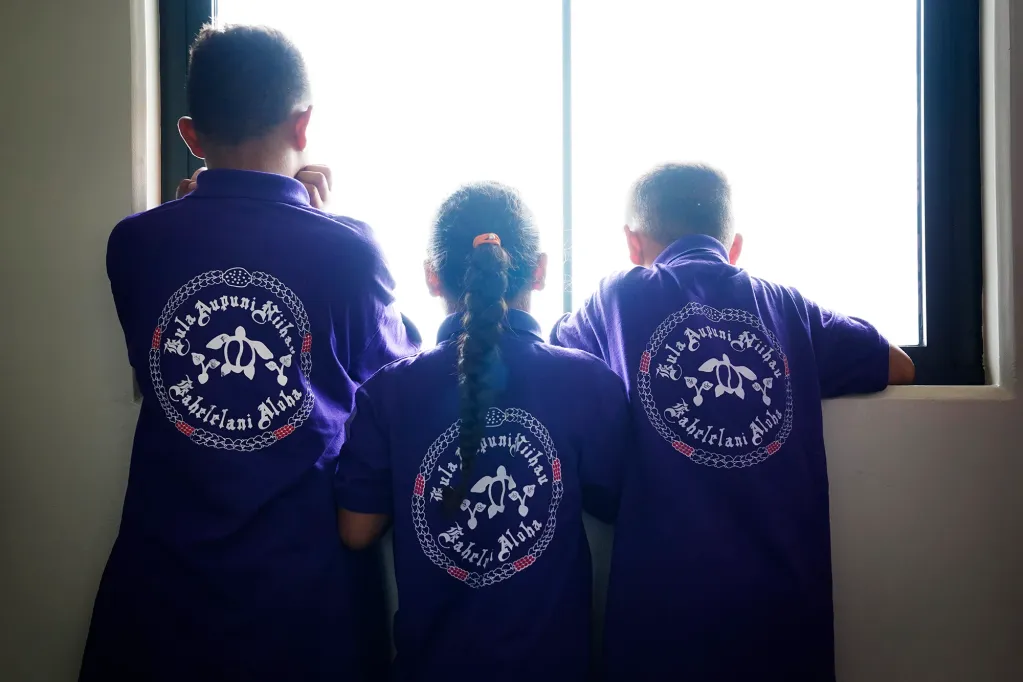
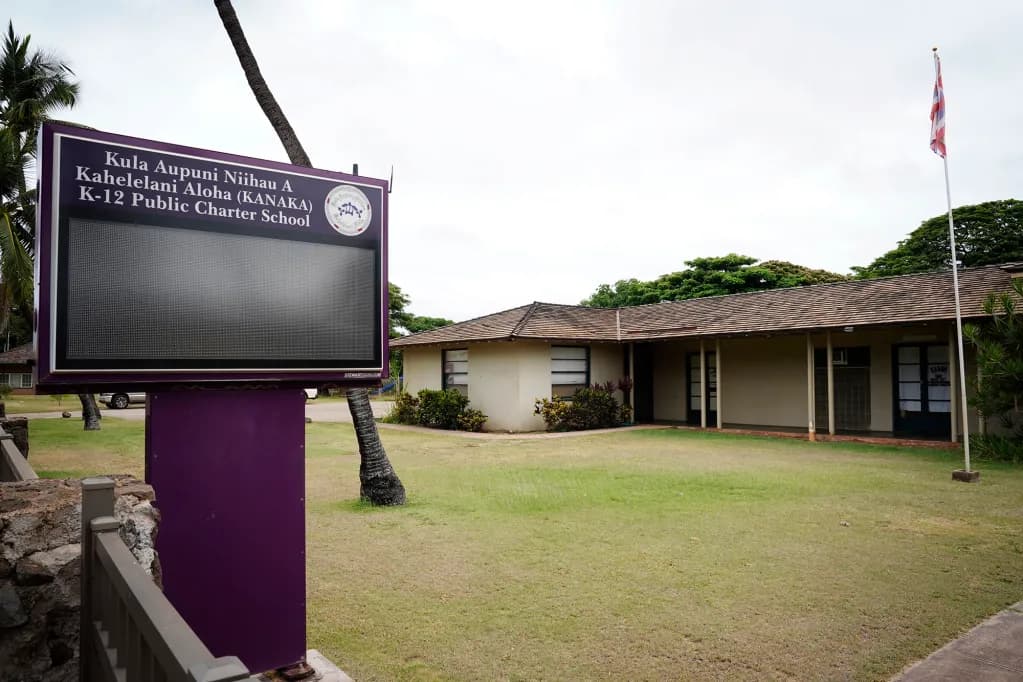
Gabriel I spoke Hawaiian fluently, and that ability made his work on Niihau especially significant. Niihau School is the only school in Hawaii that serves the Niihau community with an emphasis on the students’ first language, the Niihau dialect of Hawaiian. In that environment, his fluency was not symbolic. It was practical, and it allowed him to connect directly with students and families in a way many educators could not.
The column says he arranged for Niihau students and some parents to visit Oahu, where their hosts at Kamehameha Schools were surprised to hear them speaking Hawaiian perfectly. That detail reveals what Gabriel I understood before many institutions did: language ability is also an access issue. When students can move between home, community, and school without being forced to leave their language behind, schooling becomes more responsive and more humane.
His work on Niihau helped lead to a program that allowed the first Niihau students to attend Kamehameha Schools. Kamehameha Schools’ archives identify Jean Kuuleialoha Kelley as the first person from Niihau to attend Kamehameha School for Girls, and the school’s records say she graduated with the class of 1952. A historical snapshot also notes that a girl from Niihau was already enrolled at the Girls’ School in the 1947 to 1948 school year, showing that this pathway opened gradually. Gabriel I’s role sits behind that opening, not as a lone achievement, but as part of the institutional bridge that made it possible.
Why the legacy still matters on Kauai
Gabriel I’s story still resonates because the questions he faced have not disappeared. Kauai and Niihau continue to wrestle with how public education serves Native Hawaiian students, how much room schools make for Hawaiian-language learning, and how cultural identity should shape the classroom experience.
That debate is not abstract. Kamehameha Schools announced more than $1.9 million in Kauai and Niihau community-investment grants for fiscal year 2017 to 2018, a reminder that Native Hawaiian learners remain a focus of local investment. Later public attention on Kauai also highlighted the vitality of ōlelo Hawaii on Kauai and Niihau, underscoring that the language Gabriel I used so naturally remains central to education, identity, and community continuity.
His legacy also points to a larger lesson for Kauai County: public education works best when it reflects the people it serves. Gabriel I’s life connected Hanalei, Līhue, Nawiliwili, Niihau, and Oahu through one educator’s deep familiarity with island life and Hawaiian language. He showed that access is not only about buildings and budgets. It is also about whether students can be seen, heard, and taught in a language and cultural setting that recognizes who they are.
That is why Gabriel I remains important across generations. His career helped prove that language, identity, and public schooling are not separate issues on Kauai. They are the same issue, and the island is still living with the choices that flow from it.
This article was produced by Prism’s automated news system from verified source data, official records, and press releases, then run through automated quality and moderation checks before publishing. The system is built and supervised by the people who set the standards it runs under. Read our full AI policy.
Did this article answer your question?