Hawaii Board of Education adopts statewide limits on student cellphone use
The Hawai‘i Board of Education adopted a statewide policy banning cellphones in elementary and middle schools and limiting high school use to non-instructional time, with DOE rollout set for 2026-27.
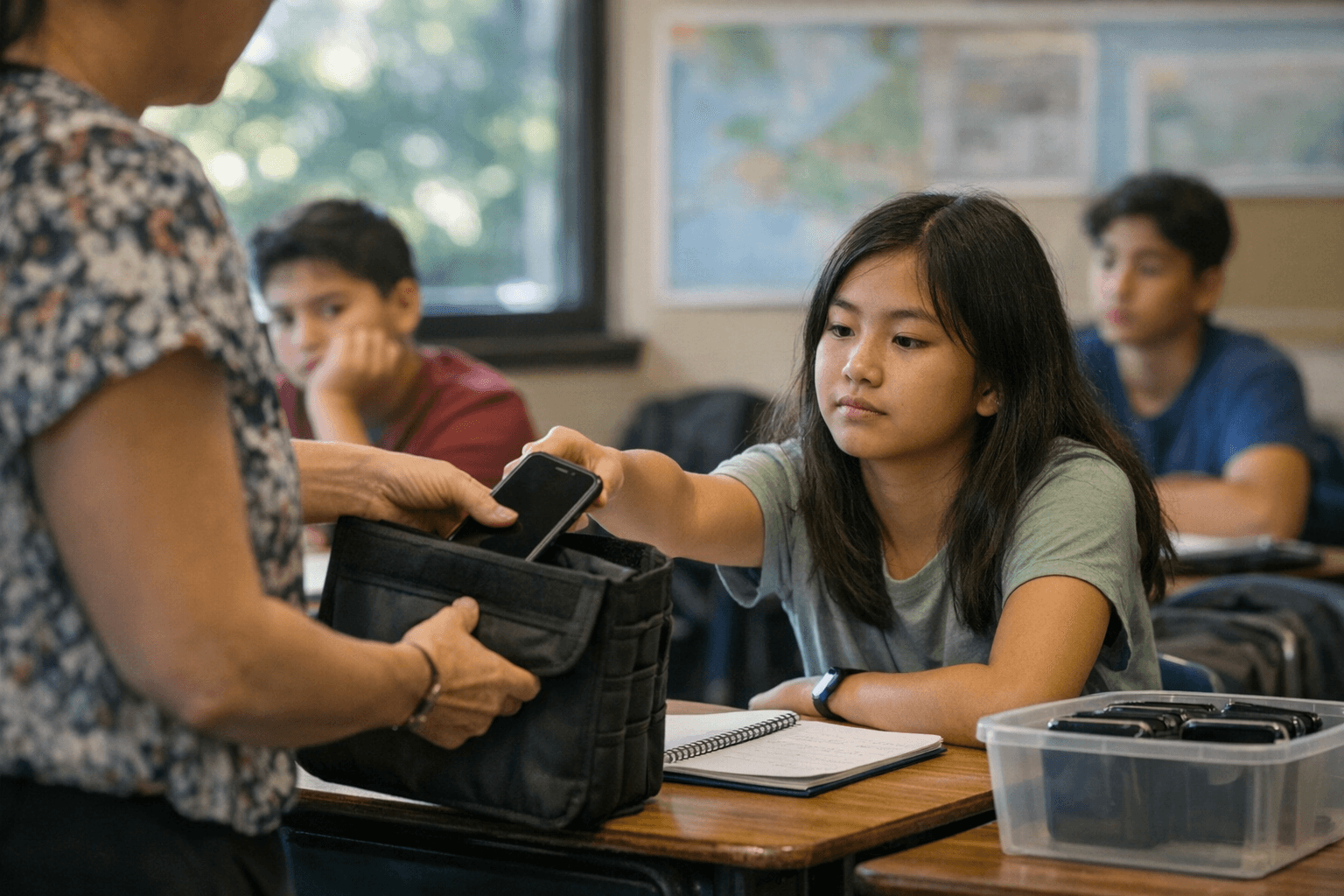
The Hawai‘i State Board of Education voted to adopt a statewide student cellphone policy during its Feb. 12 meeting, setting uniform rules for public schools that ban cell phone use in elementary and middle/intermediate schools and restrict high school use to non-instructional time. The Hawai‘i State Department of Education, headquartered in Honolulu and issuing the official release under the header Ka ʻOihana Hoʻonaʻauao o ke Aupuni Hawaiʻi, said the Department will develop implementation guidelines to take effect at the beginning of the 2026-27 school year.
The DOE release framed the policy as a balance between classroom needs and technology: “The policy is intended to balance the benefits of technology integration with the need to minimize classroom disruption and promote a safe and respectful learning environment.” The release sets the minimum requirements explicitly: “Elementary school: Cell phone use is prohibited during school hours,” “Middle and intermediate school: Cell phone use is prohibited during school hours,” and “High school: Cell phone use is prohibited during instructional time. Schools may exercise discretion regarding use outside of instructional time, including before and after school, and during designated breaks, recess, lunch and free periods.”
Exceptions to the prohibitions are narrowly defined in the DOE text. “Exceptions are permitted in limited circumstances, including during emergencies or perceived threats to safety, when expressly authorized for instructional purposes, when required for a student's health needs as determined by a licensed physician, or when included in a student's Individualized Education Program (IEP).” The policy also requires that local guidance include “clear and progressive consequences for violations,” language repeated across the Department release and local coverage by Hawaii News Now, Spectrum and Kauai Now.
Public testimony at the Feb. 12 Board meeting included students and other testifiers who supported limits during instructional time, according to Board accounts reported by Hawaii News Now and Kauai Now. Student BOE member Mia Nishiguchi told the board, “A lot of students definitely appreciated the fact that you give high-schoolers a little more leeway, and certain students were very adamant about remaining flexible at the high school level.” Nishiguchi added, “It is vital that students are living up to the effective usage of technology, especially with many moving onto post-secondary education or the workforce. They are not going to have any cellphone balance there.”
Board members and the DOE emphasized that adoption is only the first step and that the policy’s impact will depend on implementation. “While the policy establishes statewide expectations, its impact will ultimately depend on a thoughtful and consistent implementation plan aligned with the Board’s commitment to student learning and well-being,” the Department release said. The DOE said it will begin developing detailed guidance and work with schools statewide to support implementation next year, and that “additional information, including timelines and school-level expectations, will be communicated to families and staff in advance.”
For Kauai School District administrators at schools from Lihue to Waimea, the statewide minimums mean updating local student conduct policies and communicating exemption procedures for health and IEP-related needs before the 2026-27 school year. The Board cited months of review, including statewide surveys of schools and stakeholder feedback on cellphone impact, as the basis for the new policy.
This article was produced by Prism’s automated news system from verified source data, official records, and press releases, then run through automated quality and moderation checks before publishing. The system is built and supervised by the people who set the standards it runs under. Read our full AI policy.
Did this article answer your question?