Hawaii joins ballistic network, speeding Kauai shooting investigations
Hawaii’s new ballistic network lets detectives compare shell casings across islands in near real time, giving Kauai investigators faster links in shooting cases.

Hawaii’s new place in the National Integrated Ballistic Information Network could shave weeks or months off Kauai shooting investigations by letting detectives compare shell casings against other cases across the islands and the mainland much faster. The statewide rollout gives Kauai Police Department and the other county agencies a shared ballistic tool at a time when guns, suspects and ammunition can move quickly between jurisdictions.
The network, run by the Bureau of Alcohol, Tobacco, Firearms and Explosives, is the only interstate automated ballistic imaging system in the country. It works by capturing high-resolution images of fired cartridge casings through Integrated Ballistic Identification System technology and comparing the unique markings to connect shootings and recovered firearms across county and state lines. ATF’s latest fact sheet said the network was supporting 6,600 agencies, operating through 378 NIBIN sites, and had generated more than 1.096 million all-time leads while acquiring more than 658,000 pieces of evidence in fiscal year 2024.
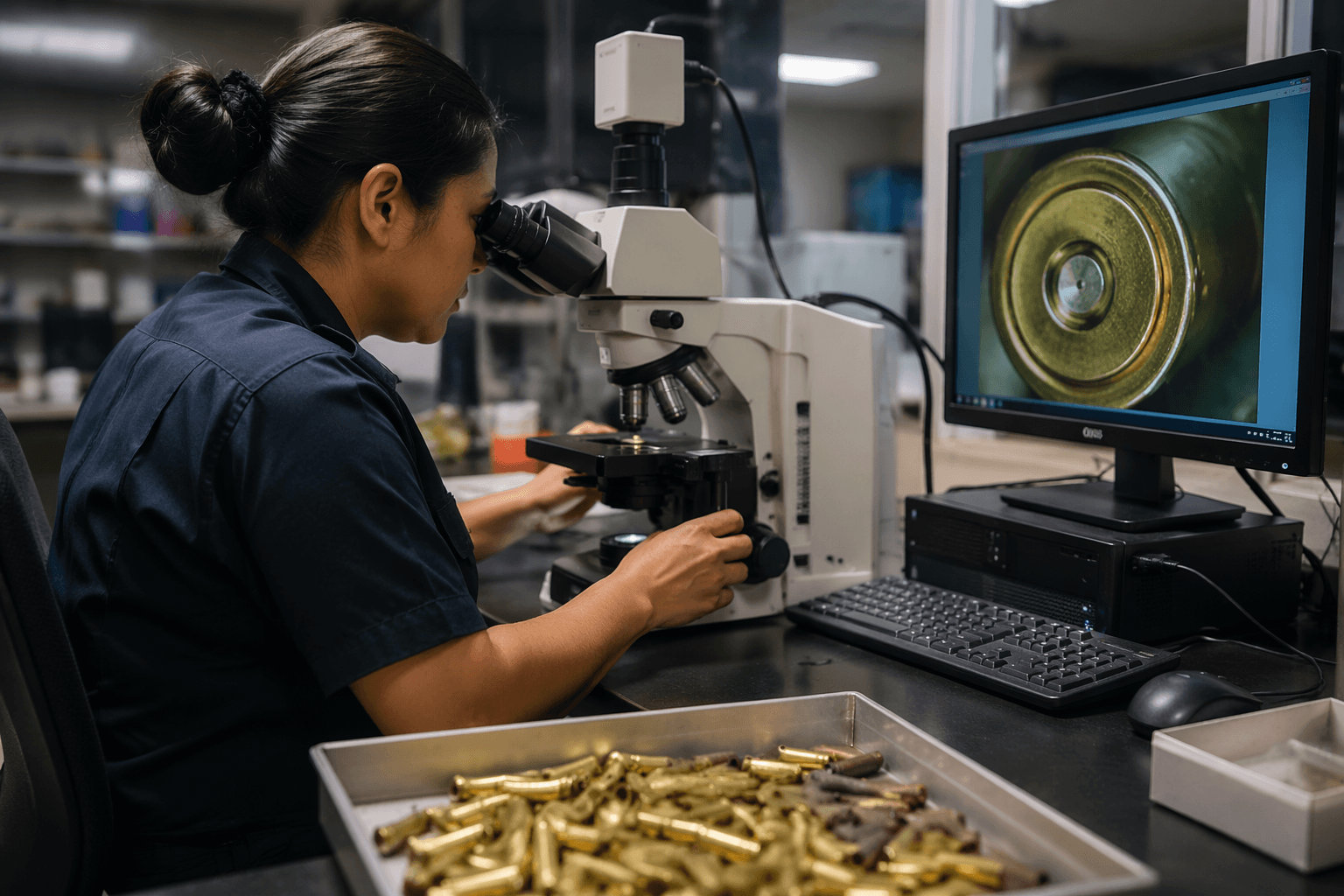
Hawaii’s site was unveiled at the Department of Law Enforcement’s South King Street offices in Honolulu, with the equipment housed at the King Street headquarters. The project was funded with $250,000 from the Hawaii High Intensity Drug Trafficking Area program. Officials said the state was one of the last to join the network, but they emphasized that the new setup now allows the Hawaii Department of Law Enforcement and the four county police departments to analyze evidence in near real time instead of waiting for separate reviews.
That matters on Kauai, where a single shooting can quickly become a multi-agency case if a weapon or suspect has moved from Līhue to another island, or from one county to the mainland. The system can connect seemingly unrelated shootings, trace the history of crime guns and help identify violent repeat offenders across county lines, which is especially significant in the age of ghost guns and rapid firearm movement.
ATF announced the new Hawaii site on June 10 as the Officer Suzanne O NIBIN Site, honoring fallen Maui Police Officer Suzanne O. Local reporting from the June 9 unveiling said the site will provide full-time acquisitions, correlations and firearm traces for agencies in Hawaii. Jonathan Blais, ATF special agent in charge, said the technology should help officers and technicians work in near real time rather than waiting weeks or months for connections to emerge.
For Kauai, the immediate question is how quickly evidence can be uploaded and how often local investigators will use the new system in actual cases. If the workflow is fast enough, residents could see the payoff in stronger charging decisions, quicker links between shootings and clearer answers when violence crosses from one island to another.
This article was produced by Prism’s automated news system from verified source data, official records, and press releases, then run through automated quality and moderation checks before publishing. The system is built and supervised by the people who set the standards it runs under. Read our full AI policy.
Did this article answer your question?