How Kauaʻi Residents Can Identify and Report Invasive Species, Including Ramie Moth
Two coconut rhinoceros beetles were trapped on Kauaʻi in late May; inspect coconut, royal, and fan palms and report suspect pests to 808-643-PEST or 7378.
1. why this matters now
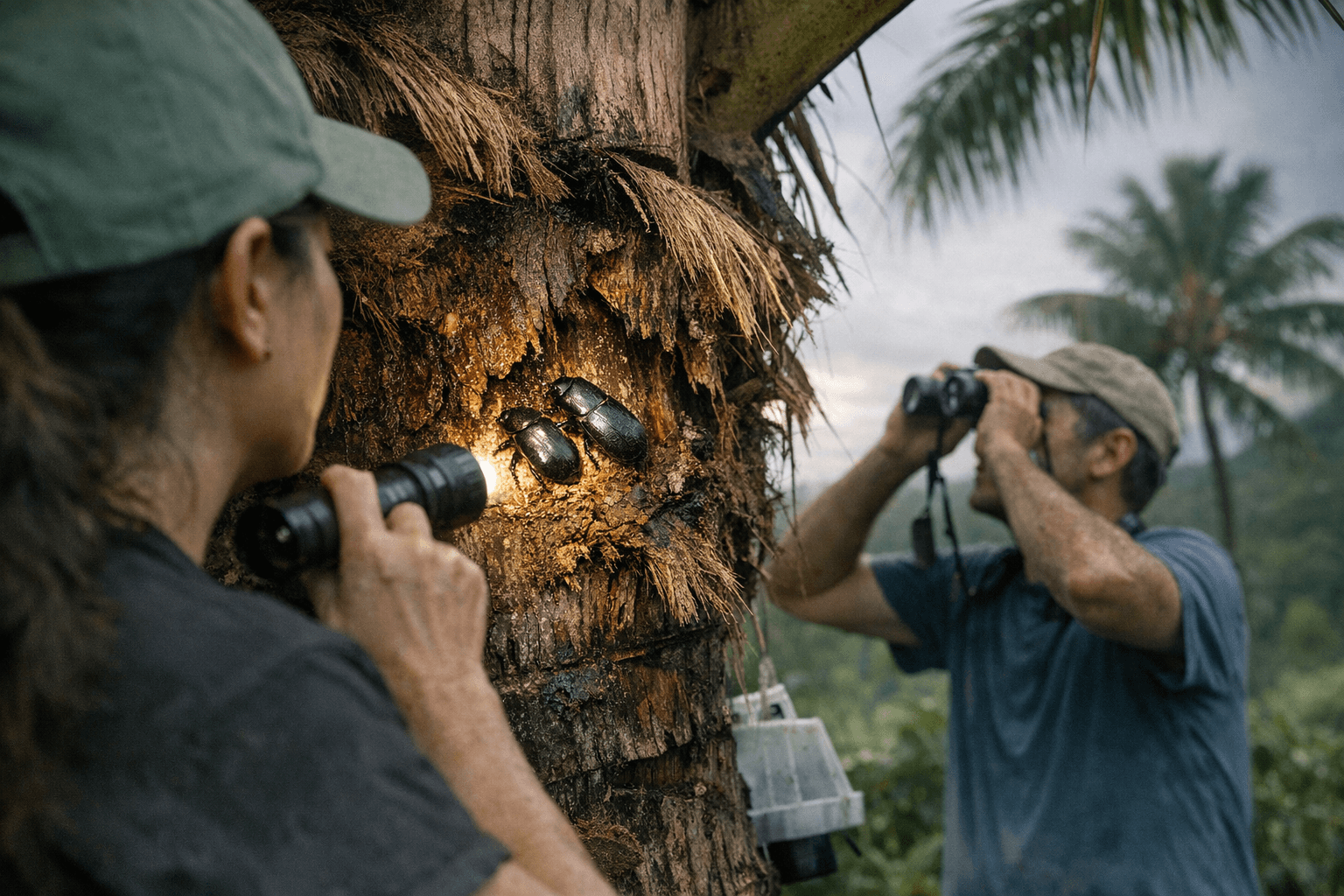
Two Coconut Rhinoceros Beetles (CRB) were trapped on Kaua’i in late May near the Līhuʻe Airport and around the Līhuʻe Transfer Station, marking the island’s first known CRB detection. Since that May detection, rapid response teams from the University of Hawaiʻi – CRB Response Team, KISC, HDOA, and other partners have been surveying island-wide and have confirmed 2 small CRB breeding sites; “Early detection of infestations increases the chance of eradicating this pest on Kaua’i.”
2. what to check on your palms (specific signs)
Regular visual inspections of coconut trees are recommended. Please regularly check your coconut, royal, and fan palms for CRB damage; watch for large v-shaped cuts in the crown of your palm trees or look for large bore holes at the base of palm fronds, these are the primary field signs KISC is asking residents to look for.
3. inspect compost, mulch, and green waste
Coconut Rhinoceros Beetles and their larvae can hide in organic material, so check all compost bins and green waste for CRB larvae. KISC notes that CRB may have arrived “in compost, mulch, or green waste,” making careful inspection of those piles a protective act for neighbors and cultural resources that depend on healthy palms.
4. how the beetles were detected and what traps mean for the island
KISC found both beetles during routine monitoring of CRB traps placed for early detection around ports of entry as part of the Mamalu Poepoe program. Additional monitoring traps have also been placed at high‑risk sites across the island, so trap captures are an early warning system that triggers island‑wide surveys and follow‑up by response teams.
5. how to identify other invasive species, including the ramie moth mention
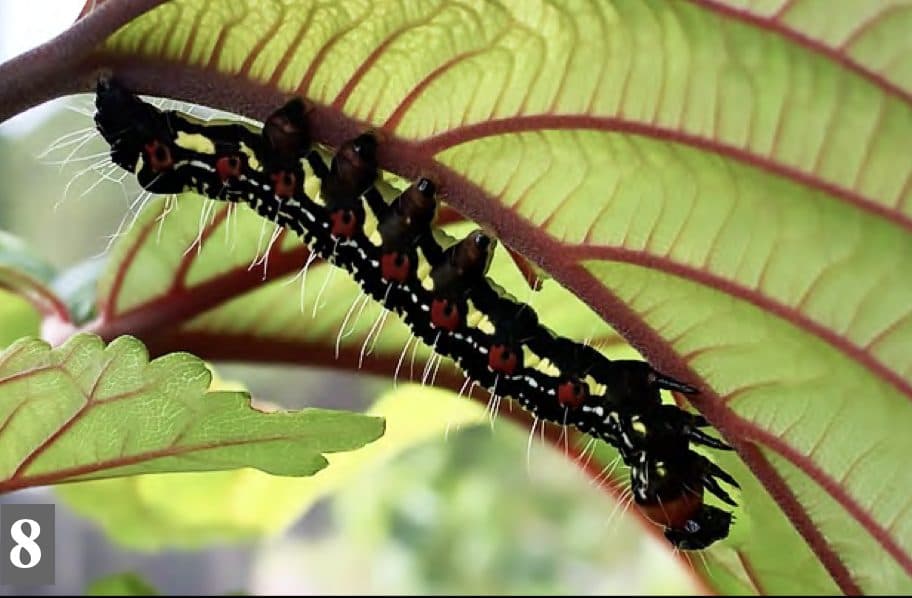
This evergreen, practical primer explains how residents and visitors on Kauaʻi can identify, document and report suspected invasive species sightings, including insects (like the recently detected ramie moth), plants, and other organisms, in a way that helps resource management. The research notes the ramie moth as a recently detected example but contains no further location or impact details; apply the same basic approach, careful observation, photo documentation, and timely reporting, for any unusual insect or plant you find.
6. how to document a suspected sighting before you report
When you encounter suspect damage or an unusual organism, record where and when you saw it and take clear photos from multiple angles if it’s safe to do so; document whether you see feeding scars (like v-shaped crown cuts), bore holes, larvae, or multiple specimens. While the research does not prescribe exact documentation steps, the original purpose described is to “identify, document and report suspected invasive species sightings,” so good records will help the University of Hawaiʻi – CRB Response Team, KISC, and HDOA verify and prioritize responses.
7. how to report a sighting right now (exact contact strings)
If you spot a CRB or suspect a coconut palm tree is being attacked by a coconut rhinoceros beetle, you can report it at the state’s toll-free Pest Hotline at 808-643-PEST or 7378. You can also find more information on our CRB Pest page. KISC’s online interface also shows the text strings “DONATEREPORT A PEST,” indicating donation and reporting options tied to their outreach and response work.
8. who is responding and what they are doing
Rapid response teams involved include the University of Hawaiʻi – CRB Response Team, KISC, HDOA, and other partners; together they have been “surveying for possible breeding sites and suspect CRB palm damage island-wide.” Those teams have already placed extra monitoring traps at high‑risk sites and confirmed 2 small CRB breeding sites, demonstrating that the event has moved from single captures to targeted containment and surveillance.
9. likely pathways of arrival (and why that matters for neighbors)
“There are numerous ways CRB may have found its way to Kaua’i, including hitchhiking on cargo or baggage, or in compost, mulch, or green waste.” That list means neighbors who move soil, prune palm fronds, or travel with plant material should exercise extra caution. Preventing accidental transport of infested material helps protect communities that rely on palms for food, cultural practice, landscaping, and local livelihoods.
10. community impacts framed by KISC’s mission
“Welcome to the Invasive Informant, KISC works across Kaua’i to prevent, control, or eliminate the most threatening invasive plant and animal species in order to preserve Kauaʻi’s native biodiversity and minimize adverse ecological, agricultural, economical, and cultural impacts.” The stakes on Kauaʻi include threatened native ecosystems, the island’s agricultural productivity, and cultural uses of coconut and other palms, so vigilance is both an ecological and a social equity issue, protecting resources critical to many families and practitioners.
11. what you can expect from agencies and what residents should do next
Expect island-wide surveys and additional traps at ports and high-risk sites while the University of Hawaiʻi – CRB Response Team, KISC, HDOA, and others work to contain spread; “Early detection and rapid management response are essential to safeguard Kaua’i from long‑term CRB impacts.” Residents should maintain regular inspections of palms, monitor compost and green-waste piles, report any suspect beetles or damage immediately via the Pest Hotline strings provided, and follow guidance posted on KISC’s CRB Pest page.
12. gaps the community should watch for and questions for follow-up
Publicly available details still leave open practical questions: exact dates beyond “late May,” the precise locations of the two confirmed breeding sites, the scale of palm damage or economic impact, details on the Mamalu Poepoe program’s scope, and confirmation of the full numeric hotline if needed. The research also flagged a ramie moth mention without further location or impact context. These are critical follow-ups for KISC, HDOA, and the University of Hawaiʻi to publish so neighborhoods know risk levels and next steps.
- Inspect coconut, royal, and fan palms for large v-shaped cuts in the crown or large bore holes at the base of palm fronds at least weekly.
- Check compost bins, mulch, and green waste for larvae or unusual grub activity and secure or quarantine suspect material.
- Photograph any suspect insect or damage, note the date and location, and report to the state’s toll-free Pest Hotline at 808-643-PEST or 7378; consult the CRB Pest page for more detail.
- Stay aware of extra monitoring at ports of entry and high-risk sites; support local surveys by reporting sightings promptly.
13. a short action checklist for residents
14. conclusion, community vigilance can shape the outcome
Kauaʻi’s first CRB detections and the confirmation of two small breeding sites show how quickly a new pest can shift from detection to active response; community reporting and careful handling of plant material are essential tools in the next phase. With coordinated surveys by KISC, the University of Hawaiʻi – CRB Response Team, HDOA, and partners, and by following the inspection and reporting steps above, residents can help reduce long‑term ecological, agricultural, economical, and cultural harm on Kauaʻi.
Know something we missed? Have a correction or additional information?
Submit a Tip