Interstellar Comet 3I/ATLAS Makes Closest Flyby, Hawaiʻi Telescopes Observe
Last night Comet 3I/ATLAS, a rare object from another solar system, made its closest approach to Earth at about 170 million miles, drawing scientists across Hawaiʻi and more than 80 observatories worldwide to observe the passage. The event offered Kauaʻi residents a chance to view material formed around another star, and local astronomy groups organized community star watch gatherings to share the sight.
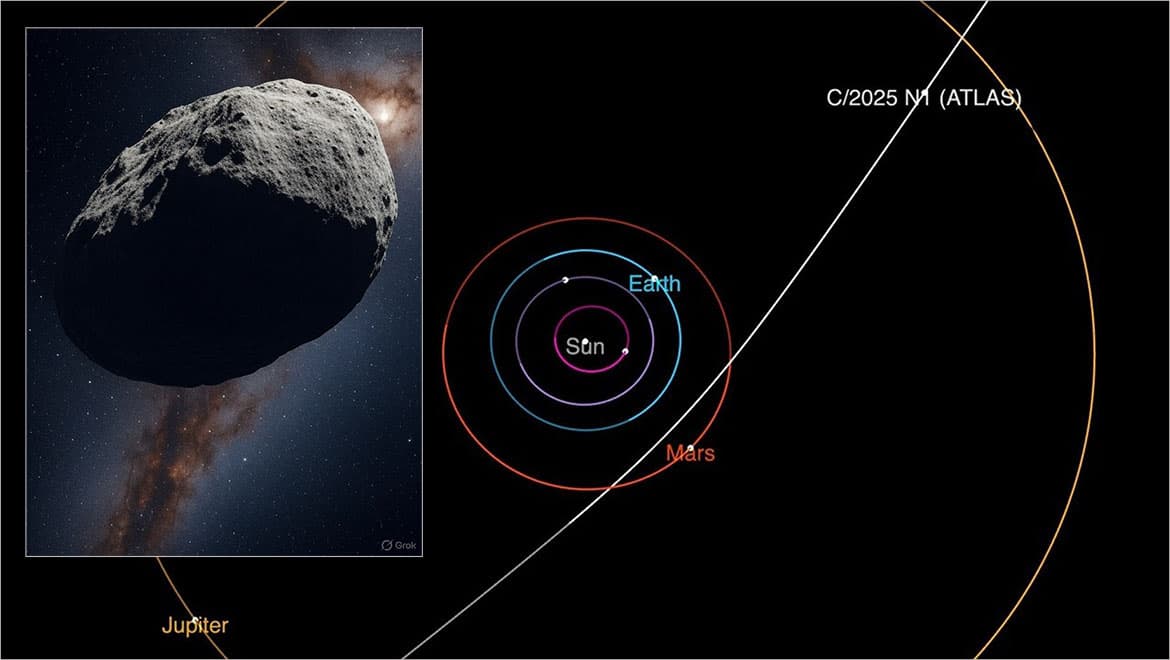
Scientists atop Mauna Kea and across the Hawaiian Islands turned their telescopes skyward late Friday as Comet 3I/ATLAS, identified as an interstellar visitor, passed within roughly 170 million miles of Earth. The distance places the comet at nearly twice the Earth Sun separation, since the distance to the Sun is about 93 million miles, but it was close enough for spectroscopy and imaging that will inform studies of material formed around other stars.
Observers say more than 80 participating observatories around the world captured data on the fast moving object, which was discovered on July 1 by the Asteroid Terrestrial impact Last Alert System survey telescope in Chile. Early spectroscopic analysis showed that the object behaved like a comet while its chemical ratios differed from comets formed in our solar system, reinforcing its classification as interstellar and giving researchers a rare opportunity to sample extrasolar material without leaving Earth.
Local scientists and visiting astrophysicists joined the effort. John O’Meara, Chief Scientist and Deputy Director at W. M. Keck Observatory on Hawai’i Island, encapsulated the local excitement. “I am excited; it’s pretty cool,” he said. “I think it’s totally awesome that Hawaiʻi is excited. It’s great to have a reason for everybody to get together around a common fun cause.” Astrophysicist Alex Filippenko, who was visiting Kauaʻi, highlighted the scientific value of studying a body formed around another star.

For Kauaʻi residents the event blended public outreach with research. Local astronomy groups planned star watch gatherings, weather permitting, and residents were encouraged to point backyard telescopes skyward and share photos with the Kauaʻi Educational Association for Science and Astronomy. Those community activities provided educational access to live science and an informal pathway for citizen contributions to imaging and tracking.
Beyond the immediate spectacle, the observations collected from Hawaiʻi and the global network will be used to compare composition, dust properties and volatile content with solar system comets. Analysts expect that combined datasets will improve models of planet formation and the distribution of materials around other stars, a long term contribution to planetary science that began with this single bright night sky event.
This article was produced by Prism’s automated news system from verified source data, official records, and press releases, then run through automated quality and moderation checks before publishing. The system is built and supervised by the people who set the standards it runs under. Read our full AI policy.
Did this article answer your question?