Kauai Beaches Offer Stunning Scenery But Demand Respect For Changing Conditions
Kauai's beaches dazzle but demand caution; shifting surf, weather, and remote terrain turn paradise into peril without preparation.
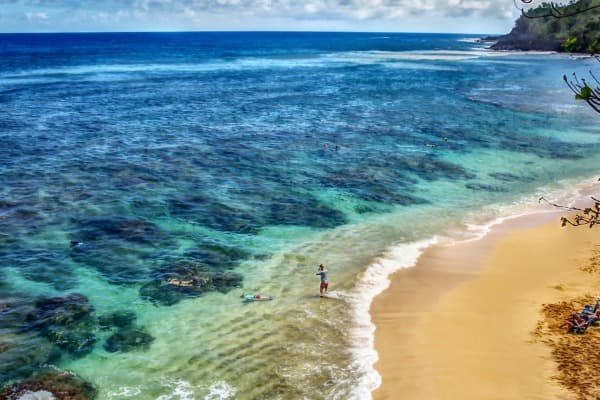
The sheltered lagoon at Ke'e, the broad golden sands of Po'ipū, the wild and windswept expanse of Polihale — Kaua'i's beaches are not simply pretty backdrops. They are dynamic, living environments shaped by trade winds, seasonal swells, and terrain that can shift character from one hour to the next. Understanding what each beach offers, and what it demands, is the difference between a memorable day on the water and a dangerous one.
Ke'e Beach: Beauty at the End of the Road
Tucked at the far northwestern tip of the North Shore, where the highway ends and the Nā Pali Coast begins, Ke'e Beach draws visitors with one of the most photogenic lagoons in the Hawaiian Islands. The reef that defines that lagoon creates relatively calm, shallow water during summer months, making it popular for snorkeling and swimming. But that protection is seasonal, not permanent. Winter swells generated by storms far out in the North Pacific can overwhelm the reef entirely, transforming the lagoon into churning surf with powerful currents that catch even experienced swimmers off guard.
Access to Ke'e requires a parking reservation through the state's permit system during peak periods, a measure put in place to manage the volume of visitors drawn to the trailhead for the Kalalau Trail as much as to the beach itself. Arriving without a reservation during those windows means turning around. Plan ahead, check conditions through the Kaua'i lifeguard services or the National Weather Service Honolulu forecast office before you go, and recognize that the remoteness of the North Shore means emergency response takes time.
Po'ipū: The South Shore's Sun-Drenched Gateway
Po'ipū sits on Kaua'i's South Shore and benefits from a climate that is sunnier and drier than much of the rest of the island. It is one of the most visited stretches of coastline on Kaua'i, offering a range of beach environments within a relatively compact area: protected coves suitable for families with young children, open sandy channels used by bodyboarders and surfers, and rocky points that attract snorkelers searching for green sea turtles and reef fish.
The diversity of Po'ipū's coastline is precisely what makes situational awareness so important there. A calm patch of water thirty yards from a surf break can look deceptively safe. Rip currents form along the channels between reef sections, and while lifeguards are present at Brennecke's Beach adjacent to the main Po'ipū Beach Park, not every section of the shoreline falls within a guarded zone. Reading the water before entering — watching for discolored, choppy, or outward-moving water — is a basic skill that applies everywhere along this coast.
Po'ipū also sits in the shadow of the island's volcanic ridgeline, which means weather can shift quickly even on an otherwise clear day. Visitors focused on sun and sand sometimes overlook how fast a squall can move through, raising surf heights and reducing visibility in the water.
Polihale: The Remote Western Frontier
Polihale State Park occupies the far western end of Kaua'i, where the Nā Pali cliffs finally descend to meet a vast stretch of sand that runs for miles with almost no development in sight. It is one of the longest beaches in Hawai'i, backed by towering sand dunes and framed by the dramatic ridgeline of the Na Pali Coast to the north. The scale of it is genuinely extraordinary.
It is also genuinely remote. The access road into Polihale runs through several miles of unpaved, sometimes deeply rutted dirt track that can become impassable after heavy rain. Four-wheel drive is strongly recommended, and checking road conditions before making the drive out is not optional — it is essential. Cell service at Polihale is limited to nonexistent, which means that if something goes wrong, getting help is not a matter of calling 911 and waiting a few minutes.
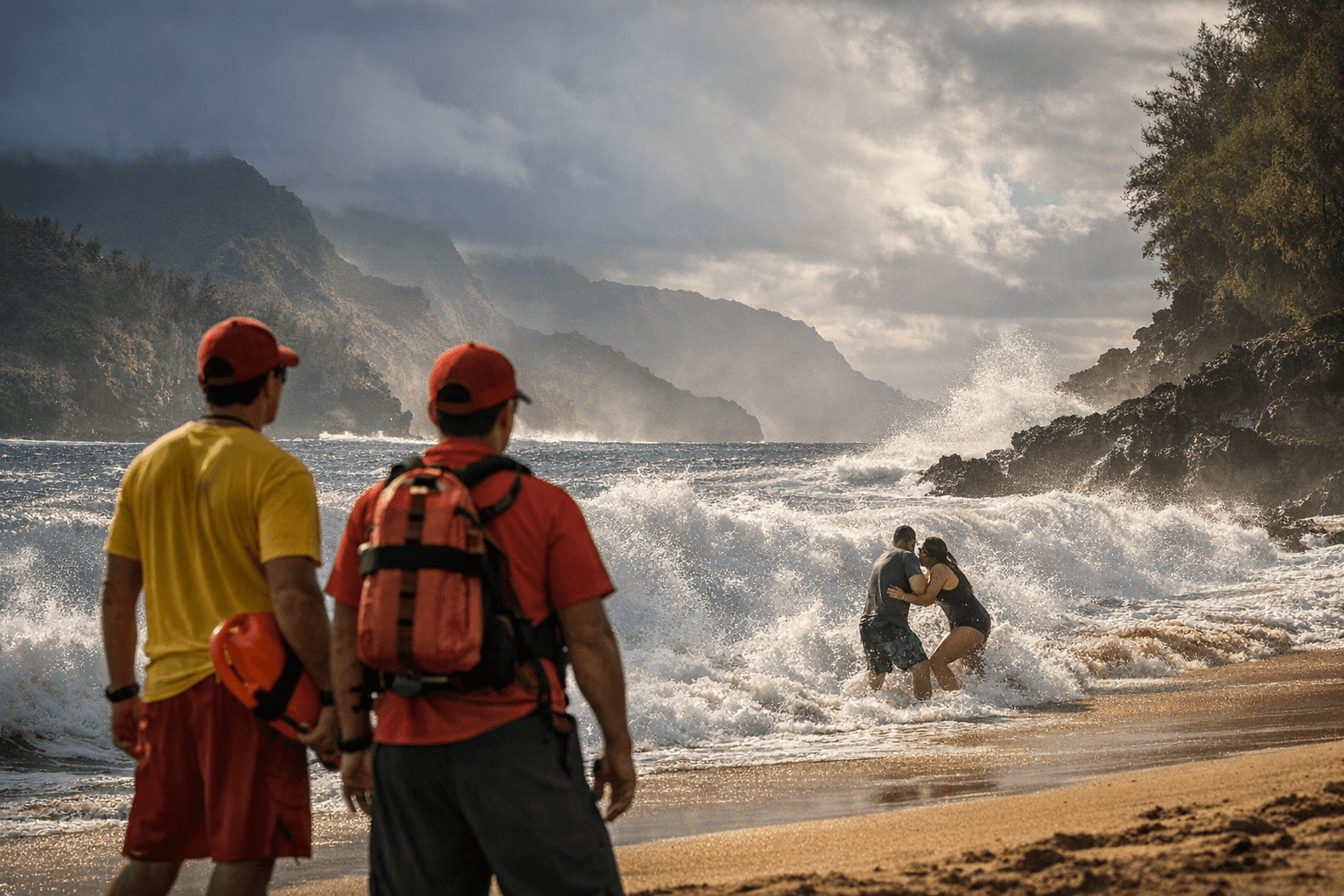
The surf at Polihale is typically not suitable for swimming, particularly in winter. Strong shore break and powerful longshore currents make the water hazardous for most beachgoers. The appeal of Polihale is the experience of the place itself: the scale of the dunes, the silence, the sunsets that paint the Nā Pali cliffs in shades that photographers chase for years. Coming prepared with water, food, sun protection, and a full tank of fuel before turning off the main road is non-negotiable.
Understanding How Quickly Conditions Change
Across all of Kaua'i's beaches, the most consistent safety factor is not any single hazard but the speed at which conditions evolve. Kaua'i sits at the northern edge of the Hawaiian archipelago, making it more exposed to North Pacific swells than the islands to its south. A swell that was two feet at dawn can be six feet by afternoon. Rain falling in the interior mountains reaches the coast quickly through streams and storm drains, sometimes introducing strong freshwater flows at beach access points and raising turbidity in the water.
The island's topography also creates microclimates. The North Shore can be receiving heavy rain while the South Shore remains dry, and weather forecasts that cover "Kaua'i" as a whole sometimes obscure conditions that vary dramatically by location. Checking marine forecasts specific to the coastal zone you plan to visit — available through the National Weather Service and Kaua'i County resources — provides a far more accurate picture than a general island-wide outlook.
Practical Steps Before You Go
Preparation for any Kaua'i beach visit, whether to the calm lagoon at Ke'e on a summer morning or the dunes at Polihale on a clear winter afternoon, comes down to a few consistent principles:
- Check the marine forecast for your specific coastline zone, not just a general weather app reading.
- Identify whether lifeguards are present at your intended beach and where their coverage area ends.
- Know the access requirements: parking reservations, permit systems, and road conditions vary by location.
- Never enter the water without watching conditions from shore for several minutes first.
- Tell someone where you are going and when you expect to return, particularly for remote locations like Polihale.
- Carry more water than you think you need. Kaua'i's sun, humidity, and wind combine to accelerate dehydration faster than most visitors expect.
Kaua'i's beaches reward the people who treat them with genuine respect. The lagoon at Ke'e, the surf channels at Po'ipū, and the immense quiet of Polihale are not amenities in the resort sense of the word. They are places shaped by geological and oceanic forces that predate human presence on the island by millions of years. Approaching them with that understanding, rather than as a backdrop for a photograph or a checkbox on an itinerary, is the starting point for any visit worth having.
Know something we missed? Have a correction or additional information?
Submit a Tip