Kauai County Council Tackles Tax Rules, Park Budgets, and Infrastructure
Kauaʻi County Council meets today on real property tax rules, park capital budgets, and cesspool conversion loans.
The Kauaʻi County Council gathered Wednesday morning with an agenda stretching across some of the island's most pressing administrative concerns, from how vacation rentals and agricultural parcels are taxed to how much capital funding parks will receive in the current budget cycle.
Real property tax rules anchored the public-hearing portion of the session. Tax classification and assessment policies shape everything from what small farmers pay on their land to how short-term rental operators are billed, making any revisions to those rules consequential for a wide cross-section of Kauaʻi property owners.
Capital budget revisions for park parcels also came before the council, signaling potential shifts in how much money is allocated for maintaining or improving recreational land across the island. Parks funding decisions carry downstream effects for facilities at places like Lydgate, Salt Pond, and Waimea Canyon State Park's surrounding county infrastructure, where maintenance backlogs have historically competed with new capital requests.
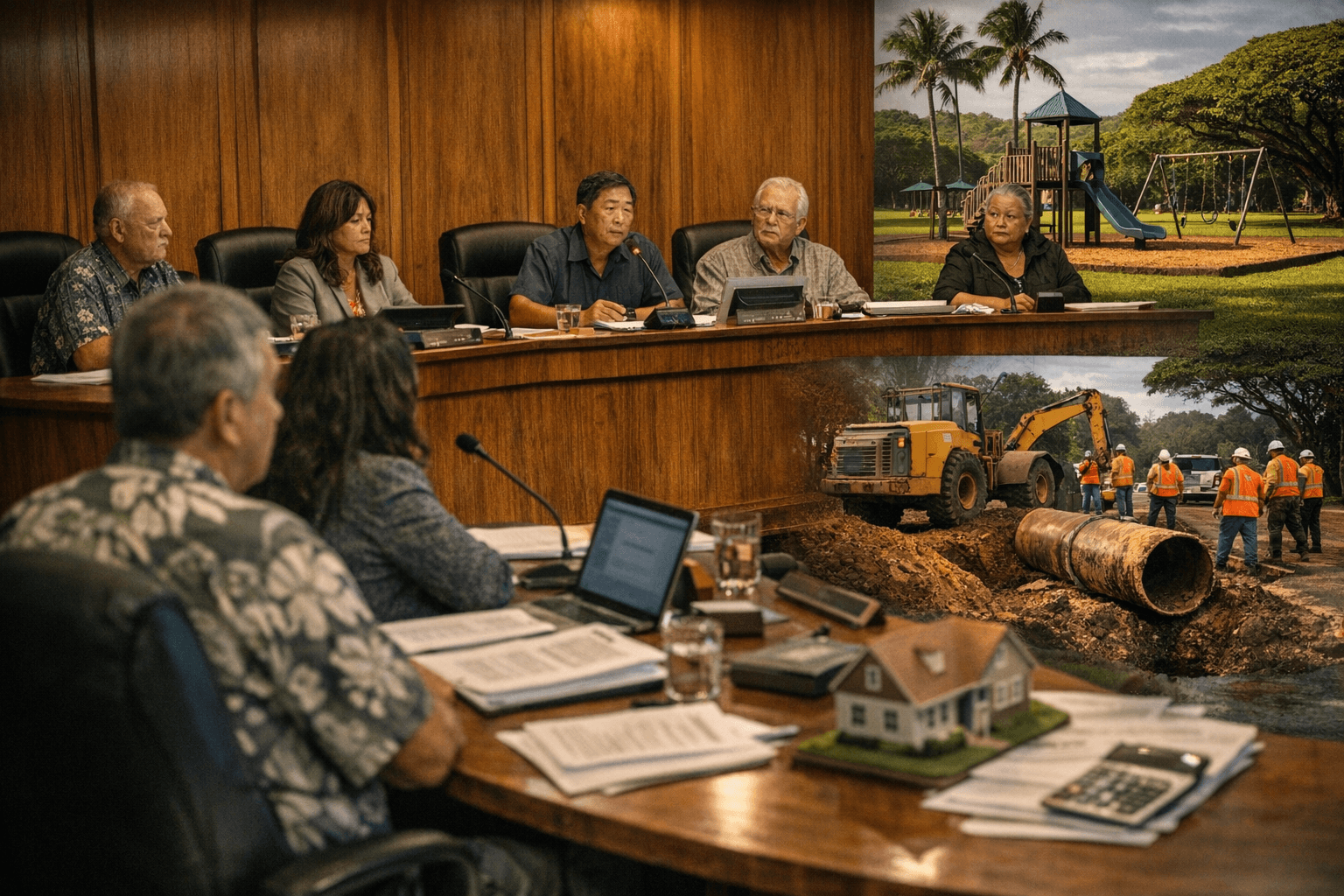
Water infrastructure and cesspool conversion loans rounded out the infrastructure-heavy portion of the docket. Cesspool conversion has become an increasingly urgent issue on Kauaʻi, where aging waste systems pose risks to the same nearshore waters that sustain the island's tourism economy and traditional fishing practices. State mandates have placed pressure on counties to create accessible financing pathways for homeowners facing costly upgrades.
The council also worked through a slate of resolutions and other legislative business during the March 11 session. With capital budgets, tax classifications, and environmental compliance all on the table in a single meeting, Wednesday's proceedings reflected the layered fiscal and regulatory pressures facing Kauaʻi's local government as the island navigates competing demands on limited public resources.
Know something we missed? Have a correction or additional information?
Submit a Tip