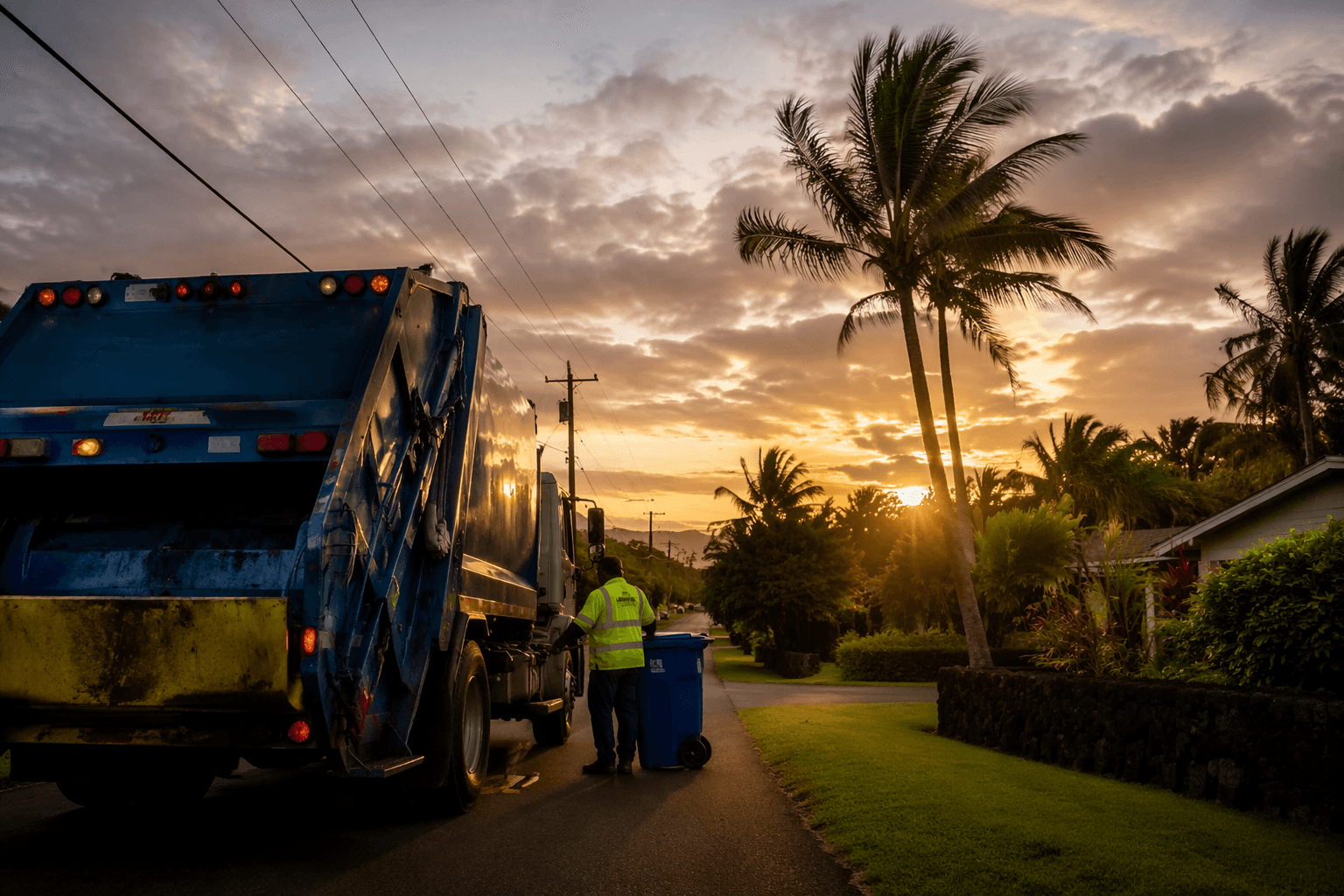
Kauai County Offers Key Resources for Floods, Tsunamis, and Wildfires
Kaua'i County's Emergency Management Agency centralizes flood maps, tsunami evacuation zones, wildfire resources, and damage reporting tools — here's what every island resident needs to know before the next emergency hits.
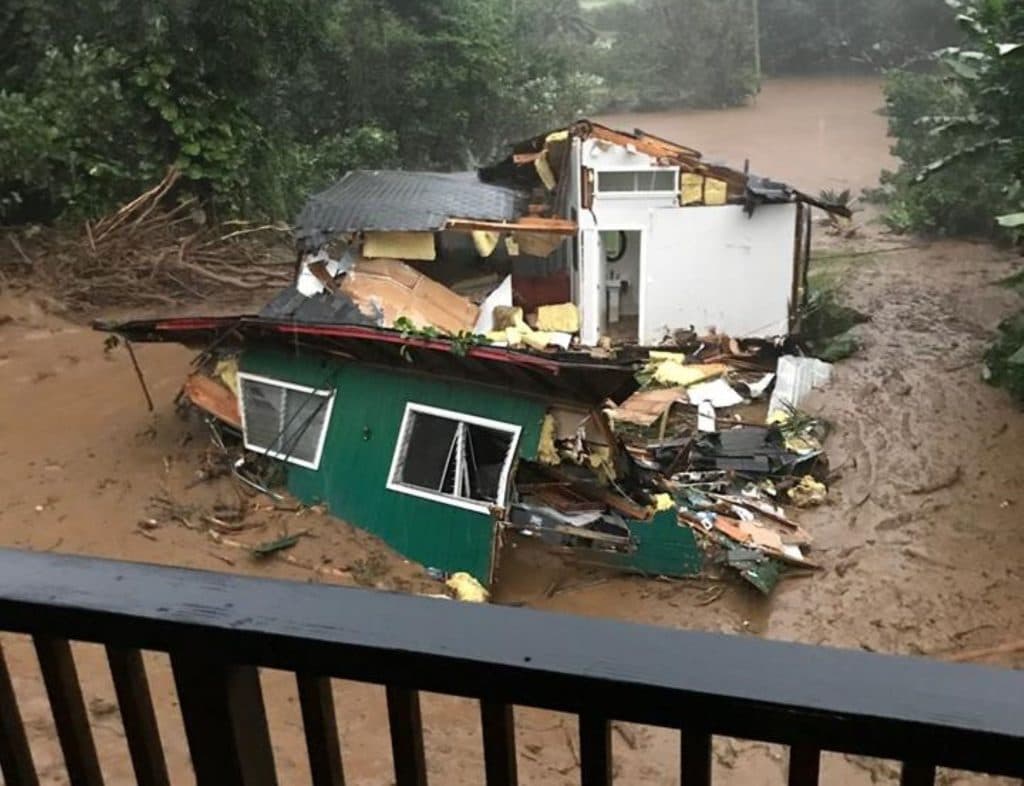
When sirens sounded across Kaua'i's coastline on the afternoon of July 29, 2025, more than 1,800 people flooded into refuge areas across the island after a magnitude 8.8 earthquake off Russia's Kamchatka Peninsula triggered a full tsunami warning. Across all tsunami refuge areas, more than 1,800 individuals sought shelter. Kaua'i Police Department shut down the westbound side going across Hanalei Bridge; however, the eastbound lane remained open for evacuation. That event was a vivid reminder of what Kaua'i residents already know: natural hazards don't give much notice, and knowing where to go and who to call before disaster strikes can make all the difference.
The Kaua'i Emergency Management Agency (KEMA) exists to protect lives and property in the County of Kaua'i by coordinating and integrating efforts among all levels of government and the private sector to mitigate against, prepare for, respond to and recover from natural disasters, acts of terrorism and other threats and hazards. KEMA's official hub at kauai.gov/kema is the single most important bookmark any resident can keep on their phone or computer. Here is a breakdown of what that site offers and how to use it when it matters most.
Flood Preparedness and Floodplain Maps
Kaua'i's geography makes it one of the most flood-prone islands in the state. Kona low storms, heavy overnight rain, and overflowing streams have repeatedly closed major roads, including arteries like Kūhiō Highway on the North Shore. The County of Kaua'i is committed to a long-term strategy for reducing the risks of natural hazards, having experienced a range of climate and hydrological hazards that have resulted in great costs to lives, property, and the community.
For flood mapping, the county's Department of Public Works hosts the State of Hawaii Flood Hazard Assessment Tool (FHAT), a GIS-based application showing floodplain maps island-wide. FHAT is a GIS application showing flood plain maps, accessible through the county's Floodplain Management page, which also links to the FEMA National Flood Insurance Program technical bulletins and Elevation Certificate resources. Residents in or near known flood zones, particularly along rivers like the Hanalei, Wailua, and Waimea, should use FHAT to confirm whether their property sits within a designated flood hazard area and consider enrolling in the National Flood Insurance Program accordingly.
During active weather events, Kaua'i Emergency Management urges the public to remain vigilant and monitor the National Weather Service Honolulu office at weather.gov/hawaii. For weather updates, call the National Weather Service automated weather line at 808-245-6001.
Tsunami Evacuation Zones and What to Do
Kaua'i's exposure to transoceanic tsunami threats is well documented. April was designated Tsunami Awareness Month to remember the April 1, 1946, tsunami triggered by a powerful earthquake off the Aleutian Islands of Alaska, which reached the Hawaiian Islands in just 4.5 hours, claiming 159 lives — in Hilo alone, 96 people died.
Maps of tsunami evacuation zones and preparedness information can be found on the county website at kauai.gov/kema. The county also maintains a dedicated tsunami evacuation zone map through its open data GIS portal. The map displays both standard and extreme tsunami evacuation zones for the island of Kaua'i.
Knowing your zone before a warning is issued is critical. KEMA Administrator Elton Ushio has stressed: "A tsunami can happen at any time, with little warning. As such, staying informed and taking appropriate actions are critical to your safety. Everyone should know if they're in a tsunami evacuation zone, whether working, out and about, or at home. Review Kaua'i's tsunami evacuation zones and have a plan should an evacuation be necessary."
A very large magnitude 9+ earthquake may cause an extreme tsunami, and there may only be 4.5 hours to evacuate before the first wave arrives. If you feel a strong earthquake while near the coast, move out of the tsunami evacuation zone once the shaking stops — do not wait for a tsunami warning to be issued. Calmly walk or bike quickly to a safe zone; do not drive your vehicle.
After a warning is lifted, stay out of tsunami evacuation zones until an "all-clear" is issued by local emergency officials. Obey local emergency and law enforcement authorities. Do not return to tsunami evacuation zones until local authorities say it is safe.
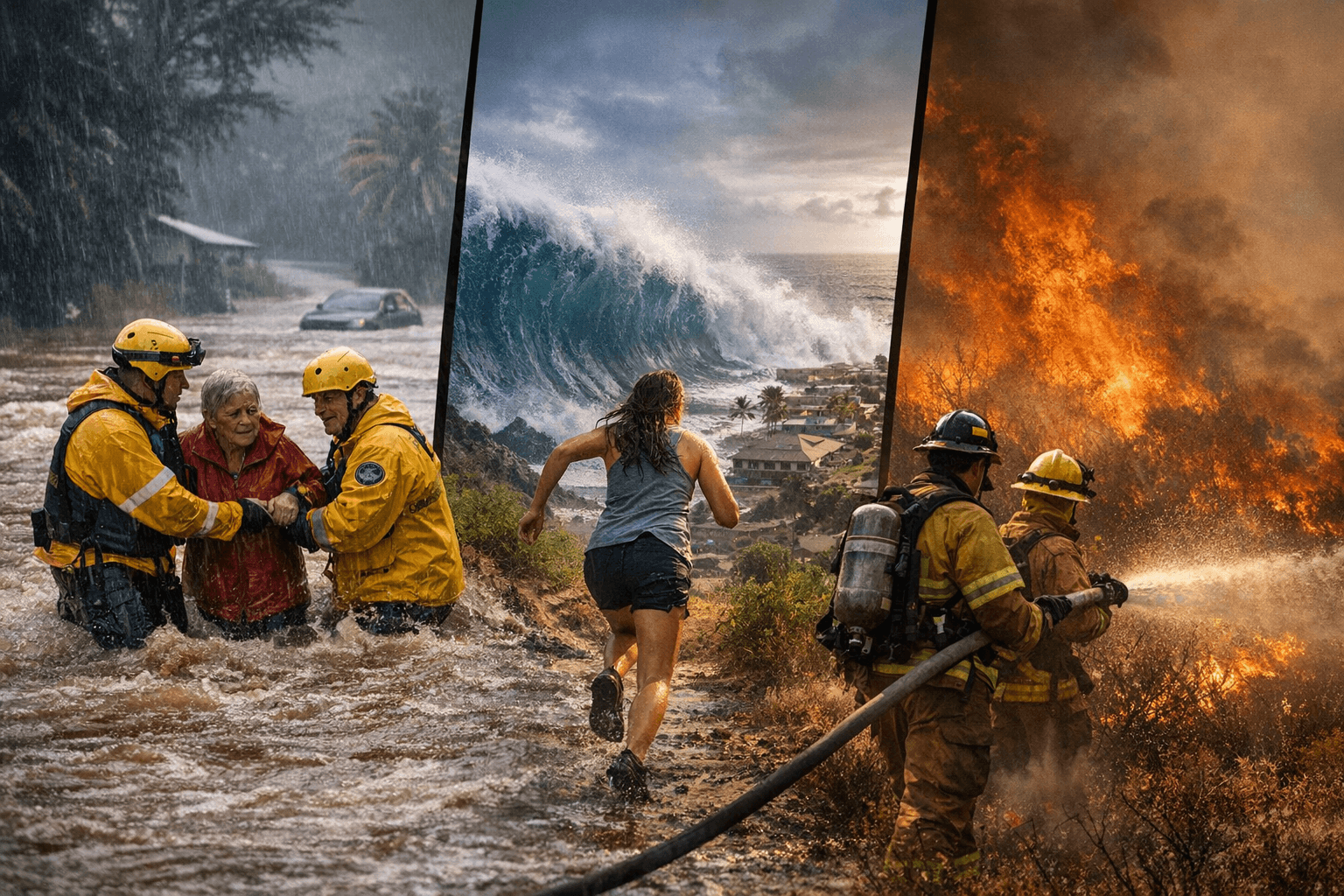
During the July 2025 tsunami warning, KEMA opened refuge areas for evacuees at Kapa'a High School, Kapa'a Middle School, Ele'ele Elementary School, and Kōloa Library, all of which provided parking and restroom facilities. If bringing a pet, bring a kennel, food, and water for the animal.
Wildfire Resources
Wildfire risk on Kaua'i has grown in recent years, driven by dry conditions in leeward areas, grassy fuel loads, and shifting weather patterns. The leeward sides of the Hawaiian islands tend to be drier and see less rainfall, making them especially susceptible to wildfires as well as floods and landslides during storm events. Details regarding past wildfire events in Kaua'i County are documented by the Kaua'i Fire Department, which coordinates with KEMA on both prevention and response.
The county's emergency preparedness page at kauai.gov/kema provides wildfire preparation resources, and residents in high-risk areas, particularly in leeward communities like Kekaha and Waimea, should review their evacuation routes in advance. The Hawai'i Emergency Management Agency's flash flood and wildfire preparedness pages offer downloadable action plans as well. In the event of an emergency, stay tuned to a local radio or TV station for official weather and civil defense instructions, secure your home, lock doors and windows, and know where to locate electrical, water, and gas service sources if advised to do so.
Emergency Alerts: Sign Up for WENS
The single most actionable step any Kaua'i resident can take right now is enrolling in the county's mass notification system. County officials implemented the Wireless Emergency Notification System (WENS), a mass notification service from Inspiron Logistics, which allows county officials to create and rapidly disseminate voice messages regarding emergencies.
To sign up for WENS, go to the county's website at kauai.gov/kema and click on "WENS." You may also call the Kaua'i Emergency Management Agency at 808-241-1800. WENS alerts cover floods, tsunamis, wildfires, and other hazards, and notifications are sent directly to registered phone numbers, including both landlines and mobile devices.
For additional statewide information, call 2-1-1 from anywhere in Hawaiʻi to get resources near you, including food, clothing, supplies, transportation, and power charging during a disaster. The Pacific Tsunami Warning Center can be monitored in real time at tsunami.gov, and the National Weather Service Honolulu page covers all active watches and warnings affecting Kaua'i.
Reporting Damage After a Disaster
Damage reports from individual households help KEMA and its state and federal partners accurately assess the scope of a disaster, which in turn determines eligibility for recovery assistance. Residents should document property damage with photographs as soon as it is safe to do so, then report through the county's official channels at kauai.gov/kema or by calling KEMA directly. Accurate and timely reporting from across the island allows officials to activate appropriate resources, from county repair crews to FEMA disaster declarations.
The Kaua'i Emergency Management Agency strives to actively promote and enhance whole-community preparedness, resilience and safety in the face of numerous threats, hazards and disasters that can potentially affect island communities. The resources outlined here are not just bureaucratic links; they are the infrastructure that stands between a manageable emergency and a catastrophic one. Knowing them now, before the sirens sound, is the most effective preparation any resident of the Garden Isle can make.
This article was produced by Prism’s automated news system from verified source data, official records, and press releases, then run through automated quality and moderation checks before publishing. The system is built and supervised by the people who set the standards it runs under. Read our full AI policy.
Did this article answer your question?