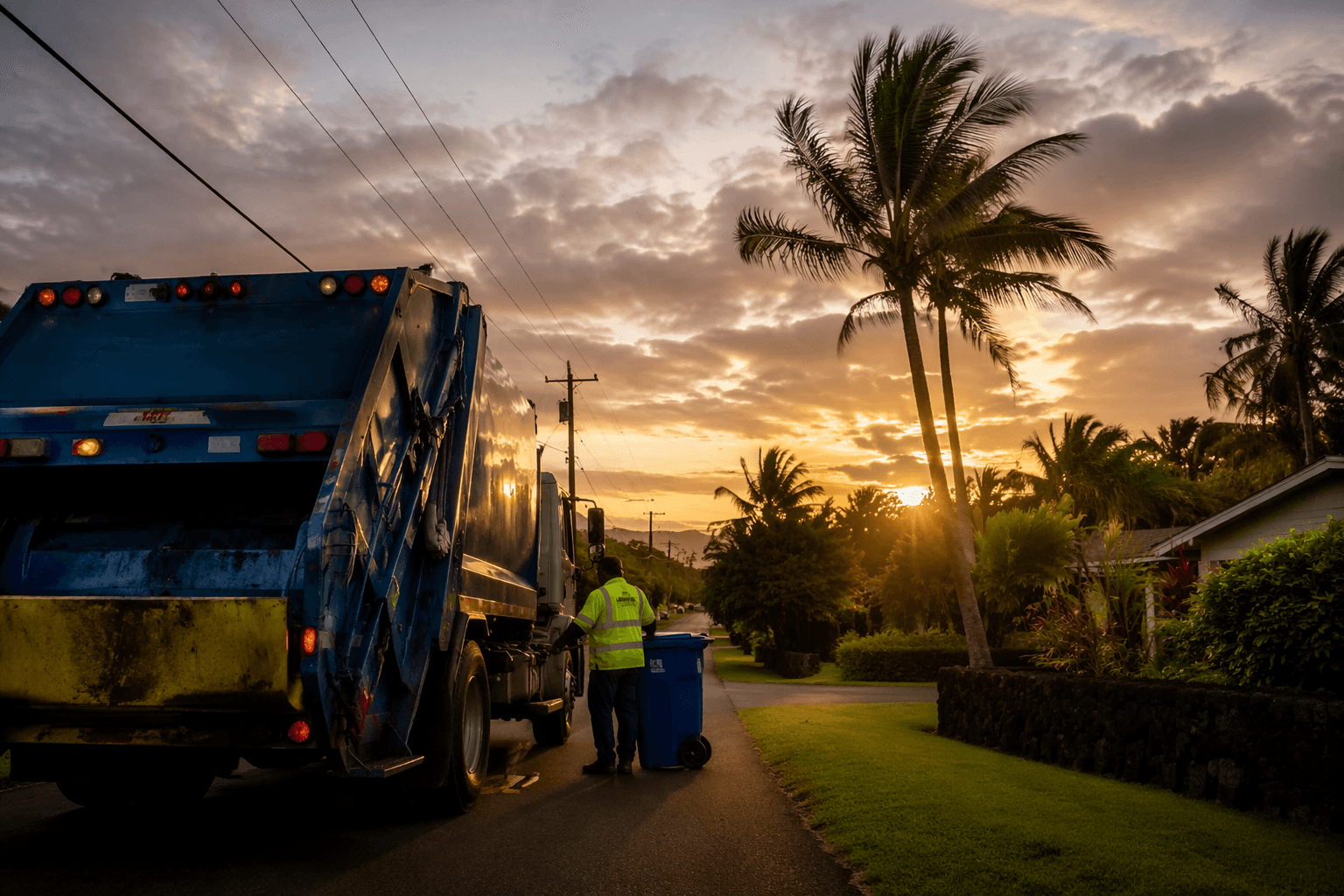
Kauai County outlines trash pickup, transfer stations and recycling sites
Kauai County’s waste system hinges on knowing the right place for each item. Miss the cart rules or site limits, and residents end up driving trash to a transfer station or landfill.
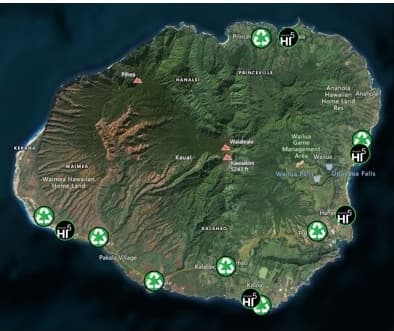
On Kauai, getting rid of a sofa, a bag of bottles or a load of green waste is less about convenience than knowing which county site wants it. The Solid Waste Division runs the island’s pickup, transfer stations, landfill, recycling programs and the Kauai Resource Center as one system, and each piece has its own hours, limits and sorting rules.
That matters across the island, from Līhue and Kapaa to Hanapēpē, Kekaha, Hanalei and Kōloa. For households trying to stay on top of trash day and avoid extra fuel, the county’s public rules are the difference between a clean set-out and an unnecessary trip across town.
What goes at the curb
The county’s refuse pickup lookup is organized by street name, so the first step is to confirm the correct collection day before rolling carts out. In cul-de-sacs, carts must be spaced 3 feet apart, which gives collection crews room to work and helps avoid missed service.
If a cart is tagged for a violation, the waste does not stay in the pickup cycle. The county says it has to be taken to the nearest transfer station or landfill, turning a simple curbside mistake into another stop and another haul.
The Solid Waste Division also serves as the county’s main public hub for closures, service status and recycling updates. When service changes or a site is unavailable, that is the place residents are meant to check before they load up the car or drag carts back to the curb.
Where trash, green waste and bulky items go
Kauai’s refuse transfer stations operate from 7:15 a.m. to 3:15 p.m., seven days a week except County holidays. Hanalei has separate green-waste hours, set from 8:00 a.m. to 3:00 p.m., which makes that site one of the few places on the island where the operating window is different for a specific material stream.
The county also identifies disposal points in Hanapēpē and Kekaha, which gives West and South Shore residents more than one place to bring material that cannot stay in the cart system. For bulky items, the rule is tighter: mattresses and furniture larger than 3 feet are accepted only at the Līhue Refuse Transfer Station or the Kekaha Landfill.
That limit is important for anyone clearing out a home, replacing furniture or handling a move-out. A couch or mattress does not belong at just any site, and the county’s own rules concentrate those bigger loads at only two places.
The Kekaha Landfill adds one more practical line between household and commercial disposal. Residents can use it without charge, while commercial loads require a tipping-fee account, a distinction that matters for contractors, landlords and businesses that are moving larger volumes.
Recycling, HI5 redemption and the Kauai Resource Center
The recycling side of the system starts with the county’s residential drop-off program, Kauai Recycles. Its FAQ points residents to disposal guidance for appliances, propane tanks, batteries, tires, scrap metal, old electronics, used motor oil, home composting and household hazardous waste, which makes it the county’s catchall reference for items that do not fit ordinary trash pickup.
In Līhue, the Kauai Resource Center at 3460 Ahukini Road near the airport handles HI5 beverage-container redemption through Reynold’s Recycling. The same site also runs a buy-back program for non-ferrous scrap metal, including aluminum, brass, copper and stainless steel.
The county’s HI5 guidance also sets one of the clearest contamination rules in the system: bottle caps are not accepted for redemption and should not be dropped into Kauai Recycles green bins either. That is a small item with a big effect, because a cap that goes in the wrong stream can spoil a load or send a resident back to the sorting table.
What households can do differently
The county’s rules make the best household strategy simple: check the pickup day, sort before the cart goes out, and know which material belongs at which site. That means separating bulky waste from curbside trash, reserving the right trip for mattresses and furniture over 3 feet, and planning for the shorter Hanalei green-waste window if that is the nearest disposal point.
It also means using the county’s recycling system as more than a place to drop mixed material. Residents who keep track of the Kauai Recycles program, the HI5 rules and the Resource Center’s scrap-metal buy-back can move more material out of the landfill stream and avoid repeated trips for the same load.
The county even offers a free composting bin through the Recycling Office, another way to keep organic material out of the trash cart. For households trying to cut waste and save time, that is one of the few direct tools the county hands out at no cost.
What still needs to be easier
The public system works, but it is built around multiple sites, different hours and separate rules for different materials. Bulky items go to only two locations, Hanalei green waste has its own schedule, HI5 redemption lives at one Līhue site and bottle caps are barred from both redemption and green bins.
That structure puts the burden on households to know the system before they step outside with a cart or load the truck. Until the county makes those rules even easier to navigate, Kauai residents will keep doing the county’s sorting work for it, one pickup day, transfer station stop and redemption run at a time.
This article was produced by Prism’s automated news system from verified source data, official records, and press releases, then run through automated quality and moderation checks before publishing. The system is built and supervised by the people who set the standards it runs under. Read our full AI policy.
Did this article answer your question?