Kaua‘i County shares 2026 economic outlook to guide planning
Kaua‘i’s outlook points to slower visitor spending, flat jobs and stubborn housing pressure, with the biggest stakes showing up in rents, hiring and small-business cash flow.

A forecast with household consequences
The County of Kaua‘i is steering residents, employers and community groups to UHERO’s 2026 Kaua‘i Economic Outlook Summary, a county-backed snapshot of where jobs, tourism, housing and spending are headed. For households, the practical takeaway is simple: when Kaua‘i’s economy cools, the first signs usually show up in paychecks, rent checks and the availability of local services.

Residents can review the outlook through the county’s economic statistics and forecasting resources, which the Office of Economic Development uses to organize UHERO’s indicator-based work. That makes the summary more than a planning document. It becomes a shared reference point for the choices that affect wages, construction, public investment and the cost of living across the island.
The numbers behind the island economy
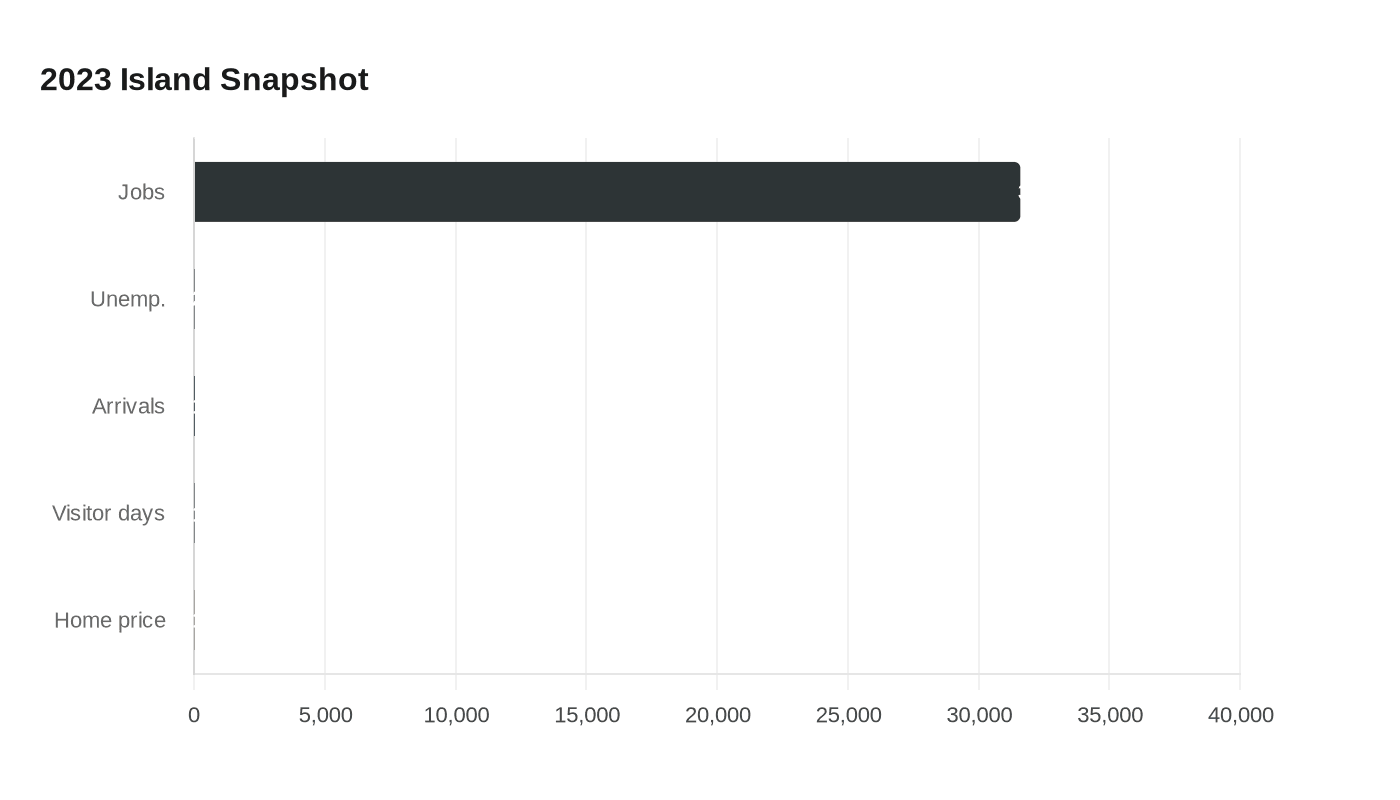
UHERO’s Kaua‘i Economic Dashboard shows just how tight and interconnected the island economy is. In 2023, Kaua‘i had 31,600 nonfarm payroll jobs, an unemployment rate of 2.75 percent, 1.417 million visitor arrivals and 10.544 million visitor days. At the same time, the median resale price for a single-family home reached $1.212 million.
Those figures explain why a forecast can matter so much to ordinary households. Kaua‘i can post a relatively low unemployment rate and still leave many families struggling to find housing they can afford. A small island economy can look stable on the surface while still carrying serious pressure underneath, especially when jobs, rents and visitor demand all move together.
What a weaker visitor outlook means in plain English
The sharpest warning in UHERO’s 2025 Kaua‘i Economic Outlook Summary was that the island’s outlook had weakened. The forecast called for no job growth in 2025 and a modest decline in 2026, while total arrivals were expected to fall 3.5 percent over 2025 to 2026. UHERO also projected visitor spending would drop by $1.6 billion.
That $1.6 billion figure is the number most residents should notice. On an island where hotels, restaurants, retail stores, transportation companies and contractors all depend on steady visitor traffic, a decline that large can ripple into shorter hours, slower hiring and tighter margins for local businesses. When visitors spend less, the effects do not stop at the resort corridor. They can reach suppliers, tradespeople and small shops that depend on the tourism economy for a large share of their revenue.
The forecast also tied the slowdown to elevated inflation, high interest rates and policy uncertainty. Those forces matter to households even if they show up first in a macroeconomic report. Higher borrowing costs make it harder for businesses to expand, and inflation keeps pressure on groceries, fuel and everyday services. If companies see demand weakening at the same time, they tend to delay hiring and hold back on wage growth.
Housing remains the hardest problem
Kaua‘i’s housing problem is one of the clearest reasons residents should care about the outlook. UHERO said construction employment was around 2,100 jobs in the 2025 summary, but residential construction remained constrained by high costs and permitting challenges. That means the island is not building housing fast enough to catch up with demand, and the gap keeps feeding high prices.
The 2023 dashboard helps show the scale of the squeeze. A median single-family resale price of $1.212 million puts ownership out of reach for many working families, even those who are employed full-time. UHERO also said in 2023 that residential permits had been extremely low for years and that supply shortages were contributing to housing affordability problems. In other words, the island’s housing shortage did not appear overnight, and it will not disappear quickly.
For renters, that means a weak or mixed forecast does not automatically translate into lower housing costs. Tight supply can keep rents elevated even when the broader economy softens. For would-be buyers, it means the gap between wages and home prices can remain wide long after the headlines move on to other parts of the economy.
Why the county is keeping the outlook public
The county says UHERO’s forecast work relies on economic indicators and is part of Kaua‘i’s broader economic statistics and forecasting resources. That matters because county leaders need a common factual base when they talk about infrastructure, workforce needs and how to preserve quality of life while still keeping the island competitive.
This is also part of a longer effort. UHERO said in 2023 that its Kaua‘i county-focused outlook was the first since 2019, after the project was relaunched publicly. The earlier effort was intended to help local members, business leaders and partners understand key sectors, emerging trends and potential challenges in the county’s business environment. The 2026 outlook continues that role by giving Kaua‘i another checkpoint for what comes next.
What it means for planning on Kaua‘i
The economic forecast matters because it feeds into the same questions that shape daily life across the island: where homes get built, how quickly roads and utilities can keep up, which employers can expand and how much strain the county can absorb without eroding quality of life. The Kaua‘i General Plan is the county’s guiding policy framework for growth, land use and development, so the outlook is not just a spreadsheet exercise. It is part of the backdrop for long-range decisions about the island’s future.
That is why this summary belongs in household conversations, not just government offices. A low unemployment rate does not erase the housing crunch. A busy visitor industry does not guarantee shared prosperity. And when visitor spending, construction capacity and inflation all move in the wrong direction at once, Kaua‘i families feel it in the most ordinary places: rent, groceries, paychecks and the ability of local businesses to keep steady hours.
This article was produced by Prism’s automated news system from verified source data, official records, and press releases, then run through automated quality and moderation checks before publishing. The system is built and supervised by the people who set the standards it runs under. Read our full AI policy.
Did this article answer your question?