Kaua‘i Farmers’ Markets Guide - Weekly Markets, Tips, Sustainability
This guide maps Kaua‘i’s main weekly farmers’ markets, Līhuʻe, Kapaʻa (Coconut Marketplace), Hanapēpē, and Kōloa, and explains what shoppers can expect, how markets support local producers, and practical steps to shop smart. Residents will learn market features, timing and access considerations, money and transport tips, and sustainability and policy implications for supporting Kaua‘i’s food economy.

1. Līhuʻe, weekday and weekend vendor markets, central access, local produce and products
Līhuʻe’s markets are the island’s hub for day-to-day shopping needs, offering staple local produce such as taro and seasonal tropical fruits, niche items like microgreens, plus prepared food stalls and locally made goods (honey, jams, crafts). The markets’ proximity to central services and public transit makes them accessible for residents without cars and convenient for quick grocery runs or lunchtime purchases. For households prioritizing local staples, Līhuʻe markets are often where predictable weekly supply is available, especially on weekdays when vendor lists tend to be steadier than weekend pop-ups.
2. Kapaʻa (Coconut Marketplace and regular markets), family-friendly, mixed shopping and entertainment
Kapaʻa’s Coconut Marketplace markets are popular with families and visitors, combining prepared lunch options, bakery items, and artisan goods alongside occasional local fish vendors when available. The site’s orientation toward mixed shopping and entertainment makes it a good choice for weekend outings: shoppers can expect food trucks or prepared meals suitable for on-site dining, plus crafts and baked goods that appeal to tourists and locals alike. For local producers, Kapaʻa provides visibility to a broader audience, which can boost small-business sales during tourist seasons while also supporting regular customer relationships among residents.
3. Hanapēpē, West Kaua‘i farmers, artisan crafts, live music, community focus
Hanapēpē’s Friday or weekend market days showcase West Kaua‘i farmers and artisan makers, often accompanied by live music and a convivial, community-oriented atmosphere. This market is a primary place to find Westside specialties, small-grower produce and handcrafted goods that might not appear at larger central markets. Supporting Hanapēpē helps keep agricultural income in West Kaua‘i, strengthening rural livelihoods and preserving local food diversity that contributes to island resilience.
4. Kōloa, holiday and tourist-season events, visitor-focused crafts, local coffee and cacao
Kōloa markets are frequently scheduled around holidays and the tourist season, which means they skew toward prepared foods and visitor-friendly crafts while still offering island-grown products like local coffee and cacao when vendors are present. Expect higher foot traffic during peak visitor months, which can raise prices but also provide important revenue spikes for local producers. For residents, attending Kōloa events off-peak can be an opportunity to buy specialty items that are otherwise marketed primarily to tourists.
- Bring reusable bags: Most vendors appreciate reusable bags, this reduces waste and makes carrying multiple items easier.
- Carry some cash: While many vendors now accept cards, low-dollar purchases (snacks, single produce items) are frequently cash-only; small bills simplify transactions and help vendors avoid card-processing fees.
- Arrive early for best selection: Highly seasonal items (taro, certain tropical fruits) sell out quickly; early arrival typically yields the best variety and quality.
- Check online for cancellations: Weather and vendor availability can change markets last-minute, check Kaua‘i County pages or vendor social media for updates before leaving.
- Mind baggage when flying: If you plan to bring perishables home, check airline baggage limits and packaging rules; cooling and secured packing help prevent spoilage and preserve quality.
5. Practical shopping tips, cash, timing, bags, and transport
6. Safety, food handling, and sustainability practices
Follow basic food-safety and sustainability steps to protect your purchases and the island environment. Use compostable or reusable packaging when possible, ask vendors about chilled storage or ice packs for high-risk perishables, and keep produce chilled on long trips across the island. Prioritizing in-season local products reduces food miles and supports ecological sustainability, buying what’s in season also helps stabilize farmer incomes by aligning consumer demand with harvest cycles.
7. Economic context and market implications for Kaua‘i
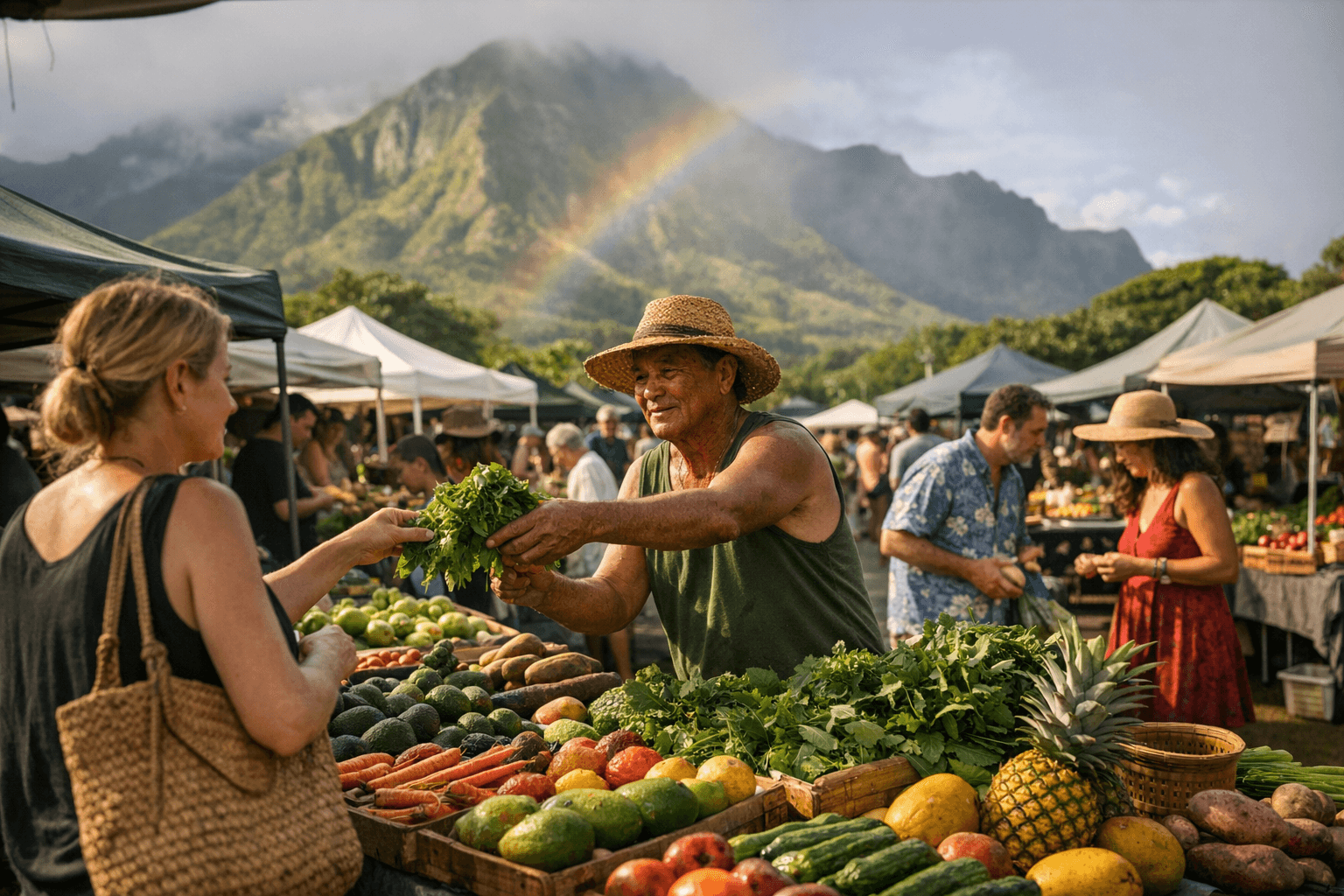
Farmers’ markets perform multiple economic functions: they generate direct farm revenue, provide retail opportunities for artisans, and circulate dollars locally, often more quickly than sales to outside distributors. In a state that imports a large share of its food (Hawai‘i historically relies on roughly 85–90% of food coming from off-island sources), strengthening local markets contributes to food security and economic resilience. For vendors, markets help reach tourists and residents, smoothing revenue variability tied to seasonality; for residents, markets are a place to capture fresher produce and keep food-dollars local.
8. Policy considerations and long-term trends to watch
Local policy choices shape the viability of markets and small farms. Investments that can improve market outcomes include expanded access to point-of-sale technology (to accept cards with lower fees), refrigerated infrastructure or shared cold-storage, streamlined permitting for pop-up markets, and support for composting and waste management at market sites. Long-term pressures, climate volatility, labor shortages, and changing tourist patterns, mean policies should focus on resilience: diversifying market sites across the island, supporting small-farm aggregation for broader distribution, and promoting year-round local demand through outreach and institutional buying (schools, hospitals).
9. Staying informed, contacts and next steps for shoppers and vendors
To confirm current schedules, vendor lists, or last-minute changes, contact individual market organizers directly and check Kaua‘i County pages and vendor social media channels. For broader questions about vendor support, permit rules, or economic development programs that affect market operations, reach out to the Kaua‘i Office of Economic Development. Staying connected helps residents plan visits, supports vendor viability, and ensures markets remain a reliable pillar of Kaua‘i’s local food economy.
Closing note: Farmers’ markets on Kaua‘i are practical places to buy fresh, locally made goods and to invest in the island’s economic and environmental resilience. With simple planning, early arrival, some cash, reusable bags, and attention to packaging, you can make market visits both enjoyable and impactful for the community.
Know something we missed? Have a correction or additional information?
Submit a Tip