Kauai Firefighters Airlift Injured New York Hiker From Kalalau Trail
Two Kalalau Trail airlifts in two days this spring break week — one wrist, one ankle — add to Kauai's 71 rescues logged there in 2025, costing more than $250K in helicopter time.
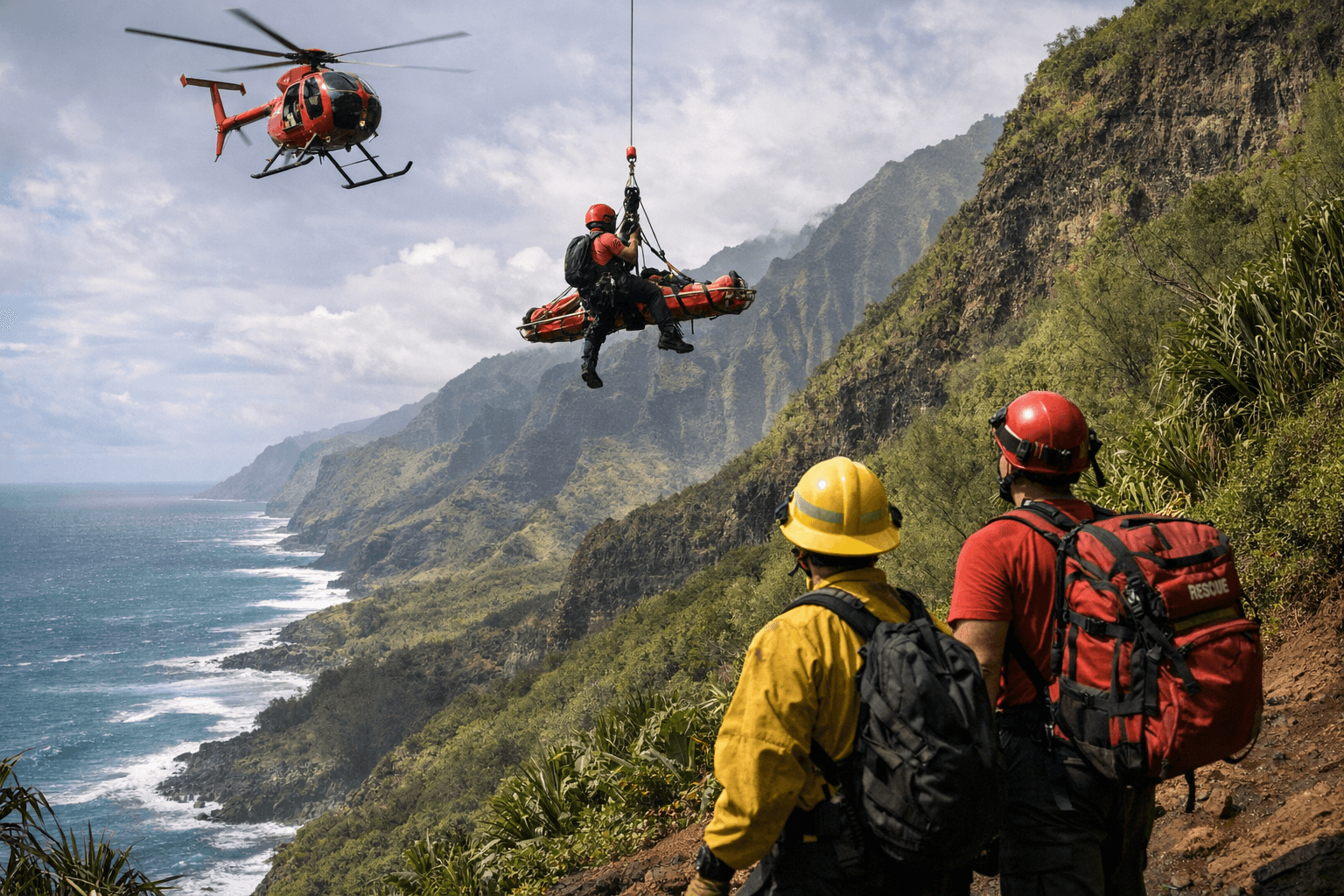
Kauai's sole rescue helicopter made back-to-back runs into the Nā Pali Coast last week, pulling a 63-year-old New York woman off Kalalau Trail on Friday just one day after airlifting a 46-year-old California man from the same corridor. The repeat calls, both during spring break, are pushing a harder question: at what point do visitor habits outpace the island's capacity to absorb them?
Rescue 3 aboard Air 1 launched shortly after 3:40 p.m. Friday, April 3, reaching the Hanakāpī'ai Beach landing zone where the New York hiker was found with an apparent wrist injury. Paramedics assessed her on-scene before loading her for the flight to Princeville Airport, where American Medical Response crews were waiting. She was transferred to AMR ground transport and taken to a local hospital. Kauai County confirmed the scene cleared shortly before 5:20 p.m.
Twenty-four hours earlier, the same Air 1 crew had responded to the Hanakāpī'ai Falls landing zone for a 46-year-old male from California suffering an apparent ankle injury. That rescue was called in shortly before 12:30 p.m. Thursday. Two separate visitors. Two separate injury types. One helicopter, twice in one week.
The pattern is not new. By December 2025, the Kalalau Trail had logged 71 rescues for the year, with Air 1 helicopter operating costs on track to exceed $250,000. KFD has been direct about what that volume means for the rest of the island. "When Air 1 is used for situations that do not involve a medical emergency or imminent danger, it can delay our response to life-threatening incidents elsewhere on the island," fire officials warned in January 2026 after pulling a 51-year-old German visitor and a child from the trail.
What makes the spring break week cases notable is what was happening in the information ecosystem at the same time: according to Beat of Hawaii, Google's AI tool was advising hikers in their 60s that the trail was "absolutely doable" during the same period that two people in that age range required airlifts.
The 11-mile one-way route has no roads. Rescue access is by helicopter only from much of the trail, and from some points, by boat. DLNR limits overnight permits to 60 hikers per night, and hikers must now hold a permit to pass Hanakāpī'ai Valley. Whether those measures are sufficient given the frequency of spring rescues is a question neither KFD nor DLNR has yet answered publicly: no new gear mandates, mandatory safety briefings, or stricter turn-around enforcement have been announced heading into what is historically the trail's busiest stretch of the year.
This article was produced by Prism’s automated news system from verified source data, official records, and press releases, then run through automated quality and moderation checks before publishing. The system is built and supervised by the people who set the standards it runs under. Read our full AI policy.
Did this article answer your question?