Kaua‘i First in Hawai‘i to Embed Wildfire Safety Standards Into Zoning
Mayor Derek S.K. Kawakami signed Bill 2961 into law, making Kaua‘i the first Hawaiian county to incorporate wildland-urban interface (WUI) wildfire-safety standards directly into zoning and permitting for plantation-camp districts. The measure establishes home‑hardening, noncombustible perimeters, and staged defensible-space requirements alongside an education‑first enforcement approach and partnerships to support implementation.
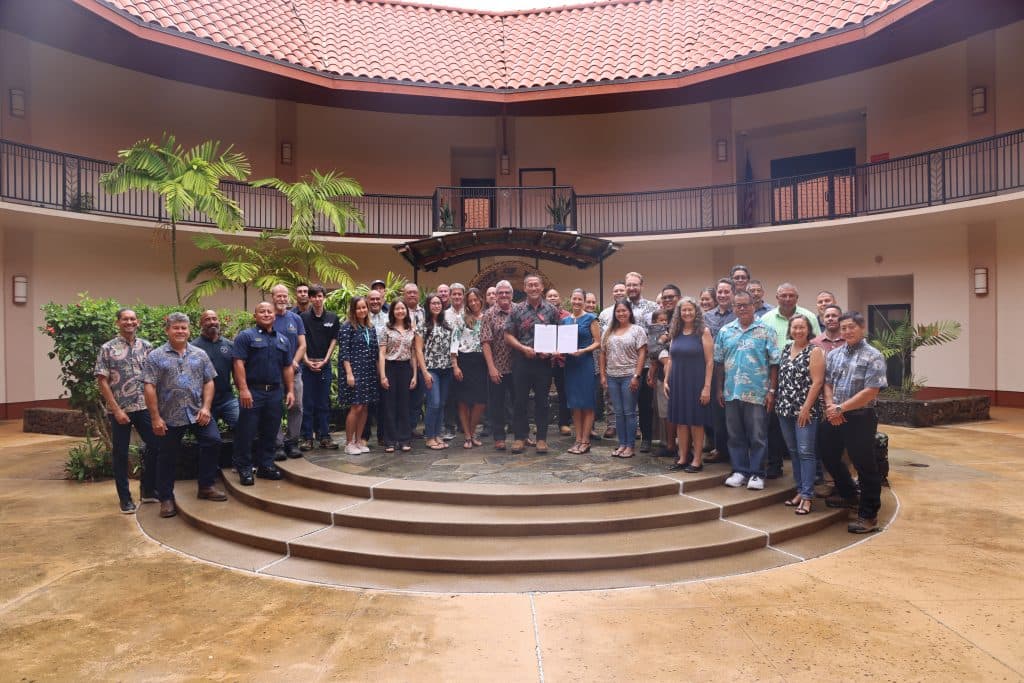
Mayor Derek S.K. Kawakami on Tuesday enacted Bill 2961, a landmark ordinance that integrates WUI wildfire‑safety standards into Kaua‘i County zoning and permitting for plantation‑camp districts. The law positions Kaua‘i as the first jurisdiction in Hawai‘i to adopt these standards into land‑use rules, aiming to reduce ember intrusion and strengthen community resilience against wildfire risk.
Under the new ordinance, affected properties will be required to adopt specific hardening and vegetation‑management measures. Home‑hardening provisions are intended to reduce ember intrusion into structures. A five‑foot noncombustible perimeter around buildings is mandated, and a defensible space zone extending up to 30 feet is established to limit combustible materials near homes. Additionally, maintenance of low vegetation is required out to 100 feet from structures. County officials have emphasized that the ordinance pairs these requirements with an education‑first enforcement model to help residents understand and implement the changes.
Bill 2961 links zoning and permitting processes directly to these safety standards in plantation‑camp districts, a distinctive land‑use category on Kaua‘i that reflects the island’s plantation era housing and community patterns. By embedding standards in zoning, the county aims to ensure wildfire resilience is considered early in permitting and development decisions rather than added retroactively.
Implementation will be supported through partnerships with HWMO and Headwaters Economics. These collaborations are intended to provide technical assistance, research support, and outreach resources to help the county and residents transition to the new requirements. The county characterizes the approach as cooperative and educational, indicating that enforcement will prioritize community education and compliance support before punitive measures.
For residents of plantation‑camp districts, the ordinance will affect routine permitting and maintenance practices and could influence home improvement and rebuilding decisions. The measures are designed to reduce the likelihood of structure ignition from embers and to slow fire spread near homes, outcomes that carry implications for public safety, property protection, and emergency response priorities on Kaua‘i.
Beyond local impacts, Kaua‘i’s move may serve as a policy model for other Hawaiian counties facing similar wildfire risks at the wildland‑urban interface. Embedding WUI standards into zoning reflects a preventative land‑use strategy that intersects public-safety planning with historic community patterns and housing stock. As the county rolls out education and implementation efforts in partnership with HWMO and Headwaters Economics, residents and property owners in plantation‑camp districts will be central to the success of these resilience measures.
This article was produced by Prism’s automated news system from verified source data, official records, and press releases, then run through automated quality and moderation checks before publishing. The system is built and supervised by the people who set the standards it runs under. Read our full AI policy.
Did this article answer your question?