Kauai initiative seeks survey input to grow local alfalfa hay for livestock
Kauai horse owners and ranchers are being asked to weigh in on a 2-minute survey that could help cut the island’s reliance on imported alfalfa.
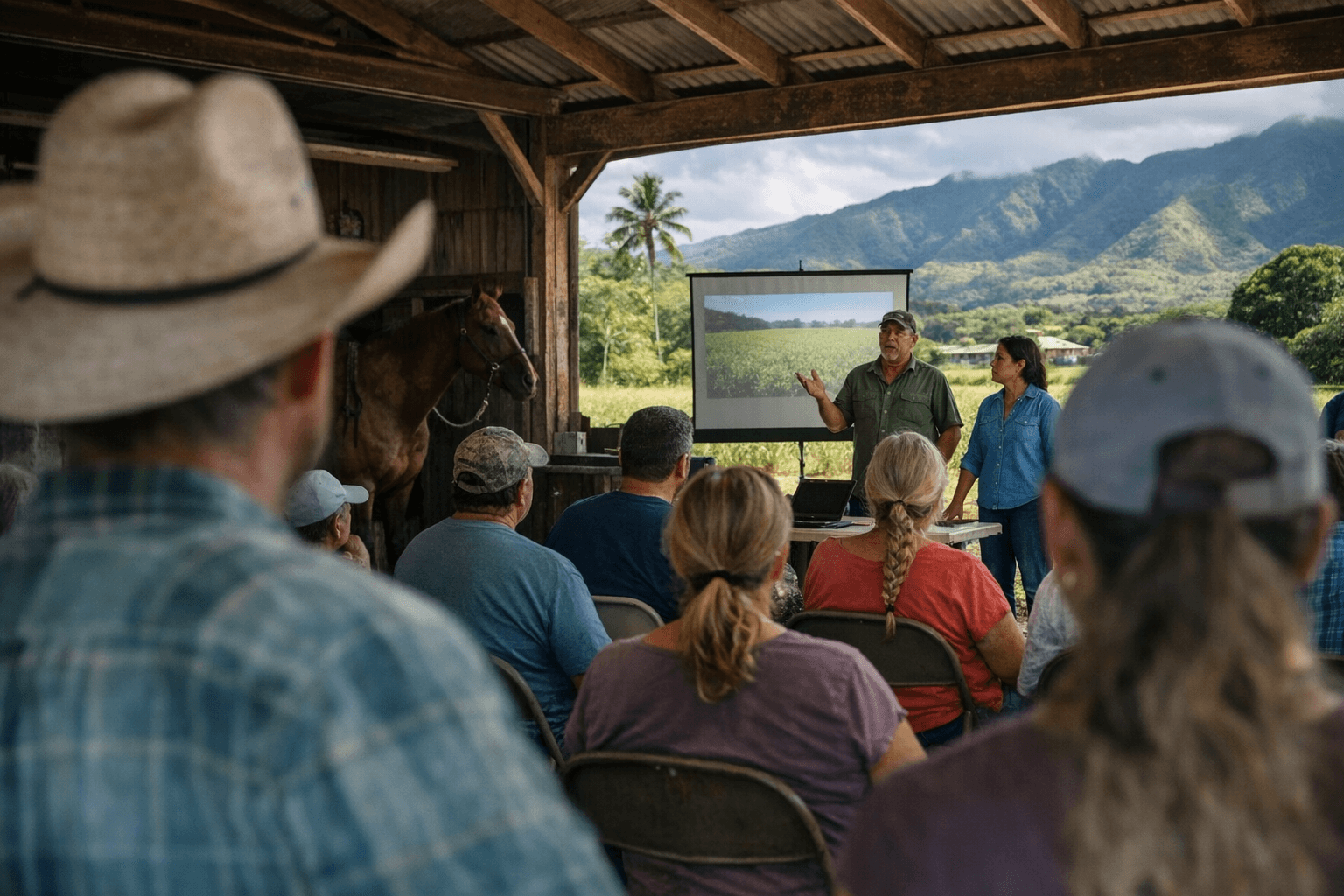
A local push to grow alfalfa on Kauai’s west side is testing a bigger question than one short survey: whether the island can keep more of its livestock-feed spending at home. Kauai Hay & Forage is seeking quick input from horse owners, ranchers and other livestock producers as it works to produce locally grown alfalfa hay for horses, cattle and other animals that now depend heavily on shipped-in feed.
The effort matters because alfalfa is one of the most useful forage crops in Hawaii, and a University of Hawaii College of Tropical Agriculture and Human Resilience publication says a sizable portion of the state’s alfalfa importation could be replaced by locally produced hay, dehydrated meal or green alfalfa forage. CTAHR also notes that alfalfa has been grown in Hawaii since 1895, with renewed interest tied to newer varieties, better weed control and improved harvesting and drying equipment. On Kauai, where forage crops already appear in the island’s agricultural profile, that history makes the crop a practical candidate for expanding local feed production.
The county has signaled the same broader goal in its own agricultural work. Kauai County says its programs are designed to increase agricultural income and opportunities by working closely with farmer groups and agencies, including efforts tied to a range-fed beef program and better logistics for joint on-island cattle finishing. In 2020, the county awarded a $750,000 CARES grant to Hartung Brothers for livestock feed production infrastructure and equipment for cattle finishing, part of an effort to strengthen the local supply chain for cattle and goats. At the time, Hartung Brothers was farming about 50 acres of alfalfa commercially and hoped to reach more than 200 acres by December.
That earlier investment shows how feed production can ripple beyond a single field. If more alfalfa is grown and processed on Kauai, horse owners and livestock operations could face less exposure to shipping costs, mainland supply swings and delays that drive up the price of feed. For producers, the issue is not just whether alfalfa can grow well in West Kauai’s conditions, but whether enough buyers will commit to it for a local market to last.
Kauai also has institutional pieces already in place to support that kind of shift. CTAHR says the island has two agricultural research and extension stations, including the Kauai Research Station, with work focused on forage, crops, seed and livestock-related projects. A 2017 Mālama Kauai survey of more than 100 farmers and ranchers showed the island has used producer surveys before to identify operational problems and shape local agriculture planning. This survey is the first test of whether Kauai’s horse and livestock community sees enough value in local alfalfa to make it a real substitute for imported feed.
This article was produced by Prism’s automated news system from verified source data, official records, and press releases, then run through automated quality and moderation checks before publishing. The system is built and supervised by the people who set the standards it runs under. Read our full AI policy.
Did this article answer your question?