Kauaʻi Leaders Urge Humility, Urgency as 33rd Legislature Opens
Kauaʻi leaders urged humility and swift action as the state legislature opened, highlighting budget uncertainty, housing and wildfire recovery that affect local services and families.
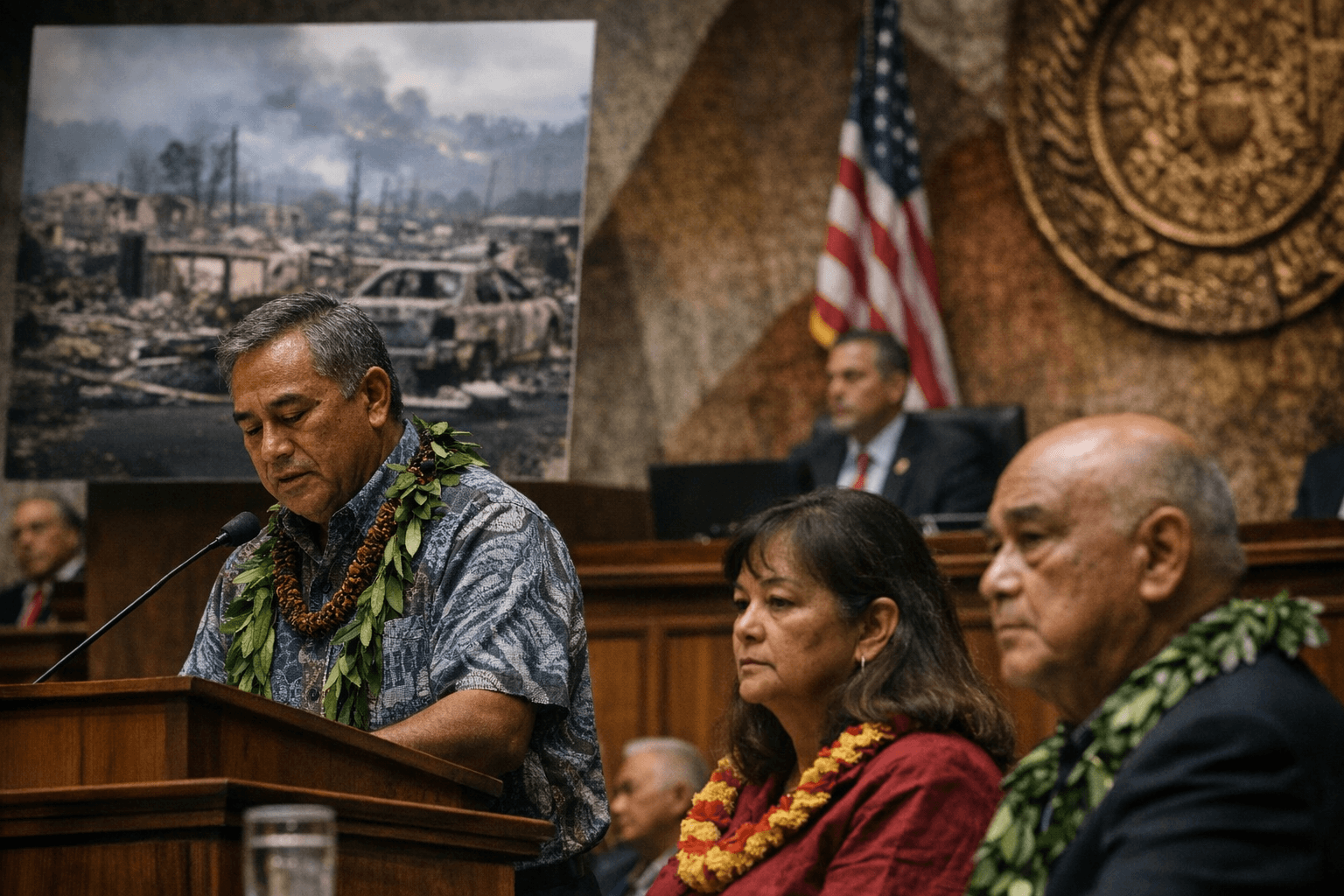
Kauaʻi lawmakers set a tone of humility and urgency as the 33rd Hawaiʻi State Legislature’s House convened, signaling immediate focus on federal funding risks, housing shortages and continuing wildfire recovery that will shape county budgets and services.
The House opened on Jan. 21, 2026, with Speaker Nadine Nakamura and Senate President Ronald Kouchi welcoming lawmakers back to the State Capitol. Nakamura, who represents Hanalei and Princeville on Kauaʻi, framed the session around service to constituents. “Today, we gather with a shared purpose: to do the people’s work with humility, with urgency, and with care,” Nakamura said, stressing that lawmakers must translate interim work into tangible outcomes.
House leaders pointed to extensive interim preparation. Lawmakers held 31 informational briefings to gather expert input on complex issues, including looming federal cuts to safety net programs and initiatives such as Operation Hire Hawai‘i and prison re-entry services. Members also completed 68 site visits across the islands, visiting schools, jails, prisons and hospitals, snorkeling in bays and hiking on mountaintops, meeting with farmers and small businesses and listening to community groups. “We all know that there’s no substitute for meeting in person, talking face to face with experts, and gaining critical insights into problems affecting the communities we serve,” Nakamura said. She added that those visits produced practical understanding: “I now understand this issue better and I think I can do something about it.”
Interim task forces and working groups laid groundwork for legislative action. Big Island Rep. Greggor Ilagan chaired the SPEED task force to streamline permitting and enhance coordination between state, counties and the private sector. Reps. Sue Keohokapu-Lee Loy, Mike Lee and Tyson Miyake led working groups on building permits, cesspools and historic preservation. Rep. David Tarnas attended a blessing for the newly established Women’s Court in Kona, which he helped fund, and Rep. Jeanne Kapela supported reopening a Hawaiian immersion keiki and kūpuna language school in Ka‘ū.
Federal funding uncertainty proved central to opening remarks. Nakamura noted the state’s intervention after the federal government left contingency USDA funds unused for SNAP, a lapse that left 16,000 Hawaiʻi households at risk. “By adding a one-time $250 benefit for Hawaiʻi SNAP users and expediting the release of funds previously approved to the Hawaiʻi Foodbank, we provided much relief to families worried about their next meal,” she said.
Housing remains a top policy battleground. Sen. Stanley Chang, chair of Housing, will press to increase the state’s housing inventory as Senate President Kouchi identified housing as the largest impediment to retaining residents in Hawaiʻi. The House majority caucus emphasized a long-range “2045 vision” to make Hawaiʻi a model for affordable housing, renewable energy and food security. “By 2045, Hawaiʻi is a model for the world: a place where families can thrive and stay, keiki are safe and flourishing, and kupuna can age with dignity,” Nakamura said.
The opening also included a moment of solemn recognition for Maui’s ongoing recovery. Kouchi apologized after initially omitting West Maui Sen. Angus McKelvey during introductions and noted McKelvey’s unique perspective. “What Senator McKelvey brings that nobody else has in the Senate is he lost everything in the fire of Lahaina,” Kouchi told the chamber.
For Kauaʻi residents, the session’s outcomes will affect county-level services, housing availability, food assistance and permitting reforms that influence development and small business resilience. Lawmakers will wrestle with federal budget uncertainty, a high-profile ethics inquiry and the detailed work of committee hearings through the 60-day session, which runs through May 8. Expect intense committee calendars and budget choices in coming weeks that will determine how state resources are directed to Kauaʻi families, housing projects and recovery programs.
Know something we missed? Have a correction or additional information?
Submit a Tip