Kauai Records Most Whales Statewide During Jan. 31 Sanctuary Ocean Count
Kauaʻi observers counted 467 humpbacks during the Jan. 31 Sanctuary Ocean Count, helping track koholā trends that affect local tourism, shoreline access and marine stewardship.
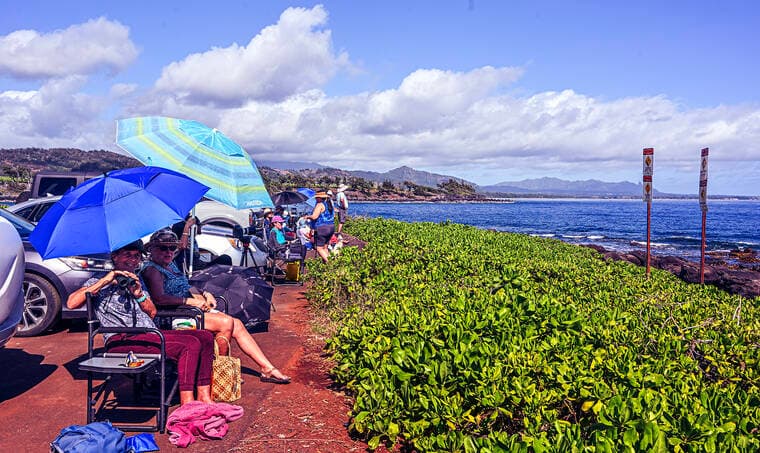
Kauaʻi shore teams recorded 467 humpback whales during the Jan. 31 Sanctuary Ocean Count, the most reported from any island during the four-hour, shore-based community science survey. Organizers reported 1,954 whales counted statewide across participating islands, a drop of 158 from the January 2025 count, and cautioned that totals may include duplicate sightings by different observers or at different times and locations.
Volunteers from 43 shore sites across the main Hawaiian Islands collected data during the first of three Sanctuary Ocean Counts in 2026. Cindy ‘Iwalani Among-Serrao, Hawaii Island Program Coordinator working as a contractor with the National Marine Sanctuary Foundation, said “433 volunteers gathered data on kohola, or humpback whales, from the shorelines of Kauai, Oahu, Molokai and Hawaii Island during the first of three Hawaiian Islands Humpback Whale National Marine Sanctuary Ocean Count in 2026.” The statewide tally included counts organized separately for Maui and Lānaʻi through the Pacific Whale Foundation’s Great Whale Count, coordinated with the Sanctuary Ocean Count.
Island-by-island reporting showed Maui with 694 whales and Lānaʻi with 49. Oʻahu observers recorded 337 koholā and Molokaʻi reported 52. Sources differ on the Big Island total - one set of results lists Hawaiʻi Island at 337 while another lists 355 - a discrepancy organizers have not fully reconciled. During the four-hour survey the busiest 15-minute window was 9:00 to 9:15 a.m., when volunteers spotted 260 whales statewide.
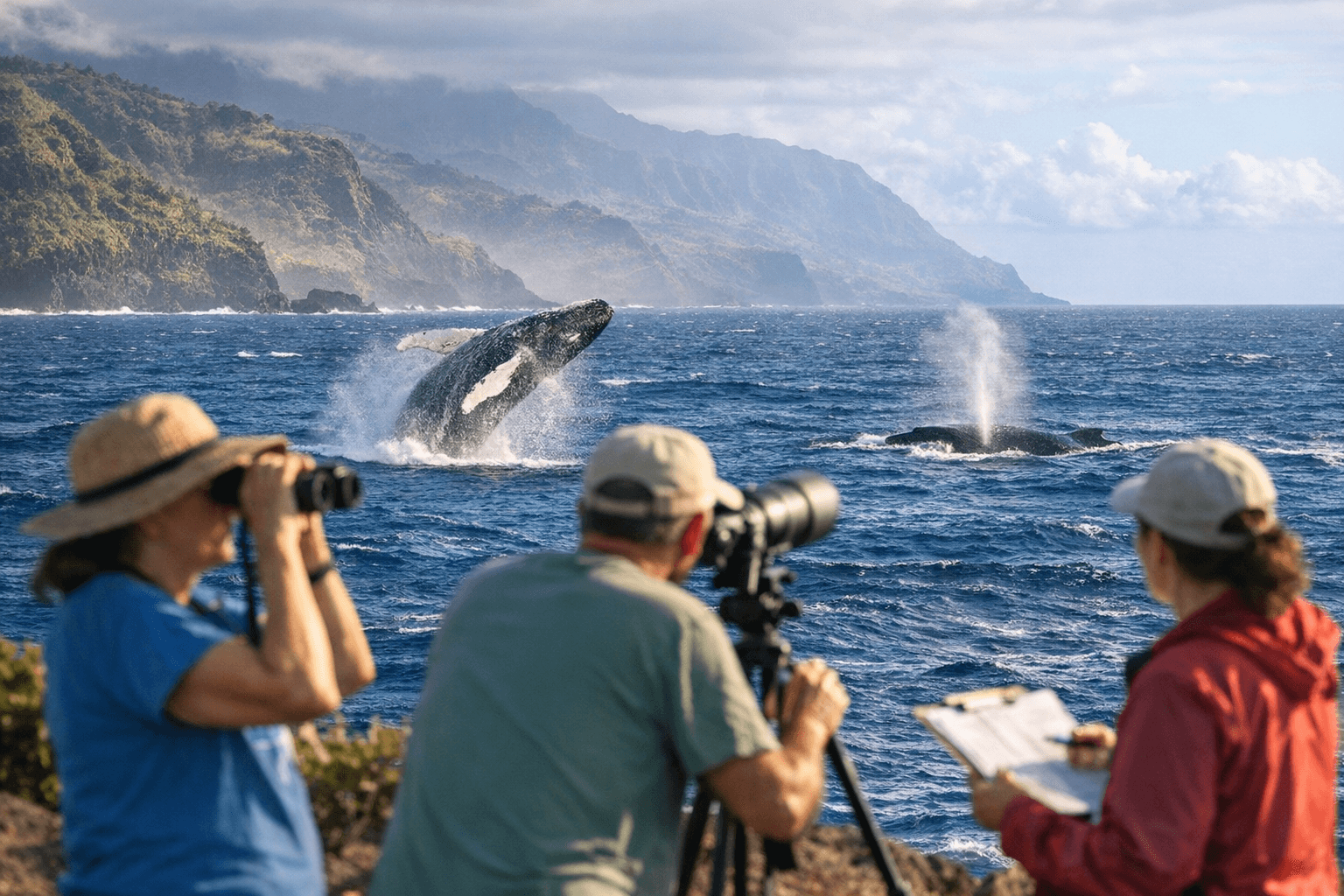
Local teams brought both science and aloha to the count. A 12-member Kauaʻi team led by site leaders Marga Goosen and Colleen Ogino worked from Ahukini Landing amid largely ideal whale-watching weather - sunny skies, light winds and calm seas - though some shore locations reported high surf that made viewing more difficult. Photographers captured volunteers scanning channels where mothers and calves are often sighted.
The counts serve as a long-term survey to track relative abundance and trends of koholā, which migrate thousands of miles to Hawaiian waters to breed, give birth and nurse calves. For Kauaʻi residents and businesses the data helps guide stewardship and tourism management during peak months that run through March. Shore viewing remains an accessible option at public spots such as Kīlauea Lighthouse and Poʻipū Beach, while boat operators continue to remind visitors to respect federal distance laws.

Public health and community planners should note that volunteer-driven shore counts and increased whale activity can bring more people to small coastal parking areas and neighborhoods. That raises needs for traffic management, safe access to lookout points and equitable enforcement of marine protection rules so that quieter communities and low-income visitors can still enjoy whale season.
Organizers emphasize the preliminary nature of these sighting totals and that fuller, reconciled results and site-level data will follow. For Kauaʻi residents, the Jan. 31 count signals a vibrant season of koholā activity that will keep local watchers, boat operators and conservation partners busy through the winter months.
Know something we missed? Have a correction or additional information?
Submit a Tip