Kekaha Landfill Moves Scrap Metal Bin, Reminds Residents of Recycling Rules
The scrap metal bin at Kekahā Landfill moved closer to the refuse drop-off area, and the county is reminding Westside residents which items belong in it.
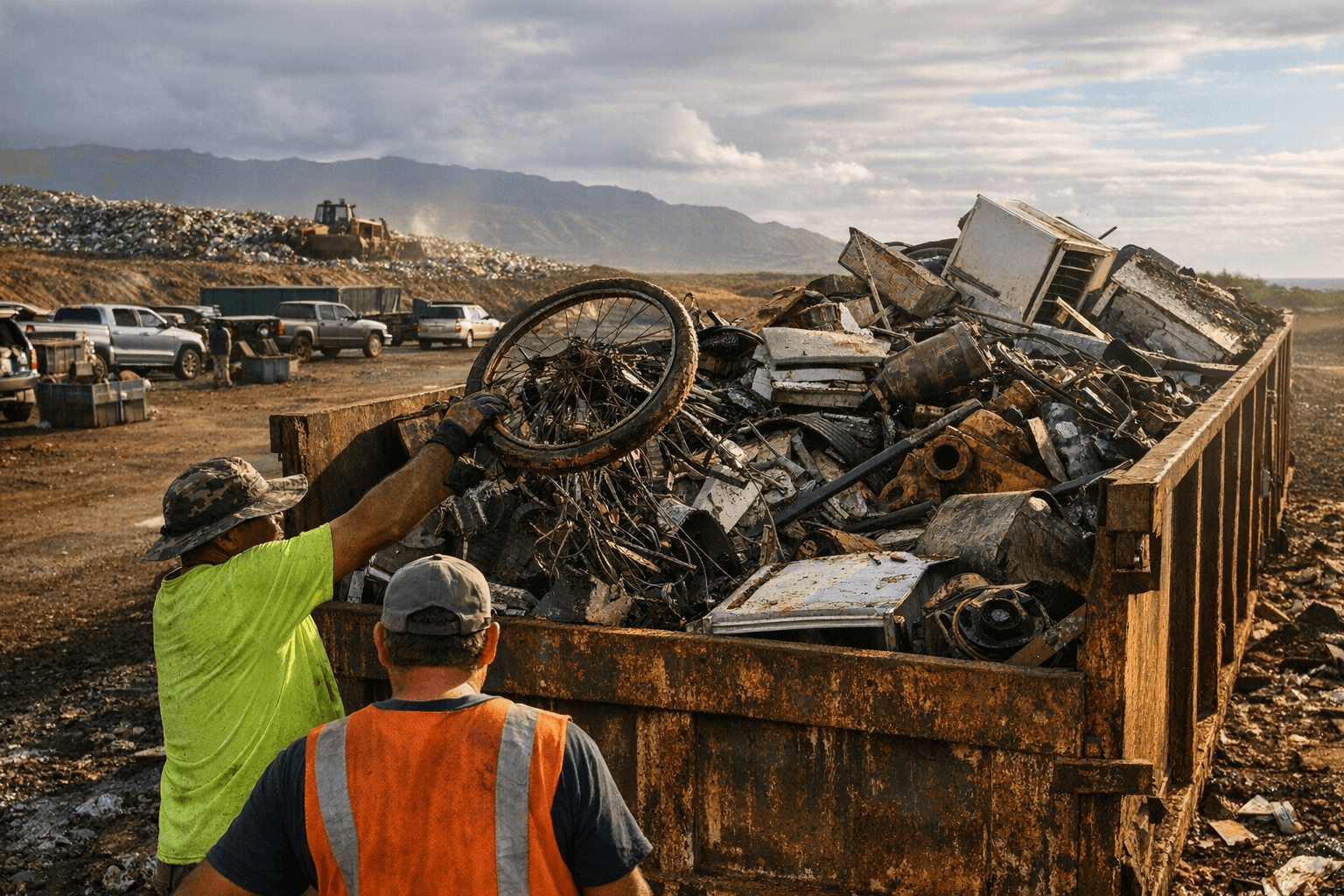
The scrap-metal recycling bin at the Kekahā Landfill has been repositioned to a spot near the refuse drop-off area, a change the County of Kaua'i Solid Waste Division announced March 27 and says will reduce handling time for staff and streamline drop-off traffic for Westside residents and businesses.
Kekahā serves as the primary refuse and recycling hub for Kaua'i's Westside, making even incremental operational shifts at the facility consequential for the community. The repositioned bin, now closer to the refuse drop-off point, is intended to make scrap-metal recycling more accessible while better integrating it with the landfill's existing refuse operations.
Alongside the relocation notice, the Solid Waste Division restated what belongs in the bin and what does not. Accepted materials include metal appliances, metal furniture, and metal piping. Items containing oils, batteries, or refrigerants must be handled separately and cannot be deposited alongside clean scrap.
That distinction matters beyond convenience. When hazardous materials enter the recycling stream, they can compromise the county's ability to market recovered metal and drive up processing costs. Refrigerants and oils in particular create environmental and safety risks for the workers handling material at the facility.
Residents with large or unusual scrap-metal loads are advised to contact the Solid Waste Division before making the trip to confirm whether the item is accepted and whether special handling is required. Signage at the new bin location is the on-site guide for drop-offs during normal operating hours.
Pairing a logistical notice with a recycling refresher reflects a persistent challenge at island transfer stations: contaminated loads requiring additional sorting or disposal raise costs and complicate recycling contracts. Proper sorting at the point of drop-off is the most direct way to protect both Kaua'i's recycling program and the workers who keep it running.
Know something we missed? Have a correction or additional information?
Submit a Tip