Limahuli Garden preserves Hawaiian heritage, ecology and land stewardship
Limahuli is more than a North Shore destination. It shows how Hawaiian land stewardship can protect water, food, native habitat and community resilience at once.
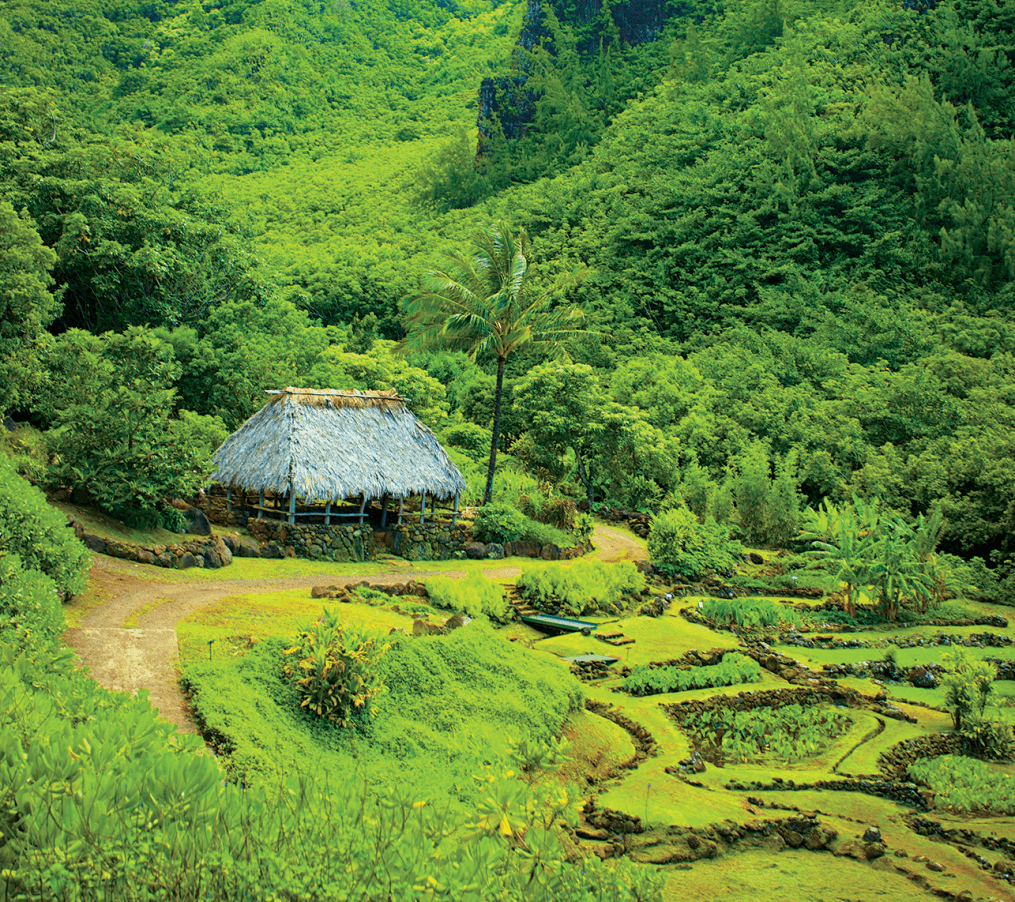
Limahuli Garden and Preserve in Hāena is one of Kauai’s clearest working models of how land care can serve households, culture and ecology together. The preserve sits inside an ahupuaa, the traditional mountain-to-sea land system, and the National Tropical Botanical Garden describes it as stewardship carried out “as our ancestors did before us.”
A North Shore resilience model
What makes Limahuli matter to Kauai is not just its beauty or its rarity. It is the way one valley holds multiple kinds of public value at once: watershed protection, native forest recovery, archaeological preservation and food security rooted in Hawaiian practice. In an island county where every acre has consequences for roads, runoff, stream health and access to resources, that combination is not decorative. It is practical.
NTBG calls Limahuli one of the most biodiverse valleys in Hawaii, and it describes the site as a puuhonua, a place of refuge where Indigenous traditions and “flourishing relationships” continue today. That framing matters for residents because it shows conservation as more than habitat management. It is also a model for how land can support community well-being when ecological restoration and cultural continuity are treated as the same project.
A valley with deep time and living continuity
Limahuli Valley has been a Hawaiian place for at least 1,500 years, according to NTBG. The preserve is also described as one of the last easily accessible valleys with intact archaeological complexes, native forest, a pristine stream and descendants of the valley’s original inhabitants caring for it. Those details make the site unusual even by Hawaii standards, where development pressure has altered many coastal and near-coastal landscapes.
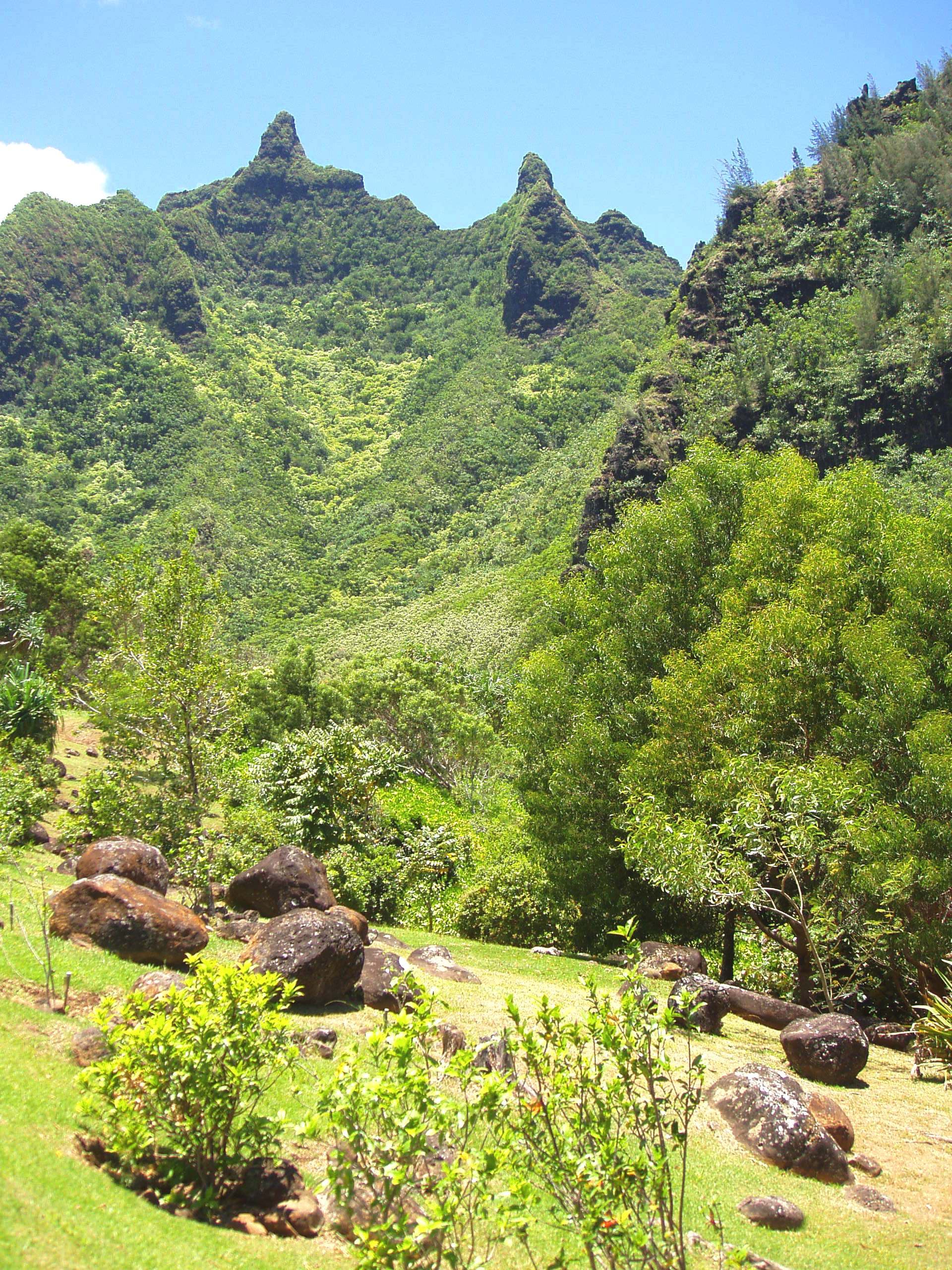
The preserve is the largest of the two valleys in the ahupuaa of Hāena, a detail that gives the story its place in the larger land system that once linked upland forests, loi and shoreline use. For Kauai readers, that connection explains why management here reaches beyond the garden gates. When the upper valley is cared for, the effects travel downstream through water quality, stream flow and the condition of land that households and farmers depend on.
Cultural memory anchored in place
Hāena appears in song, chant, proverbs and poetry, and NTBG says the area was the setting for two chapters in the epic tale of Hiiaka-i-ka-poli-o-pele. That literary and oral history is not separate from the landscape. It is part of why this stretch of the North Shore remains culturally legible, with names, legends and practices still attached to a specific valley and mountain.
The area is also connected to the sacred oahi fire ceremony, which was performed from atop Makana mountain. Together, those traditions show that Limahuli is not simply land under protection. It is land that still carries meaning in Hawaiian knowledge systems, where stewardship is measured not only by acreage restored but by whether the place continues to support ceremony, memory and responsibility.
From threatened private land to restored preserve
The modern history of Limahuli adds another layer to its importance. After land partitioning in the 1960s, Juliet Rice Wichman removed cattle and began restoration work, including rehabilitation of taro terraces. That sequence matters because it shows the valley was not preserved by accident. It was actively repaired after a period of fragmentation and pressure that could easily have pushed it further away from Hawaiian land use.
In 1976, Wichman gave the lower valley to NTBG. In 1994, the rest of the acreage was also transferred, creating the Limahuli Garden and Preserve known today. The timeline gives Kauai a concrete conservation lesson: long-term stewardship can depend on private action, but durable protection often requires institutions prepared to hold land, restore it and keep public purposes at the center.
Why the ahupuaa model matters beyond Limahuli
Limahuli is useful to county residents and policymakers because it shows how land management can be organized around shared needs instead of narrow use categories. Ahupuaa stewardship naturally links forest, stream, agriculture and shoreline, which is exactly the kind of integrated thinking Kauai needs when flood control, invasive species management and food systems are all under strain.
That is the larger lesson here for county decision-makers, land trusts, conservation groups and community partners:
- Protect upstream areas that influence stream health and flooding downstream.
- Treat native habitat restoration and invasive species control as public infrastructure, not just environmental extras.
- Preserve agricultural terraces and other food-producing landscapes as part of resilience planning.
- Keep cultural practice, access and stewardship tied to place so restoration is not separated from community life.
Limahuli shows that heritage protection is not a side project on the North Shore. It is a land-use strategy that supports the resources Kauai households still rely on, from clean water and stable slopes to food landscapes and the cultural knowledge that tells people how to care for them.
This article was produced by Prism’s automated news system from verified source data, official records, and press releases, then run through automated quality and moderation checks before publishing. The system is built and supervised by the people who set the standards it runs under. Read our full AI policy.
Did this article answer your question?