New law requires country-of-origin labels on ahi in Kauai stores
Ahi sold in Kauai stores now has to show where it was landed. The new label law is meant to stop shoppers from guessing whether poke or sushi fish is local or imported.
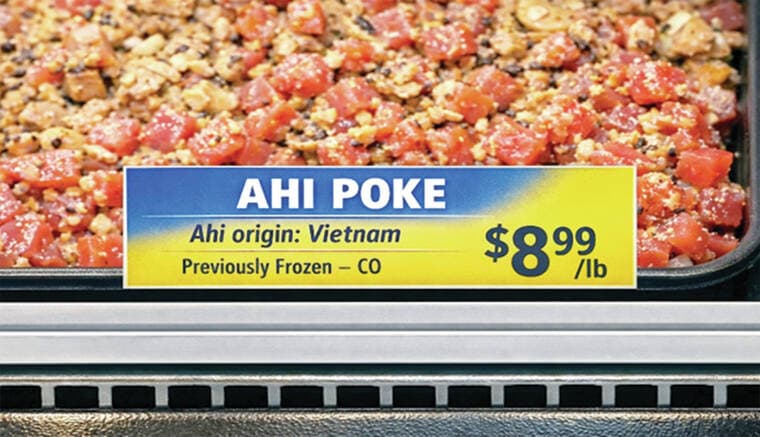
Ahi sold in Kauai grocery aisles, seafood cases and other retail settings now has to carry a country-of-origin label after Act 238 took effect July 1. The law requires retail establishments that sell raw or processed ahi products to identify where the fish was landed, giving shoppers a direct answer instead of leaving them to read marketing language and make assumptions.
The change is aimed at one of the island’s most common seafood purchases. Legislative committee materials said most raw ahi sold at local retail establishments is sold as poke and sushi products, and lawmakers said many consumers wrongly believed previously frozen, gas-treated ahi was caught by Hawaii fisheries. For Kauai buyers, that means the label is meant to separate local catch from imported fish and make it easier to compare what is actually on the shelf.
Gov. Josh Green signed Act 238 into law on June 27, 2025. The Legislature described the measure as a way to extend country-of-origin labeling requirements for certain ahi tuna products at Hawaii retail establishments and to prohibit the sale of raw processed ahi without a label stating the country in which it was landed. A committee report put tuna’s contribution to Hawaii’s economy at about $100 million a year.
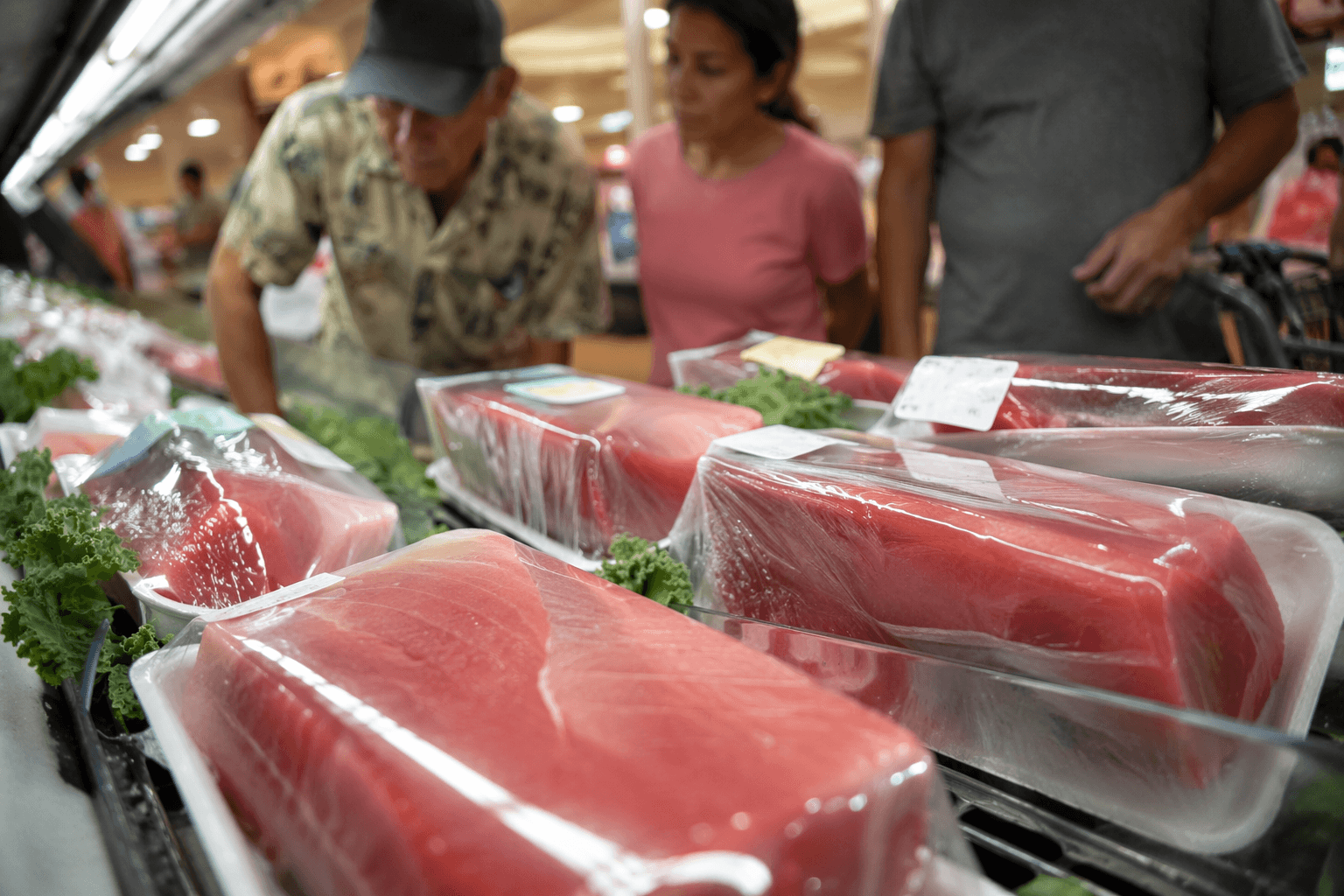
The Hawaii Department of Agriculture and Biosecurity said local tuna fisheries and the seafood markets tied to them are an important part of the state’s economy and food production, and that identifying imported tuna is critical to inform and safeguard consumers. Chairperson Sharon Hurd put the consumer side plainly: “consumers deserve clear and accurate information about the food they buy.”
Support for the bill came from the Department of Land and Natural Resources, the Hawaii Longline Association, Hawaii Farm Bureau, Chamber of Commerce Hawaii, Fishing Tales with Mike Sakamoto, Hawaii Farmers Union and 10 individuals. The Department of Agriculture also submitted comments.

For shoppers on Kauai, the practical test is simple. If the ahi is raw or processed and sold through a covered retail establishment, the label should tell you where it was landed. That should make it easier to spot local fish, imported fish and any product whose packaging or display language might otherwise blur the difference. Businesses now have to make sure their labels are compliant and that staff present origin information correctly at the counter.
This article was produced by Prism’s automated news system from verified source data, official records, and press releases, then run through automated quality and moderation checks before publishing. The system is built and supervised by the people who set the standards it runs under. Read our full AI policy.
Did this article answer your question?