New Study Reveals Ocean Microbe Diversity, Implications for Kauai Waters
Researchers at the University of Hawaiʻi at Mānoa found that SAR11, one of the ocean's most abundant microbial groups, is made up of stable, ecologically distinct populations adapted to different habitats. The discovery, based on years of Kāneʻohe Bay time series sampling and global genomic comparisons, improves understanding of microbial roles in carbon and nutrient cycling and carries direct implications for local coastal health and resource management.
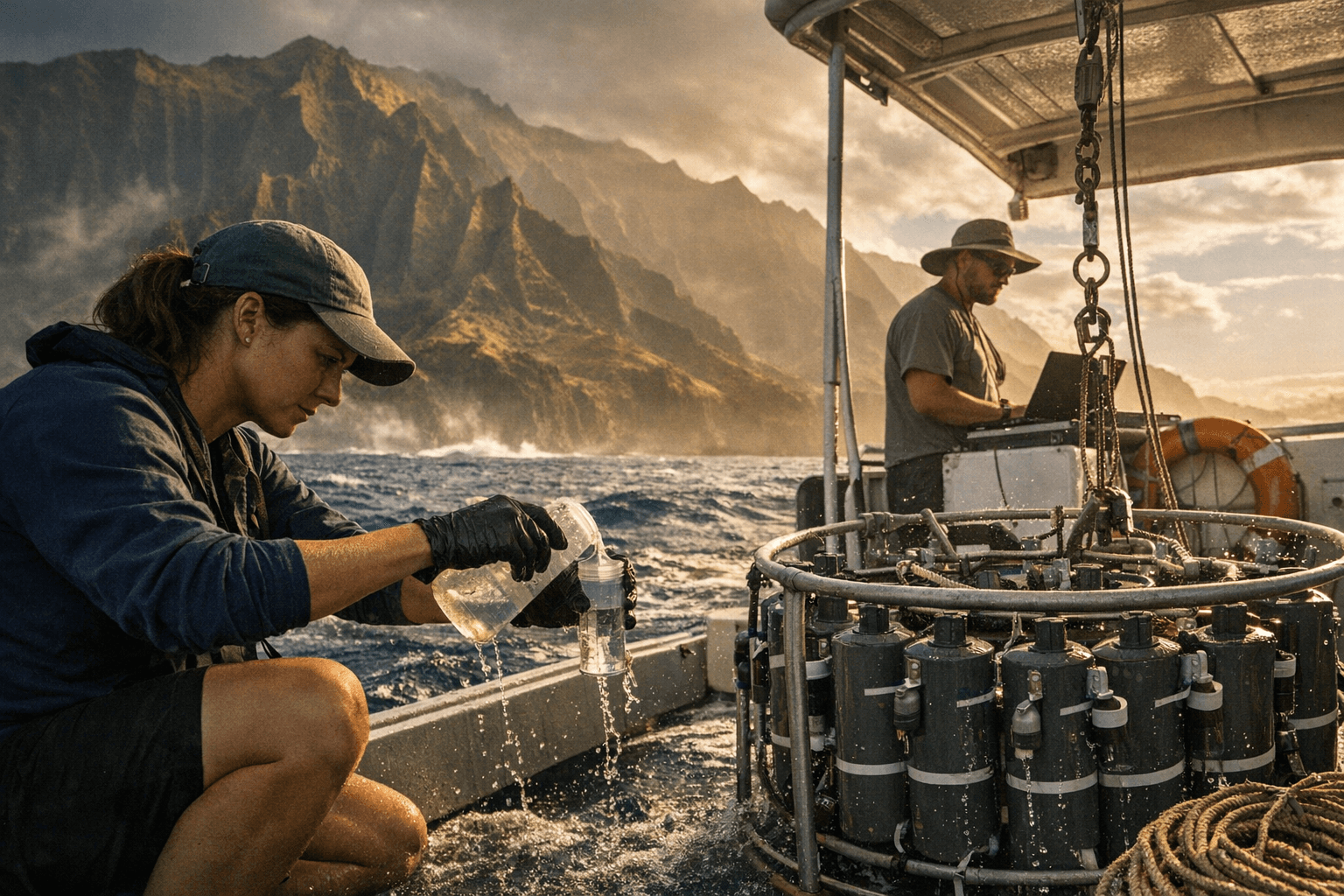
Scientists at the University of Hawaiʻi at Mānoa published a study in Nature Communications on December 28, 2025 that reshapes how we understand a foundational ocean microbe. The research used years of time series sampling and cultivation in Kāneʻohe Bay, sequencing dozens of SAR11 genomes and comparing them with more than 1,300 marine metagenomes from around the world. The work showed consistent ecological structuring and identified small suites of genes under strong environmental selection, offering a genetic explanation for how SAR11 maintains global diversity across coastal and open ocean habitats.
The immediate significance for Kauai County lies in how microbial functioning underpins coastal ecosystem services. SAR11 contributes to ocean carbon and nutrient cycling, processes that affect primary production, coral reef health, and the base of the food web that supports local fisheries. Changes in microbial communities driven by warming, runoff, or pollution could alter nutrient flows in nearshore waters, influencing algal growth, reef resilience, and fishery productivity that many residents depend on for livelihoods and subsistence.
Public health and social equity concerns follow from these ecological links. Shifts in nutrient cycling and microbial dynamics can increase the risk of harmful algal events and reduce the reliability of local seafood, disproportionately affecting low income households and Native Hawaiian families who rely on nearshore resources. Community monitoring and response capacity are essential to detect changes early and to protect those most vulnerable to environmental stressors.
The study underscores a need to integrate microbial genomics into local environmental management and climate adaptation planning. Investing in long term monitoring, supporting local laboratory and field capacity, and prioritizing pollution reduction and watershed management can help preserve the ecological functions that sustain Kauai communities. As decision makers weigh future land use and coastal protections, acknowledging the role of invisible microbial communities will be important for equitable and science based policies that protect both public health and cultural connections to the sea.
This article was produced by Prism’s automated news system from verified source data, official records, and press releases, then run through automated quality and moderation checks before publishing. The system is built and supervised by the people who set the standards it runs under. Read our full AI policy.
Did this article answer your question?