Six Must-Know Day Hikes on Kauai, From Permits to Safety Tips
Kauai's best day hikes range from no-permit coastal walks in Poʻipū to canyon scrambles above Waimea; here's what you need before you hit the trail.
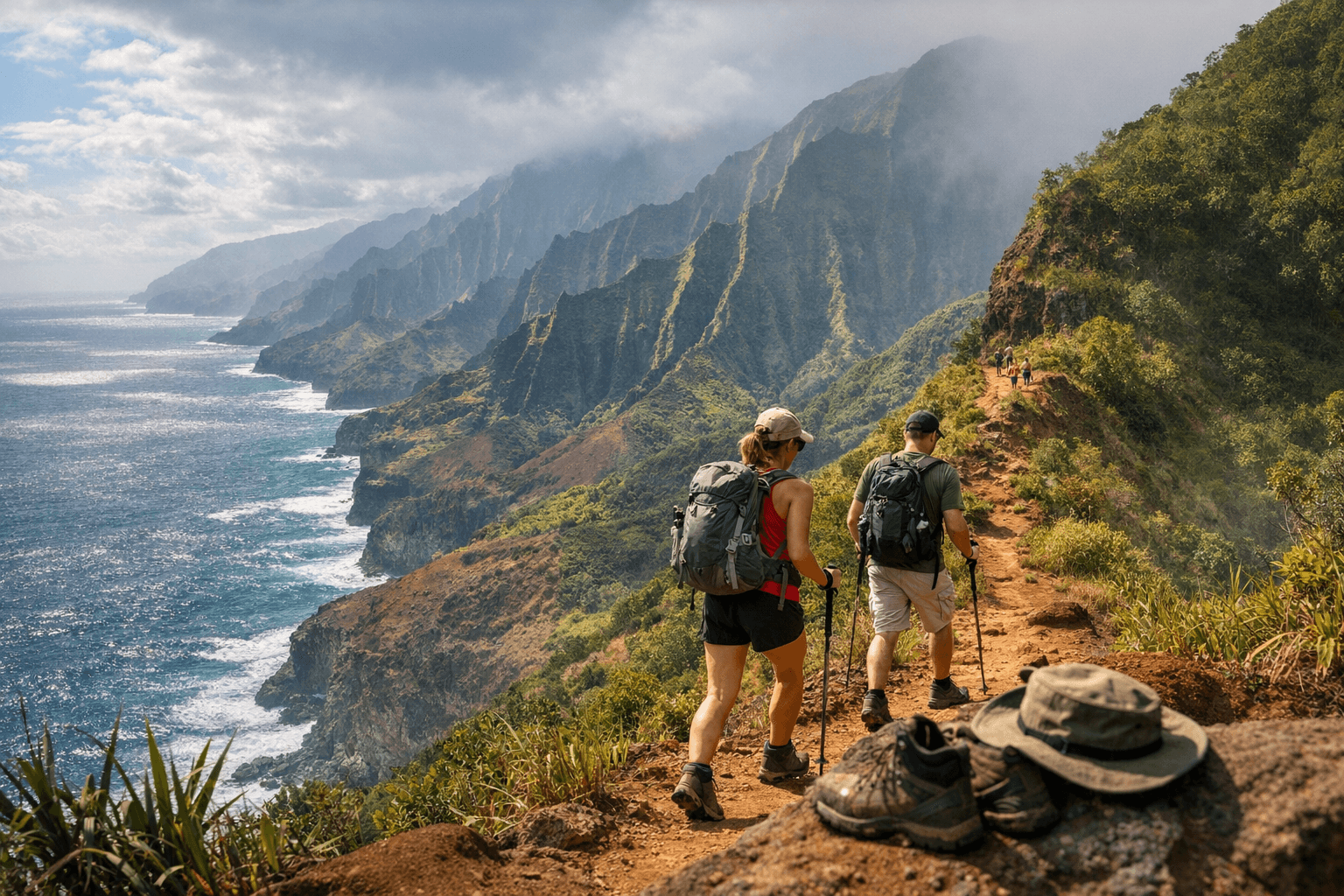
Kauaʻi's nickname, the Garden Isle, undersells the sheer drama waiting on its trails. Dense native forest gives way to 3,000-foot canyon walls, ridge walks with unbroken Pacific views, and waterfalls that pour straight into jungle swimming holes. The six routes below consistently deliver that payoff for day hikers, with specific details on difficulty, permit requirements, and the safety considerations that separate a great outing from a dangerous one.
Nounou Mountain (Sleeping Giant) East Trail, Kapaʻa/Wailua
The Sleeping Giant's unmistakable ridgeline profile above Kapaʻa is one of the east shore's most recognizable landmarks, and the Nounou East Trail earns its reputation as a local classic. The round trip runs 3 to 4 miles with a moderate grade, culminating in panoramic views across the Wailua River and out to the Pacific. No permit is required for day hikers, though park rules apply and parking in designated spaces is strongly encouraged to reduce impact on the surrounding neighborhood.
Because the summit sits on a narrow ridgeline, conditions matter. Trails can turn muddy quickly after rain, and scramble sections near the top demand footwear with real grip. Avoid the ridgeline entirely in high winds or when fog obscures visibility. Nounou is a favorite for sunrise hikes; starting early beats both the heat and the midday crowds.
Waipoo Falls via Canyon Trail, Waimea Canyon State Park
The drive from Līhuʻe to Waimea Canyon State Park takes roughly 45 to 60 minutes, and every minute of it is worth it. The Canyon Trail to Waipoo Falls is the park's signature day hike: a moderate-to-strenuous route that strings together spectacular canyon overlooks before delivering hikers to a genuine waterfall payoff in the Waimea Canyon interior, one of the Pacific's most dramatic geological features.
No permit is required for day hikers on the marked trail network, but the terrain demands respect. Steep, slippery sections multiply after rain, and Kona-low storm systems have caused trail and road closures in the past, so checking DLNR Division of State Parks for current conditions before heading up is non-negotiable. The canyon sits at elevation and runs noticeably cooler than the coast; bring layers even when it's warm at sea level.
Kuilau Ridge Trail, Central East-Side Uplands
For hikers seeking sweeping mountain-and-coast views without the technical demands of a ridgeline scramble, Kuilau Ridge Trail is the answer. Accessed from parking areas off Kuhio Highway near Wailua Heights, this forested ridge walk gains elevation gradually, making it one of the island's most family-friendly options while still delivering the kind of scenery that stops hikers in their tracks.
The forest canopy provides shade and atmosphere, but trail conditions shift seasonally and mud is a reliable companion after rain. Insect repellent is worth packing; the dense vegetation that makes Kuilau so beautiful also keeps mosquitoes well-fed. Trail surfaces vary, so check recent conditions before heading out.
Mahaʻulepu Heritage Trail, Poʻipū
The south shore's answer to a dramatic coastal walk, the Mahaʻulepu Heritage Trail traces the cliff-top edge of Poʻipū's coastline past seabird habitat, secluded beaches, and geological formations shaped by wind and wave. The easy-to-moderate grade makes it well-suited for mixed-ability groups, and no permit is required for day use.
The trail passes through fragile dune ecosystems and culturally significant sites, so staying on marked paths is both a safety and a stewardship requirement. Coastal cliffs along this stretch can be unstable, and the ocean below is not forgiving. Sneaker waves and elevated surf during stormy conditions are real hazards; keep a safe distance from unprotected edges and watch the water.
Kalalau Lookout and Nā Pali Overlooks, Kōkeʻe
The full Kalalau Trail is an 11-mile one-way wilderness route along the Nā Pali Coast that requires advance permits and has been subject to seasonal closures following storm damage. For day visitors without those permits, the Kōkeʻe-area lookouts offer a legal and genuinely awe-inspiring alternative: short walks to overlooks above the Nā Pali cliffs and Kalalau Valley that rank among the most photographed views on earth.
These short loop walks and roadside viewpoints require no permit and no serious hiking gear, but the Kalalau Trail itself is a different matter entirely. Anyone tempted to walk beyond the legal day-use boundary should know that DLNR Division of State Parks actively monitors access and that trail status has shifted following major storms. Always check current closure notices before planning any Nā Pali itinerary.
Hoʻopiʻi Falls and East Kauaʻi Waterfall Hikes
The waterfalls of east Kauaʻi, including Hoʻopiʻi Falls and the island's many so-called "hidden falls," draw hikers with the promise of jungle swimming holes and old-growth forest. In dry conditions, these hikes deliver exactly that. The hazards, however, are concentrated and serious.
Stream crossings that look manageable under blue skies become dangerous or impassable within minutes of heavy rain upstream, and flash floods on Kauaʻi can develop without warning. Never cross a stream during or immediately after significant rainfall. Some routes to lesser-known waterfalls cross private property or follow informal tracks with no official access; posted closures and property boundaries must be respected. Use official access points and follow park signage throughout.
Before You Go: Permits, Weather and Safety Essentials
Every hike on this list benefits from the same pre-trip checklist. Check the DLNR Division of State Parks website and relevant county park pages for trail closures and official advisories, particularly following storms. Review weather forecasts and recent rainfall, since heavy rain doesn't just make trails muddy; it can trigger flash floods, wash out stream crossings, and generate brown-water advisories at coastal exit points. Verify permit requirements specific to your route; multi-day Kalalau wilderness permits and certain campground permits require advance booking.
On the trail, carry more water than you think you need, pack sun protection and a basic first-aid kit, and bring a charged phone or personal locator device. Tell someone your planned route and expected return time before you leave. Kauaʻi's terrain rewards preparation. The trails that look easiest on a clear morning can turn formidable fast, and the ones that look intimidating often open up beautifully to hikers who showed up ready.
Know something we missed? Have a correction or additional information?
Submit a Tip