State Negotiates 1,000 Acre Purchase, Kaua‘i Jail Relocation Planned
State negotiators moved to purchase roughly 1,000 acres from Grove Farm for about $39 million, and discussions included an additional 40 acres to support a planned relocation of the Kaua‘i Community Correctional Center. The Department of Corrections and Rehabilitation set aside about $20 million for the land acquisition and design, but construction funding remains unsecured, leaving timing uncertain for residents and planners.
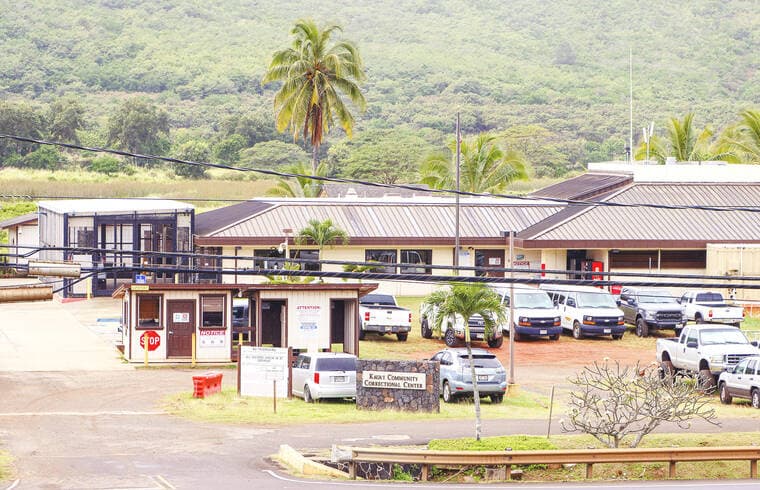
State negotiators entered talks to acquire roughly 1,000 acres from Grove Farm for about $39 million, with the proposed transaction potentially including an additional 40 acres to accommodate a planned relocation of the Kaua‘i Community Correctional Center. Department of Corrections and Rehabilitation officials allocated about $20 million to acquire the 40 acre parcel and to fund design work for a new jail site. Officials said the $20 million would cover land purchase and design, but not full construction costs. Because negotiations are ongoing, construction timing remained uncertain, though officials expected work to begin within the next two years.
The move responds in part to a planned expansion of Kūhiō Highway that threatens some of the current facility footprint. The existing Kaua‘i Community Correctional Center was built in 1977 and later had temporary structures added after Hurricane Iniki. County and state planners have cited that highway improvements and the age and condition of the present facility prompted relocation planning.
The state transaction under discussion would shift a sizable parcel of privately held land into public hands, with implications for land use, infrastructure planning, and local economies. For Kaua‘i residents, the proposal raises questions about site selection for correctional facilities, community safety, traffic and emergency access, environmental impacts, and long term fiscal commitments. The $20 million allocation for land and design secures initial steps, but without committed construction funding the project remains in a planning phase that could stretch over multiple budget cycles.
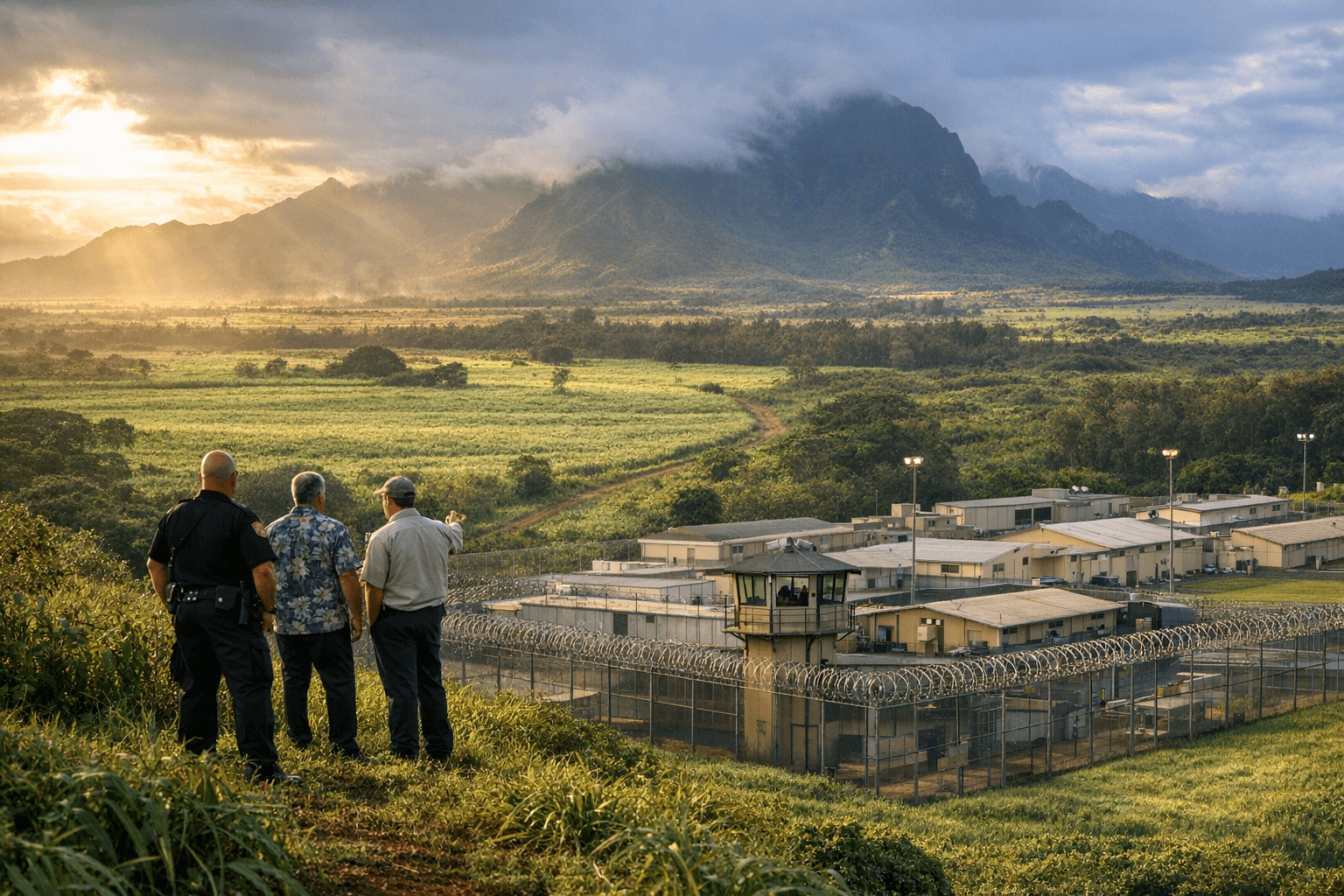
Institutional responsibility will rest with state agencies but the change will affect county planning decisions and may become a topic in local and state budget debates. Voters and civic groups are likely to press for public hearings on site design, environmental review, and cost estimates before construction money is requested. Transparency in negotiations, clear timelines for permitting and design milestones, and public engagement in siting decisions will shape how the relocation affects neighborhoods and county infrastructure. Residents should monitor upcoming state and county planning and budget meetings for opportunities to review plans and weigh community priorities.
Know something we missed? Have a correction or additional information?
Submit a Tip