Surfrider report finds high bacteria levels at most Kauai beaches
Mānoa Stream posted 10,112 bacteria units per 100 mL, and 25 of 33 Kauai sites exceeded state standards after May rains.
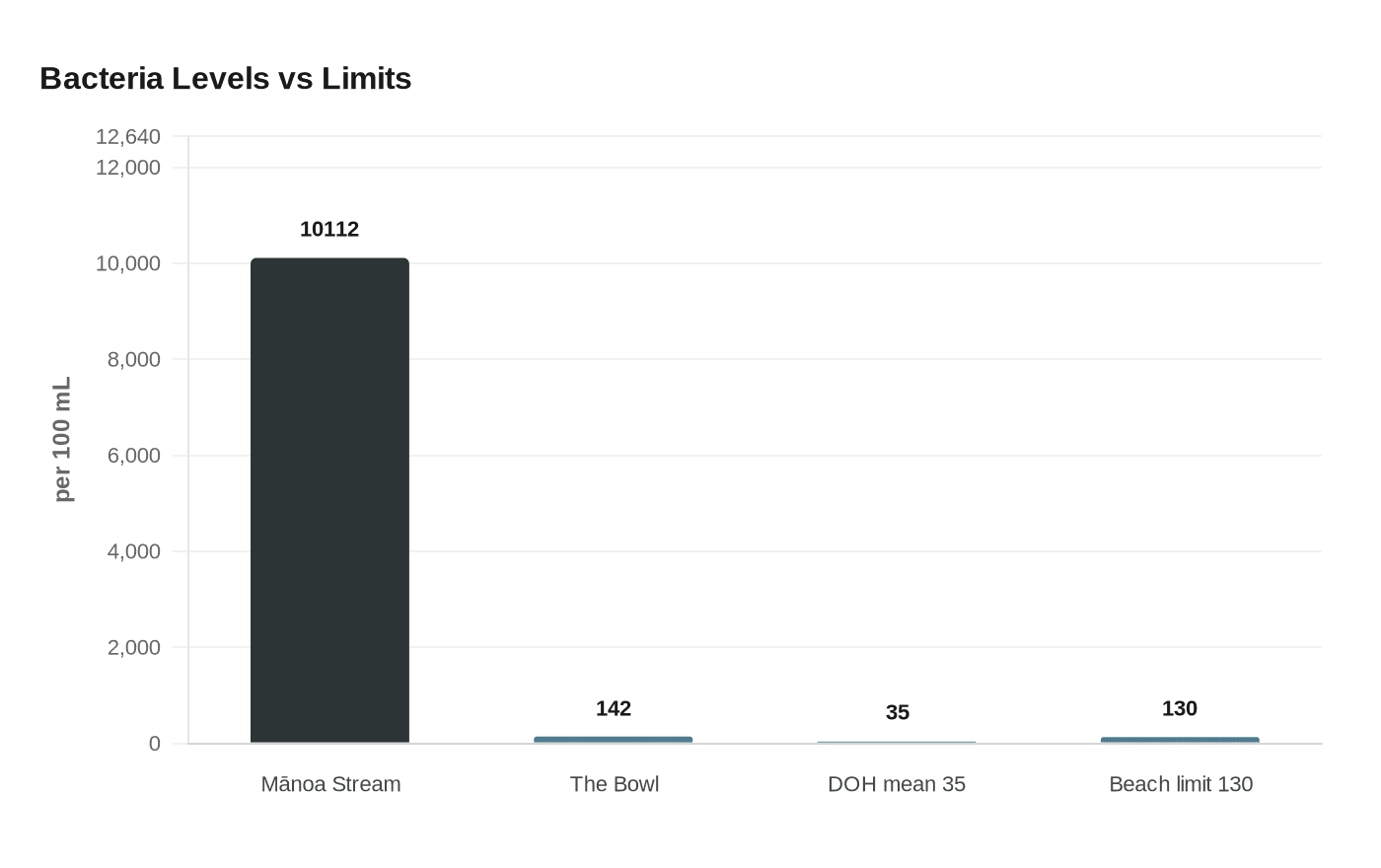
Mānoa Stream had the worst reading in Surfrider Kauai’s May sampling, with 10,112 enterococcus per 100 milliliters, while the Hanalei Bay spot known as The Bowl measured 142 per 100 milliliters. Those numbers put the warning squarely on the island’s beaches and stream mouths, where families, surfers and paddlers can face the highest risk after heavy rain.
Surfrider’s Blue Water Task Force tested 33 Kauai sites in May and found high enterococcus levels at 25 of them, or 76 percent. Only five sites came back low, with a few more in the middle range. Because enterococcus is used as a fecal-indicator bacteria, high readings can signal the possible presence of other harmful pathogens in coastal water, especially where runoff washes into the ocean.
The practical advice remains blunt: avoid brown water, stay out of spots that exceed recreational standards, and wait 24 to 48 hours after major rainfall before getting back in. That matters across Kauai’s coastal communities, from Hanalei to Kapaa and Līhue, where one beach can clear faster than another only a few miles away.

The state’s standards make the concern clear. The Hawaii Department of Health says recreational water should not exceed a 30-day geometric mean of 35 CFU or MPN per 100 milliliters, and a single-sample beach action value of 130 CFU or MPN per 100 milliliters. The department says its beach monitoring program follows the federal BEACH Act framework and uses enterococci as the indicator organism for the potential presence of human pathogens.
There is also a gap in who gets watched. The state program covers coastal beaches, but not inland waters upstream of river or stream mouths. Surfrider says its volunteer program fills that gap by testing beaches, surf breaks, stream mouths and other recreation areas that often go unmonitored. In 2025, volunteers collected 1,138 coastal water samples at 90 sites across Kauai, Maui and Oahu, including 30 Kauai sites.
Surfrider Kauai said it has been sampling beaches around the island monthly since 2007, giving the May results a long backdrop of chronic pollution tracking rather than a one-day alarm. The recurring hot spots raise the same public-health question for state and county officials: where are stormwater runoff, sewage leaks or other contamination sources continuing to push bacteria back into the water, and why do the same places keep showing up on the list?
This article was produced by Prism’s automated news system from verified source data, official records, and press releases, then run through automated quality and moderation checks before publishing. The system is built and supervised by the people who set the standards it runs under. Read our full AI policy.
Did this article answer your question?