Surfrider Testing Finds Elevated Bacteria at 20 Kauai Coastal Sites
Twenty of 27 Kauai coastal sites tested by Surfrider volunteers this month exceeded the state bacteria standard, with Nawiliwili Stream failing every sample collected last year.
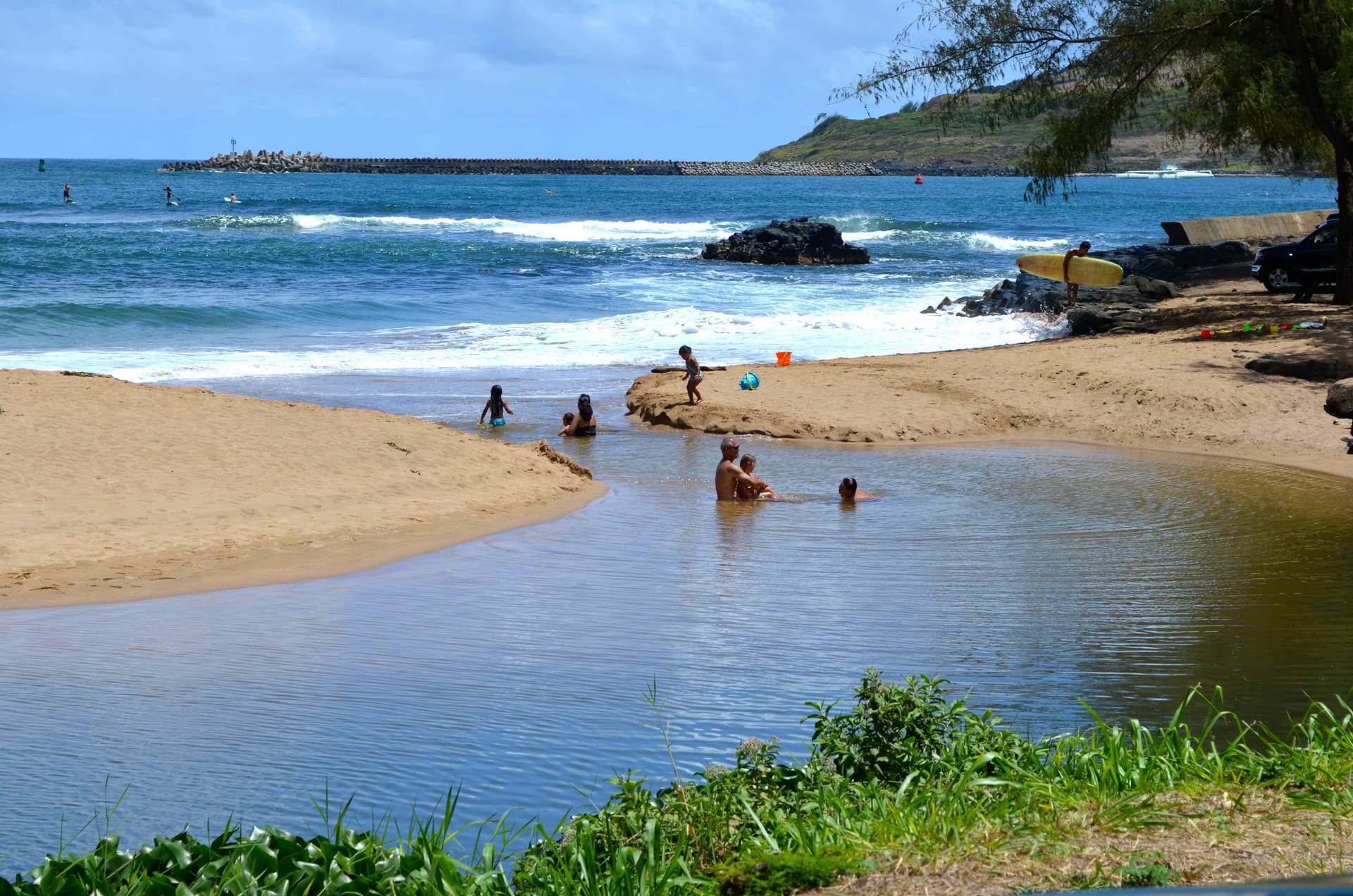
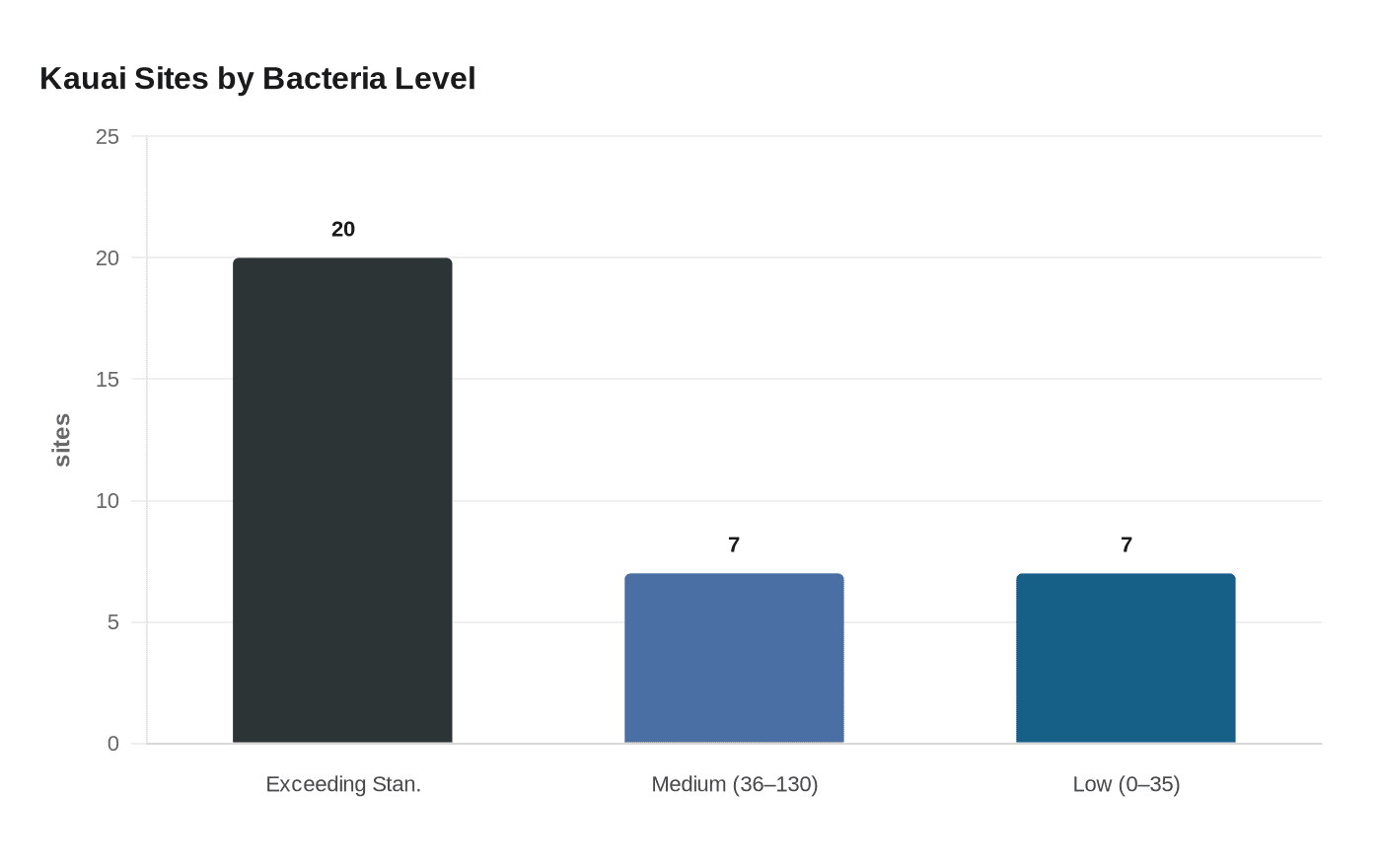
Volunteers testing waters after heavy rains found 20 Kauai sites with enterococcus levels exceeding the state recreational water quality standard of 35 colony-forming units per 100 milliliters during the Surfrider Foundation's March sampling run, the worst monthly showing yet reported in 2026.
Enterococcus bacterial concentrations varied during March testing; only 7 of the total 27 sites tested had medium (36 to 130 colony-forming units per 100 milliliters) or low (0 to 35 colony-forming units per 100 milliliters) levels. Elevated bacteria levels indicate other harmful pathogens that can make people sick could also be present in the water.
The bacteria measured is enterococcus, a fecal indicator. "We sample for enterococcus bacteria," said Surfrider Foundation Hawaiʻi Regional Manager Hanna Lilley. "This is a fecal indicator bacterium, and when it's present, it indicates that there might be wastewater pollution." Lilley added that geography drives where the worst readings cluster: "We measure fecal indicator bacteria levels and compare them to public health standards for recreational waters," and sites near stream mouths consistently rank among the most contaminated because those channels collect pollutants across entire watersheds before emptying at the shoreline.
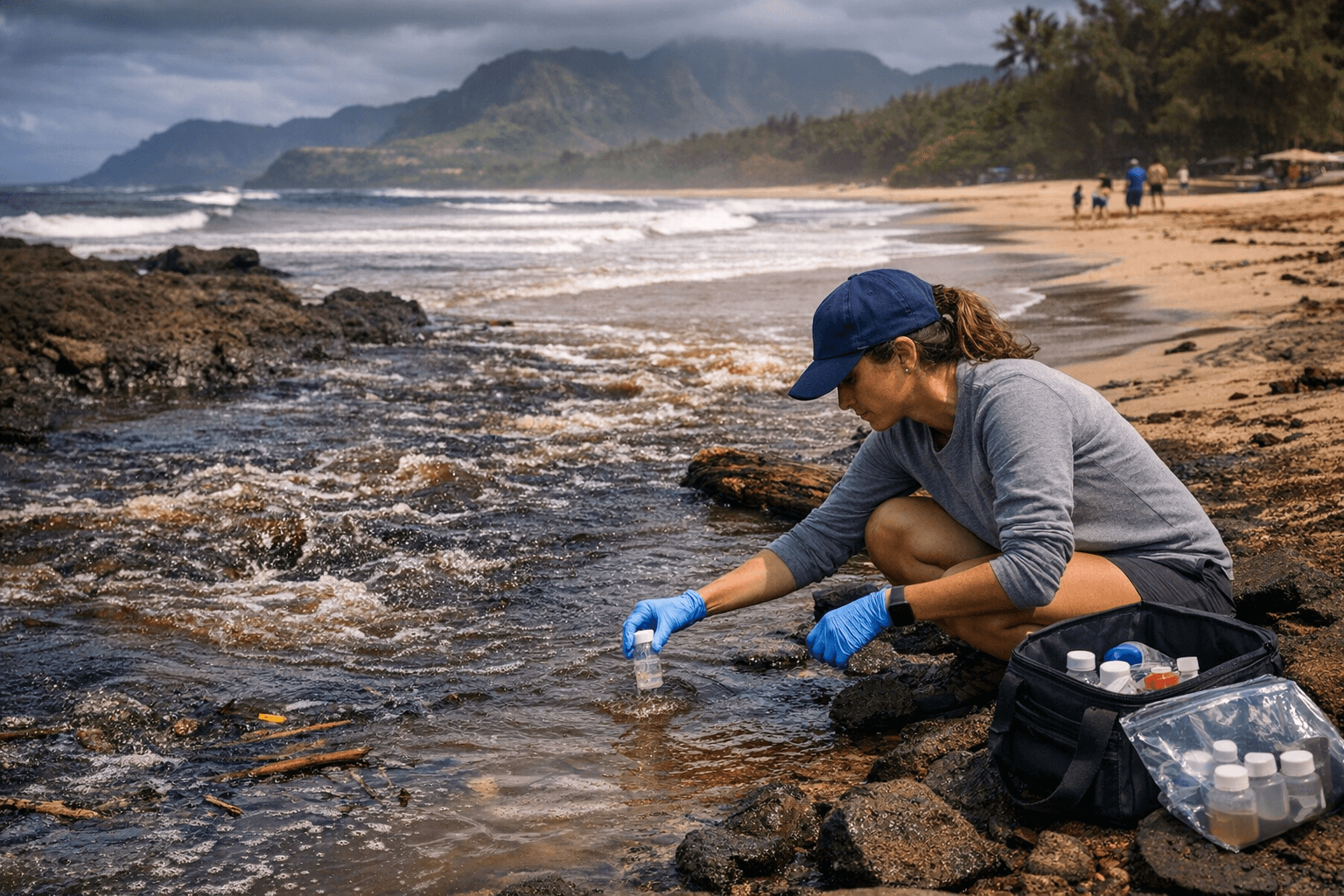
The March spike follows a pattern well documented in Surfrider's annual data. In the state report, 100% of samples collected at Nawiliwili Stream on Kauai last year failed to meet state health standards. More than 90% of water samples collected in 2024 from Waikomo Stream at Koloa Landing also had bacteria levels above state health standards, landing that Poʻipū-area site on Surfrider's national list of top-ten beach bacteria hotspots. Surfrider sampling over the years has documented chronic levels of pollution at Hanamāʻulu Stream, Nāwiliwili Stream at Kalapakī Bay, Niumalu Beach Park, and Waikomo Stream at Koloa Landing.
The Kauaʻi chapter's 2024 program analysis, which covered 18 sites and collected 190 water samples through biweekly volunteer sampling, compares results to the Hawaiʻi Department of Health Beach Action Value, which the chapter's materials set at 130 colony-forming units of enterococcus per 100 milliliters. Several of the worst-performing sites sit in areas already flagged for cesspool risk: Hanalei River, Hanalei Bowl, and Wainiha Stream fall in Priority 1 cesspool zones, while Nāwiliwili Stream, Moloaʻa, Waikomo Stream, and Hanamāʻulu Stream and beach fall in Priority 2 zones.
The cesspool problem extends statewide. Lilley has said Hawaii has "83,000 cesspools that are leaching 52 million gallons a day of sewage into our coastal waters," with a state mandate requiring all cesspools to be replaced by 2050. All streams tested in the Kauaʻi sucralose study yielded bacteria counts that exceeded the state health criteria for fecal indicator bacteria. Sucralose was detected in at least 50% of the samples collected in 14 streams, indicating those streams are contaminated with human sewage specifically.
The Blue Water Task Force supplements beach water testing performed by Hawaiʻi Department of Health to provide year-round water quality information. BWTF teams maintain a regular interval between sampling and will sample both after rain events and during Brown Water Advisories, barring dangerous conditions, ensuring the data captures conditions in both wet and dry weather. Federal funding cuts could threaten future water quality testing: the EPA's BEACH Act Grant Program, used by 35 states and territories to test and report beach water quality, is slated for complete defunding in the 2026 budget proposal.
Questions about Kauaʻi test results can be directed to BWTF program coordinator Rob Brower at chair@kauai.surfrider.org or to Hanna Lilley, Surfrider Hawaiʻi Regional Manager, at hlilley@surfrider.org. State beach advisories are posted through the Hawaiʻi Department of Health Clean Water Branch.
Know something we missed? Have a correction or additional information?
Submit a Tip