Volunteers Restore Native Habitat at Alakoko Fishpond for Spring Workday
Volunteers cleared invasive mangrove and replanted native species at Alakoko, one of Kauaʻi's largest surviving traditional fishponds, in the first spring workday.
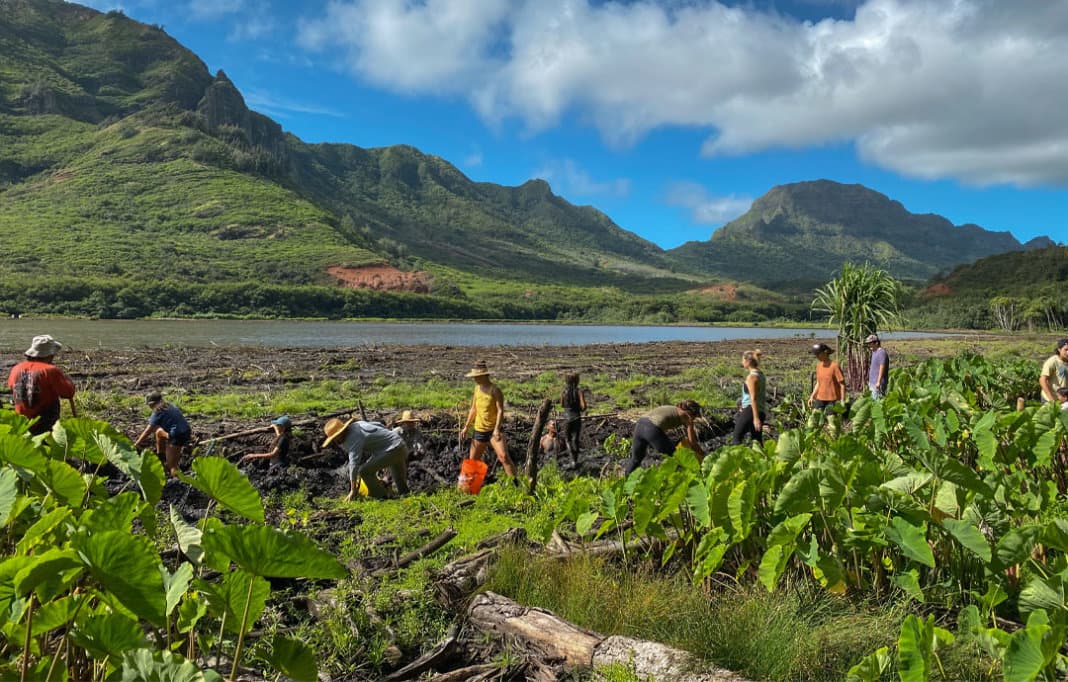
Volunteers pulled invasive plants, replanted native species, and learned about traditional Hawaiian aquaculture at Alakoko fishpond Wednesday, completing the first community stewardship workday of spring at one of Kauaʻi's most significant surviving loko iʻa.
Mālama Hulēʻia, the east-side nonprofit leading restoration of the Hulēʻia watershed, organized the April 2 event at a five-acre riparian and pūnāwai zone, the spring-fed corridor that channels freshwater into the broader wetland system before reaching the pond itself. Participants included Līhuʻe-area residents, students, and volunteers from partner organizations working under the direction of experienced stewards.
The session centered on removing invasive mangrove and other non-native species that have encroached on the riparian corridor over decades. Left unchecked, invasive mangrove constricts freshwater flow, crowds out native vegetation, and accelerates the sediment and nutrient buildup that threatens nearshore reefs at the Hulēʻia River's mouth. Mālama Hulēʻia has documented multi-year progress clearing mangrove from large sections of the pond perimeter and rebuilding stretches of the traditional rock wall that defines the fishpond's structure.
Alakoko sits inland from the Hulēʻia River's mouth near Līhuʻe and is considered one of Kauaʻi's largest remaining traditional Hawaiian fishponds. The site anchors both ecological and cultural restoration goals. Replanting native vegetation stabilizes the watershed and helps recover habitat for native birds and fish, while the educational components woven into each workday work to preserve the traditional knowledge that once sustained the pond as a food-production system for the community.
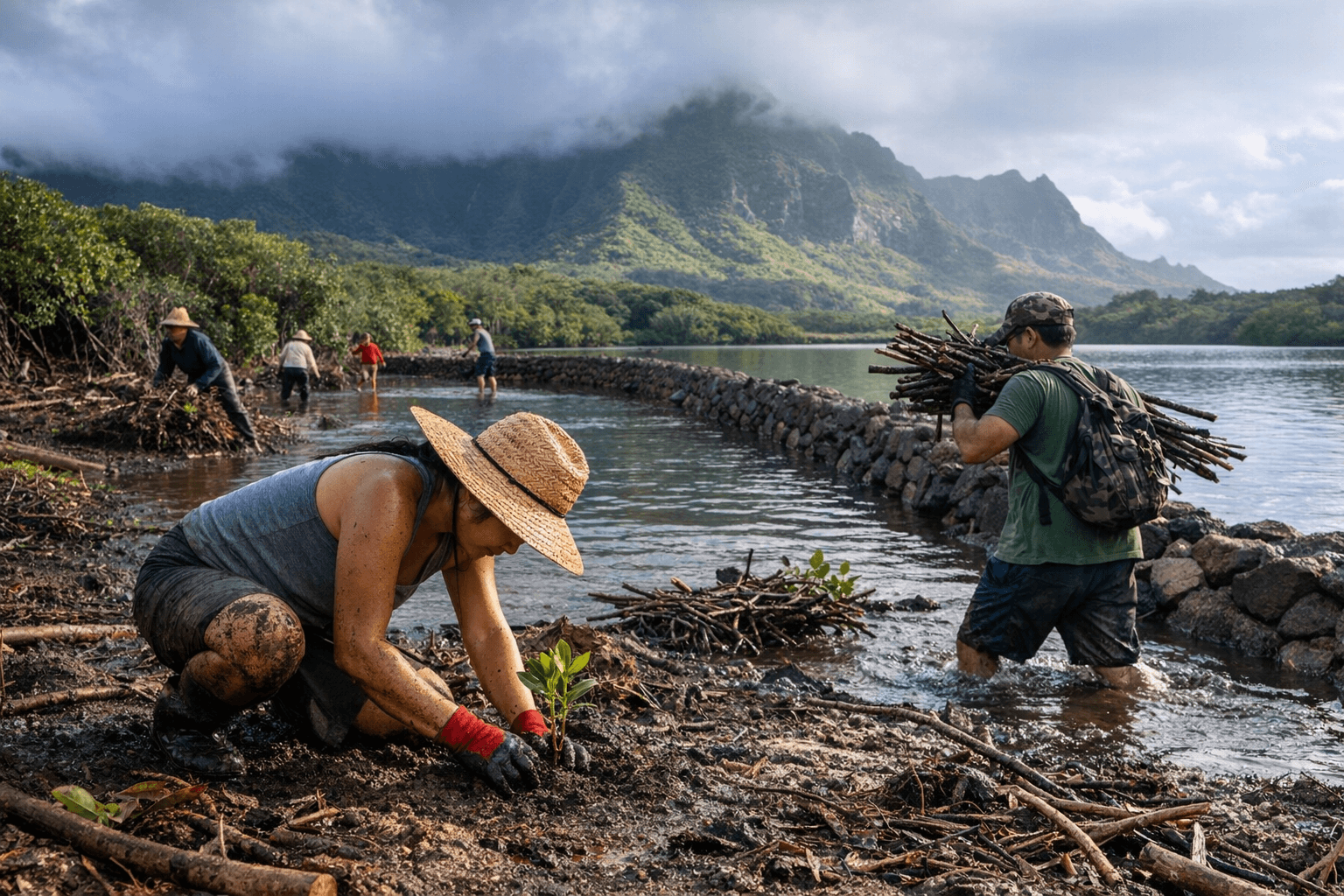
Volunteers on Wednesday received hands-on training from experienced stewards alongside brief talks on the fishpond's history and function. The Hulēʻia refuge, which encompasses portions of the surrounding wetland, remains closed to general public access to protect endangered species; workdays organized through Mālama Hulēʻia provide crews with permitted access for restoration.
Each workday serves a dual function: accomplishing on-the-ground habitat work while widening the base of community investment that sustains long-term care. For students and younger volunteers, the events offer direct experiential learning in ecology, Hawaiian cultural practices, and watershed stewardship. Prior sessions have achieved significant mangrove removal, wall repairs, and repeated student outreach, with community labor reducing project costs and strengthening ties among nonprofits, government agencies, and land stewards.
Continued funding and volunteer support remain essential to reaching multi-year targets across the full extent of the pond. Community members interested in participating in future workdays can find registration information and project updates through Mālama Hulēʻia's volunteer and project-news pages.
Know something we missed? Have a correction or additional information?
Submit a Tip