West Kauai farmer training program aims to boost local agriculture
West Kauai’s new farmer pipeline is built to do more than teach skills. It aims to move residents from classroom to crops, shelf space and real income.
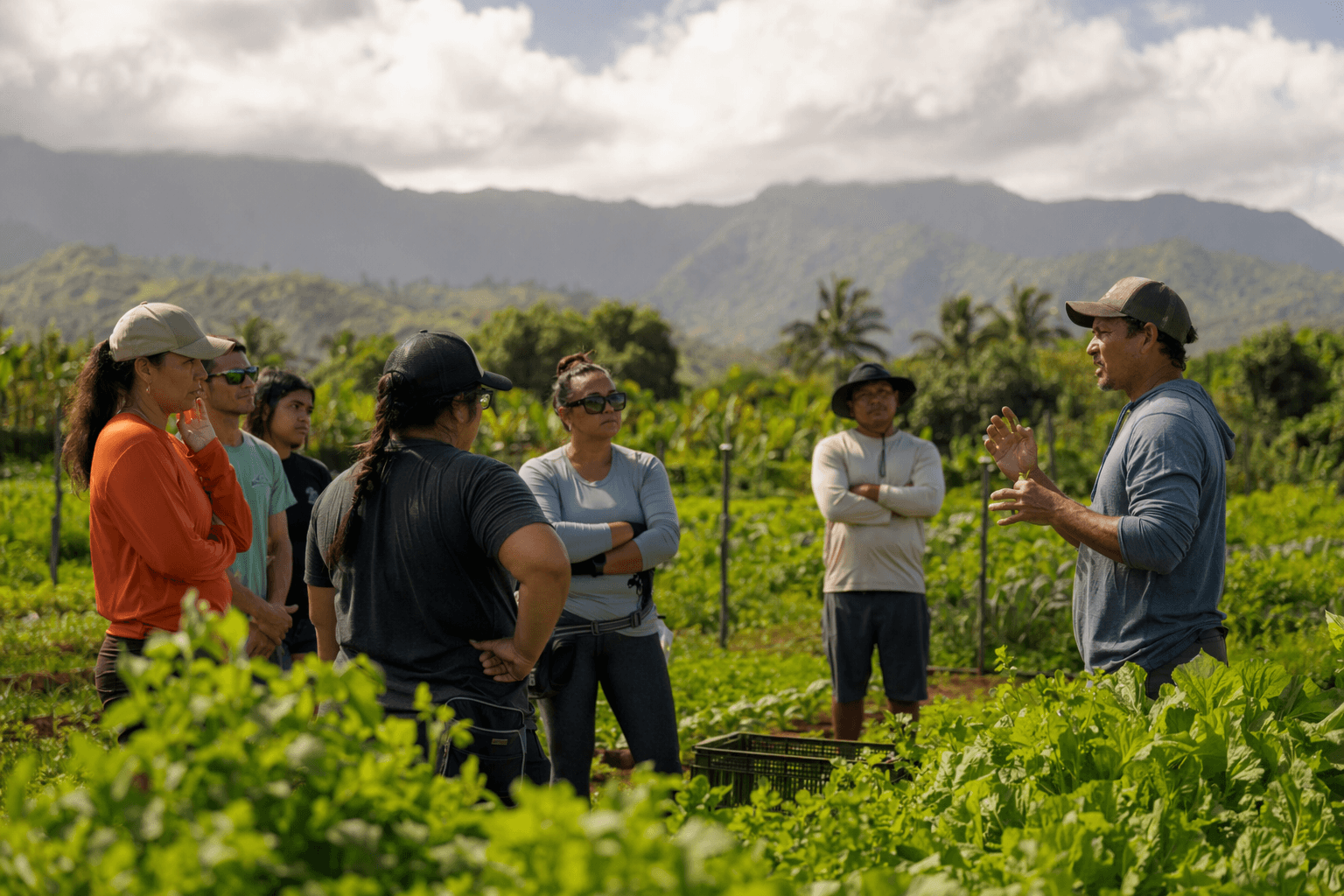
West Kauai’s new beginner-farmer push is trying to solve a harder problem than training alone: turning residents into commercial growers who can actually sell produce. The bet is that if Kauai can pair hands-on farm instruction with a ready market, more of the island’s food dollars can stay home instead of flowing to imports.
What the program is designed to do
The new effort is meant to close a gap that has held back would-be growers for years. Honolulu Civil Beat has reported that few instructional opportunities exist for Kauai residents who want to get into commercial farming, which makes the West Kauai model stand out as more than a classroom exercise. It is built around the idea that a farmer should not just learn how to plant and harvest, but also how to sell.
GoFarm Hawaii, the nonprofit behind the model, says its mission is to increase the number of sustainable local agricultural producers through hands-on commercial farm and business training. Its beginning-farmer sites already operate on Oahu, Maui and Hawaii Island, and the Kauai site has become part of that statewide pipeline. A county release in 2025 said the Kauai program had graduated fourteen cohorts of farmers and that it combines practical production, basic business skills and conservation-minded regenerative practices.
That combination matters. A successful commercial farm is not just a patch of soil and a set of tools. It is also a business with payroll, inventory, distribution and customers. Kauai’s newer training effort is trying to move residents from aspiration to operation.
Why market access is the real test
The strongest part of the model is its direct link to a ready market. That is the crucial difference between a feel-good class and a real business launch. If new farmers can move product early, they can test pricing, build customer relationships and learn what the island will actually buy.
Kauai already has one important piece of that puzzle in place: the Kauai County Sunshine Markets system. These farmers markets offer direct produce sales to community members, with locations in Kapaa, Hanapēpē, Kalāheo, Kīlauea and Līhue. For beginning farmers, that kind of infrastructure can mean the difference between growing at a loss and building a viable customer base.
The larger economic point is straightforward. Kauai does not need more training for training’s sake. It needs a path from seed to shelf. If the West Kauai program can steer graduates into local markets, it can start to chip away at the island’s dependence on imported food while keeping more value in the local economy.
How the county is trying to build a farm economy
The training program sits inside a broader county strategy. The County of Kauai Office of Economic Development says its agricultural support work is intended to increase agricultural income and opportunities by helping farmer groups obtain resources and other assistance. That language matters because it signals an economic-development approach, not just an education effort.
The county has also put money behind expansion. Agriculture Farm Expansion Grants launched in fiscal year 2023-2024 as the county’s first year offering that funding. In fiscal year 2024-2025, the county received 18 proposals, funded 12 projects and committed a total of $637,429. For a small island economy, that is a meaningful pool of capital, especially in a sector where startup costs pile up fast.
Those costs are part of the point. Even with training, a new farmer still has to line up land, equipment, water, transportation, packaging and enough working capital to survive the gap between planting and first revenue. County grant funding helps, but it does not erase the financial reality that keeps many would-be growers on the sidelines.
The food-system blueprint behind the effort
Kauai’s push to strengthen agriculture is not happening in isolation. In the county’s food access planning effort, more than 200 food producers, community leaders and residents took part in eight community meetings and identified 27 priorities for putting more locally grown and produced food on island plates. That process shows how wide the demand is for a more resilient food system.
It also shows how many moving parts have to line up before local agriculture can scale. A training program can produce capable farmers. A market network can create customers. But the island still needs land, infrastructure and a consistent way to connect producers to buyers if those farmers are going to turn a crop into a business.
That is why the county’s approach, if it works, could matter far beyond West Kauai. It ties together training, market access and public planning in a way that could create a real business pipeline instead of a one-time class.
The barriers that still define the market
The hardest constraints remain very physical. Civil Beat reported in 2023 that Kauai stakeholders repeatedly pointed to the need for more farmable land and farm-worker housing. Those two issues remain central because commercial farming is not only about whether a person knows how to grow food. It is about whether they can secure a place to grow it and a workforce that can support operations.
That is especially important on Kauai, where land values, housing pressures and small-market economics can squeeze a new farm before it reaches scale. Even when a farmer has training and a place to sell, the business can still be undermined by short leases, limited access to productive land and the difficulty of finding and keeping workers.
The West Kauai program therefore has to be judged by a tougher metric than participation numbers. The real question is whether it helps residents clear the startup barriers that separate a good idea from a functioning farm.
Why West Kauai is the place to watch
West Kauai is becoming a meaningful test ground for agricultural development. Civil Beat also reported in 2025 on a separate West Kauai dairy proposal, another sign that the region is being viewed as a place where new production can take root. That makes the beginner-farmer effort part of a larger shift in how the island thinks about its western side.
If the program succeeds, the payoff will be visible in practical terms: more local produce moving through Sunshine Markets, more agricultural income circulating in Kauai, and more residents able to stay on the land as business owners rather than workers in someone else’s operation. If it falls short, the reason will probably not be lack of interest. It will be the old island constraints of land, housing, capital and access to market that continue to separate training from real farm businesses.
The opportunity is real, but so is the test. West Kauai will show whether Kauai can build a farm pipeline that produces income, not just instruction.
This article was produced by Prism’s automated news system from verified source data, official records, and press releases, then run through automated quality and moderation checks before publishing. The system is built and supervised by the people who set the standards it runs under. Read our full AI policy.
Did this article answer your question?