Zonta leaders gather on Kauai to bolster violence survivor support
Zonta leaders met in Waipouli to focus on shelter services and crisis response for Kaua‘i survivors of family violence.
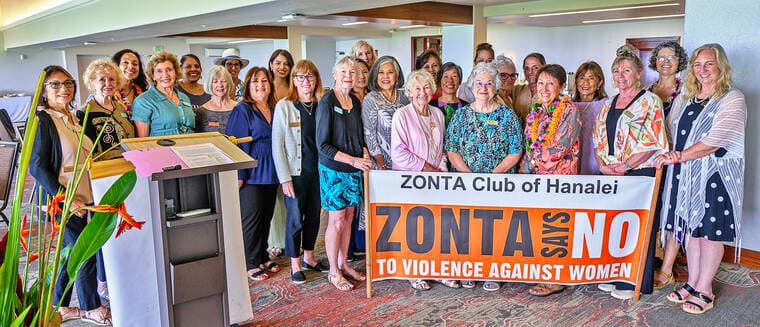
Support for survivors of family violence, not ceremony, drove the one-day Zonta gathering at the Sheraton Kaua‘i Coconut Beach Resort in Waipouli, where women leaders from across Hawai‘i met to compare notes on crisis intervention, shelter needs and advocacy.
The meeting brought together the Zonta Club of Hanalei and representatives from other clubs and organizations around the state. Keynote speakers from the YWCA of Kaua‘i helped steer the discussion toward the day-to-day realities of intervention and recovery, with YWCA of Kaua‘i Director of Crisis Services Katie Vanwingerden and Family Violence Shelter Director Isabella Zingray underscoring the continuing need for shelter services, intervention programs and longer-term support for women and families in crisis.
State Zonta leaders used the forum to link local service work with broader human-rights advocacy. District 9 Governor Gloria Salas and Area 1 Director Tracy Parker emphasized the organization’s role in advancing women’s rights while also pushing membership growth, a practical step they said would help Zonta expand its reach on Kaua‘i and across the state. The structure of the meeting made that point clear: the goal was to strengthen ties between clubs and community organizations so they can respond more effectively to violence prevention and survivor support.
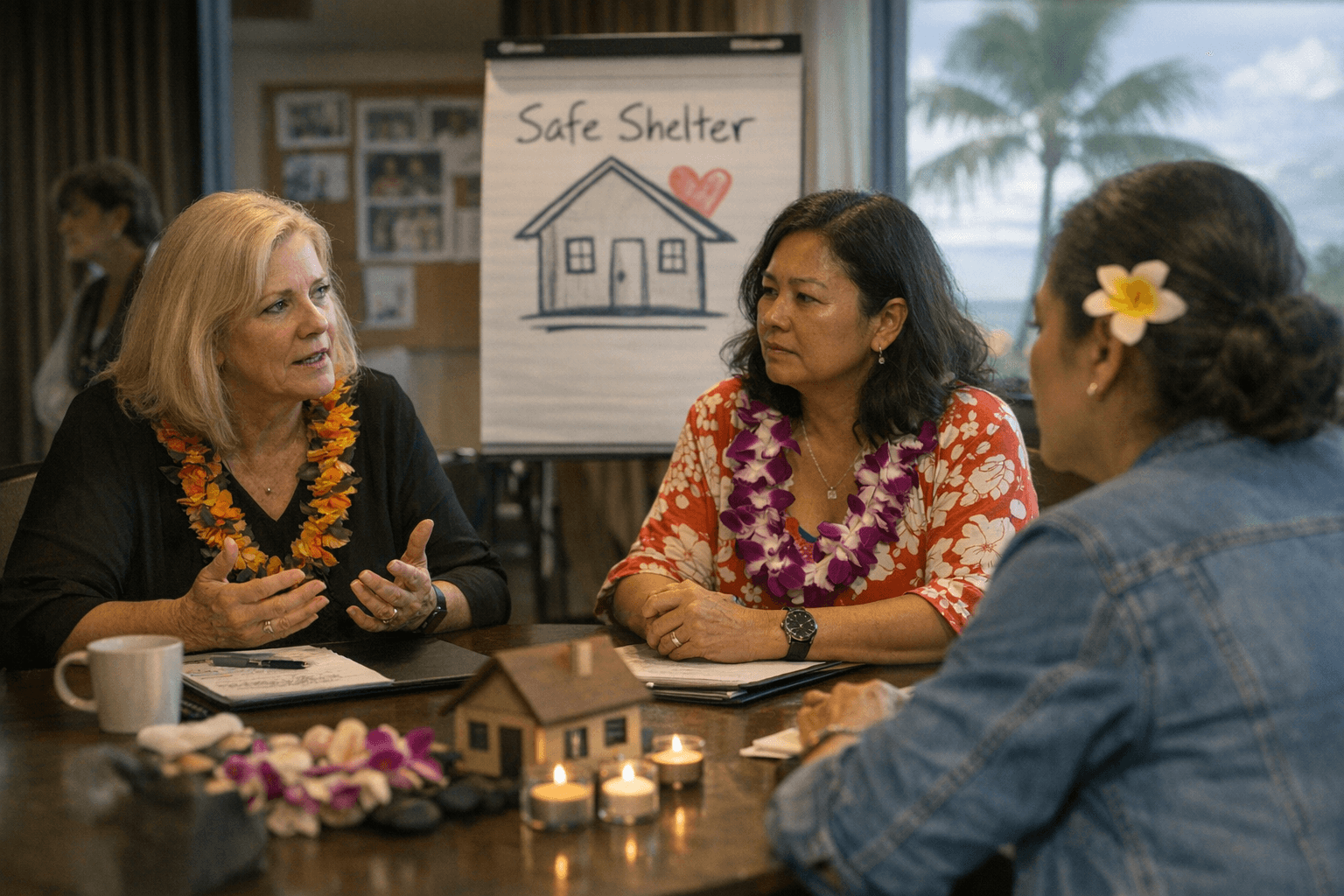
Zonta Club of Hanalei president Diana Harvey said the organization’s power comes from shared action, noting that “the strength of the organization lies in coming together, learning from one another, and taking meaningful action for women and girls.” That message framed the resort meeting as more than a networking event. It was also a reminder that the work depends on steady coordination between advocates, shelter providers and civic leaders after the crowd leaves the room.
For Kaua‘i, the significance is local. The island served as the host site for a statewide conversation about safety, service and women’s rights, with Waipouli becoming a temporary hub for planning how to better support survivors who rely on crisis lines, shelter beds and community intervention. The meeting did not announce a new program, but it made plain where the pressure points remain: keeping services staffed, widening advocacy and turning statewide solidarity into faster, more reliable help on the ground.
This article was produced by Prism’s automated news system from verified source data, official records, and press releases, then run through automated quality and moderation checks before publishing. The system is built and supervised by the people who set the standards it runs under. Read our full AI policy.
Did this article answer your question?