Anderson Family Bible reveals Coeur d’Alene theater roots and genealogy
An 1855 family Bible traces the Andersons from Scotland to Coeur d’Alene, where their descendants helped build the city’s theater scene.
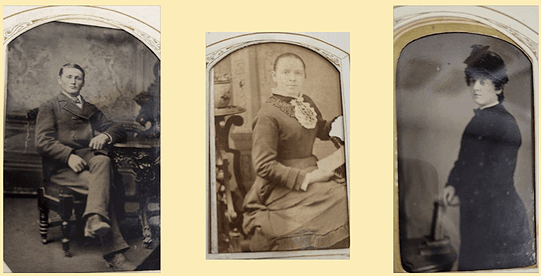
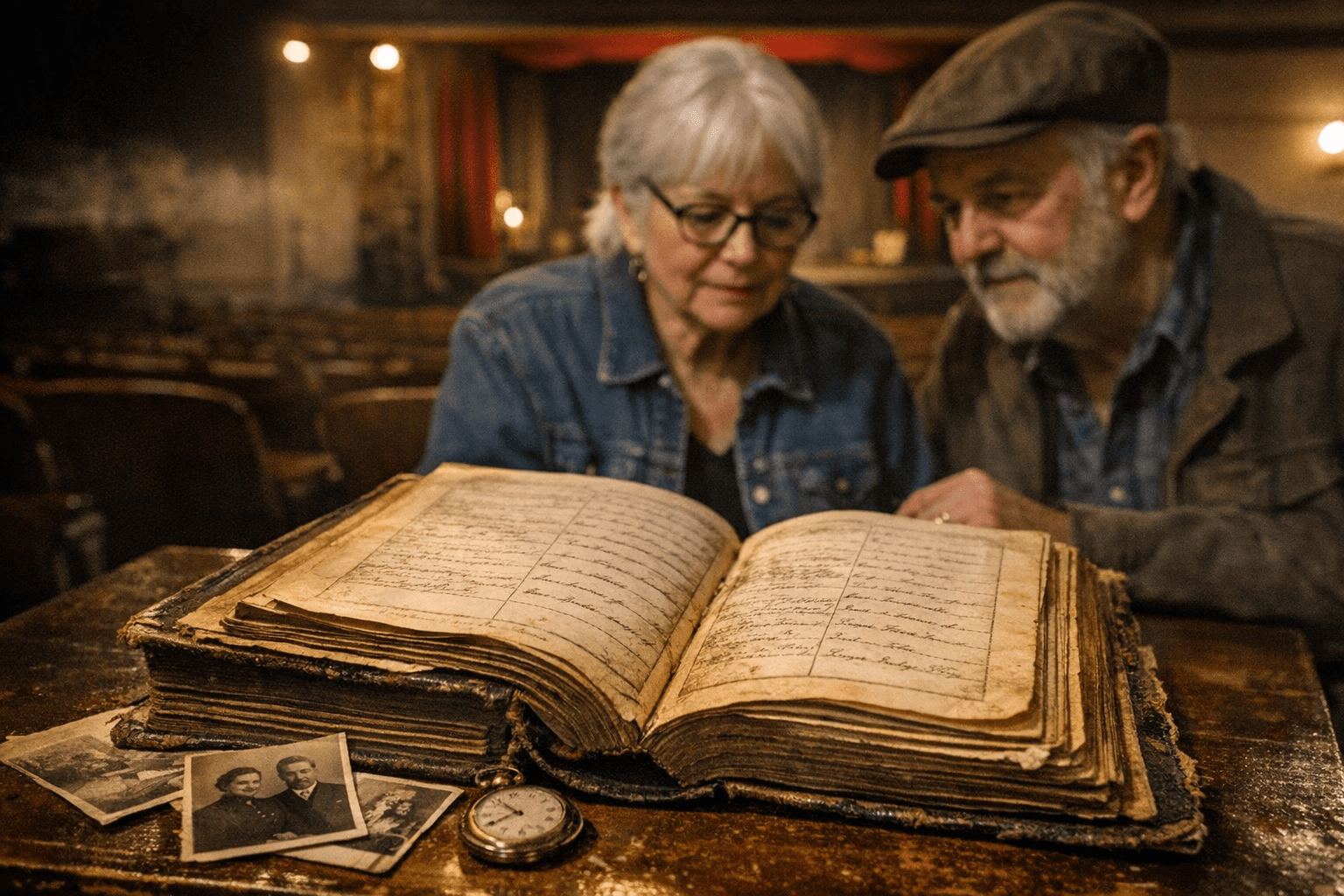
An ornate family Bible is doing more than preserving names and dates. It is mapping how one immigrant line moved from Scotland to Canada, settled in Coeur d’Alene, and helped shape the downtown entertainment economy that once drew crowds to the Wilma, the Huff and the Dream.
A Bible that holds a city’s hidden ledger
The Anderson Family Bible, cataloged with records stretching from about 1855 to 1963, surfaced through a local librarian and then went to the Kootenai County Genealogical Society. Its pages connect births, marriages, deaths, occupations and addresses across generations, turning a private object into a public record of Coeur d’Alene’s growth.
The Bible’s value is not only genealogical. It shows how family papers can preserve the kind of business history that often slips past official records. In a town where downtown life was built as much by entrepreneurs and performers as by merchants and mill owners, the Anderson volume captures the personal side of the story: who arrived, who stayed, who married into local families, and who ended up in the theater business.
That is why the item drew such attention during the April 8, 2026 History Hour at the Coeur d’Alene Public Library, part of the Museum of North Idaho’s free monthly lecture series. The presentation placed the Bible at the center of a broader account of how one family’s paper trail intersects with the city’s creative life.
From Scotland to Ottawa to Coeur d’Alene
The Anderson line began in Scotland, moved through Canada, and eventually reached Coeur d’Alene. That path matters because it places the family inside a larger pattern of migration that shaped North Idaho, where settlement often came through layered moves rather than a single leap from one continent to another.
Kootenai County Genealogical Society volunteers spent about a year and a half piecing together the family’s story. They worked through births, deaths, marriages, residences, occupations, census records and photographs, building a chain that turned the Bible from a cherished heirloom into a historical key. The result was not just a family tree but a portrait of how a household became part of the city’s business and cultural fabric.
The History Hour presentation, led by Laura Dabney and Pam Heath, followed the Anderson family from Ottawa, Canada, to Coeur d’Alene. That route helps explain how descendants became embedded in the town’s civic life, including the entertainment scene that blossomed in the early 20th century. The audience response showed how alive that history still is: people recognized addresses and landmarks that remain in or near the modern city, proof that old stories still sit in plain sight.
How Coeur d’Alene’s theater world took shape
The Anderson story lands in a city that was already building a movie-going culture by the early 1900s. According to the Museum of North Idaho, northern Idaho had more than a dozen movie theaters by 1911, and three were already operating in Coeur d’Alene: the Alene Theater, the Edison and the Lyric.
That backdrop helps explain why the family’s theater ties mattered. Nicholas Eugene Huff and Vera Anderson emerged as one of Coeur d’Alene’s early power couples, figures linked to both the city’s entertainment scene and the later Huff Apartments. Their names sit at the intersection of personal history and urban development, where family connections and business decisions helped define downtown.
A stock certificate preserved in archival records shows that N.E. Huff owned 100 shares in the Dream Theater in 1919. The Dream Theatre itself opened in Coeur d’Alene on April 24, 1914 and remained open until 1957. Those dates mark the period when motion pictures were becoming a regular part of downtown life, and when theater ownership could anchor a family name in the city’s memory.
Nicholas E. Huff’s own obituary excerpt adds another layer. It says he was a theater owner in Coeur d’Alene from 1915 to 1940, and that before coming to town he had worked in sawmills in Michigan and Montana. That shift from industrial labor to local entertainment business says much about the changing economy of the region. The same generation that worked timber also helped create the places where Coeur d’Alene gathered for news, stories and escape.
The rise, fall and residue of the Huff Theatre
One of the strongest links between the Anderson Bible and downtown history is the building that began as the Huff Theatre. It opened on September 9, 1936 with seating for about 600. By 1940, it had been renamed the Wilma Theatre, and it remained part of local life until it closed in 1983.
Its end came in 1997, when the building was demolished after the roof collapsed. That sequence, opening, renaming, closing and demolition, captures the life cycle of many downtown landmarks. The structure is gone, but the name survives in records, photographs and local memory, and the theater’s history still helps explain how Coeur d’Alene’s entertainment district evolved.
The story of the Huff and Wilma is also a reminder that downtown culture was not incidental to the city’s growth. It was part of the economy. Movie houses, storefront theaters and adjacent businesses drew foot traffic, created evening activity and gave names like Huff and Anderson a place in the civic landscape that outlasted the buildings themselves.
Why the Bible matters to Kootenai County history
The Anderson Family Bible shows why personal artifacts can matter as much as official archives. A courthouse record may capture a date, but a family Bible can carry the connective tissue of a community: kinship, mobility, occupation and memory all in one place. That is especially valuable in Kootenai County, where local history often survives in photographs, family papers and the work of volunteers.
The Museum of North Idaho says its photo collection includes about 39,000 digitized images, a reminder of how much of the region’s past survives in visual form. The institution has collected and interpreted objects representing the Coeur d’Alene region for more than fifty years, building an archive that complements what families keep at home. Together, those records help explain how downtown Coeur d’Alene became what it is today.
The Anderson Bible does exactly what the best local history does: it connects a family, a business, and a city. It shows that the roots of Coeur d’Alene’s entertainment economy are not only found in theater marquees and building permits, but also in the pages of an old Bible that carried a family’s story across oceans and into the heart of town.
This article was produced by Prism’s automated news system from verified source data, official records, and press releases, then run through automated quality and moderation checks before publishing. The system is built and supervised by the people who set the standards it runs under. Read our full AI policy.
Did this article answer your question?