Cataldo Mission highlights Kootenai County’s Indigenous and settlement history
Cataldo Mission pairs a low-cost family outing with some of Kootenai County’s deepest history. The riverfront site links Coeur d’Alene tribal heritage, missionary settlement, and the first road-and-ferry corridors through the region.
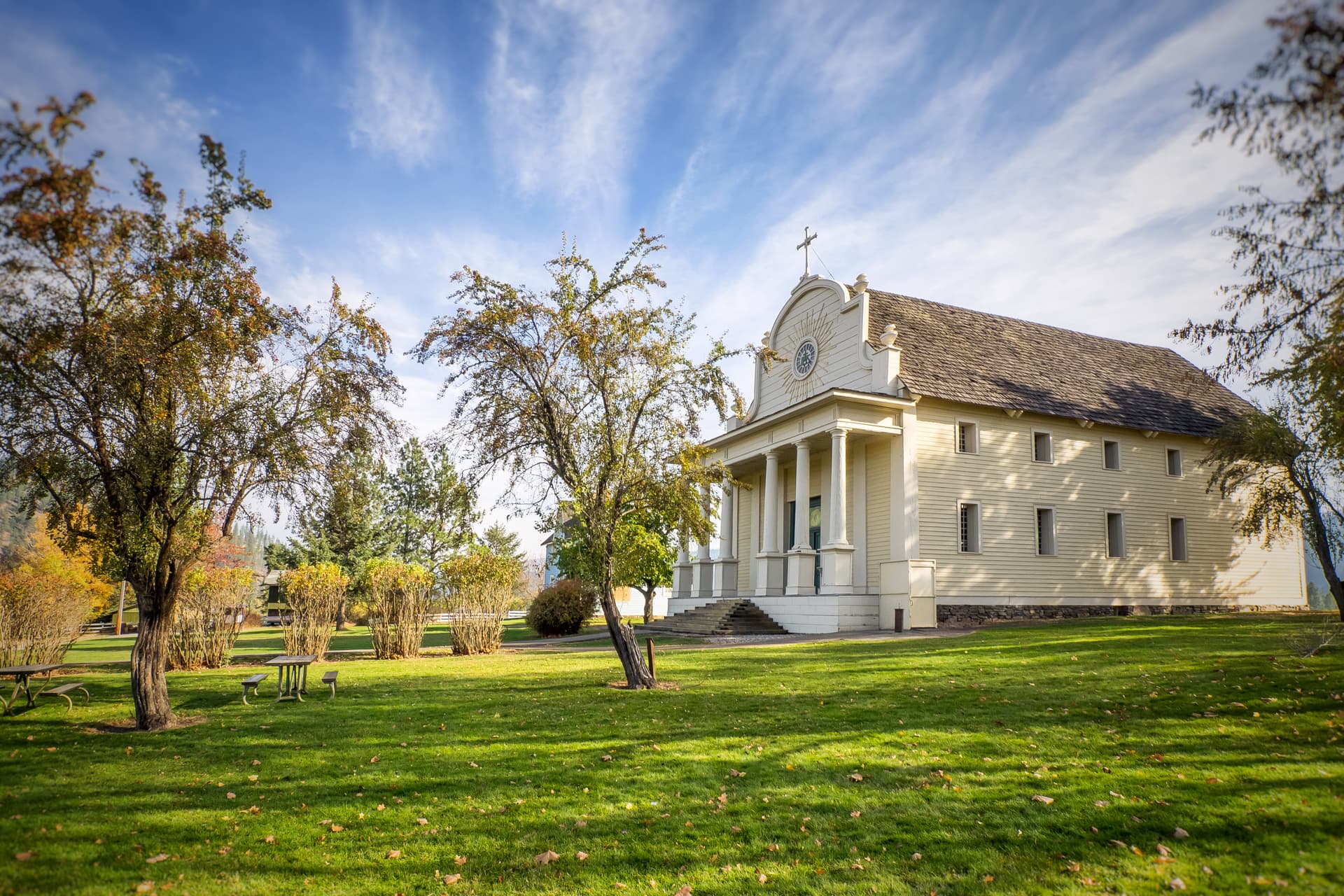
Cataldo is one of Kootenai County’s most rewarding day trips because it gives visitors a real place to stand while they learn how this part of Idaho took shape. Set beside the Coeur d’Alene River, the site combines a landmark church, a restored historic setting, and a clear view into Indigenous history and early settlement, all for a modest admission cost.
Why Cataldo belongs on a summer list

The draw here is not just that the Mission of the Sacred Heart is old. It is that the whole landscape still tells the story of how Native homeland, river travel, missionary activity, and rail-era settlement overlapped in one corridor. Kootenai County’s history places Cataldo on land that was originally a Coeur d’Alene Indian village known as sq'wt'u, and the town later took shape when Patrick J. Whalen, the first homesteader in the area, platted Cataldo.
That layered history gives the site unusual weight for a family stop or a slow afternoon drive. Father Joseph Cataldo, S.J., who served at the Old Mission from 1865 to 1870, gave the town its name, while Whalen’s ferry once connected the river crossing to the Mullan Road before rail service arrived in 1889. In a county that includes a significant portion of the center of the Coeur d’Alene Tribal Homeland and an important east-west trail system for interior Salishan peoples, Cataldo makes that larger story visible in one compact place.
What you actually see on the ground
The centerpiece is the Mission of the Sacred Heart, better known locally as the Cataldo Mission. Kootenai County says it was completed in 1853 and remains the oldest standing building in Idaho. Idaho State Parks describes it as a structure built between 1850 and 1853 by Catholic missionaries and members of the Coeur d’Alene Tribe, which is part of what makes the site so significant: it is not just a missionary relic, but a place shaped by Native and non-Native hands.
The park is more than the church itself. Visitors can see a restored parsonage, a historic cemetery, a 9,000-square-foot visitor center, and outdoor interpretive trails with panels and audio stations. Ranger-led tours are available at the historic church, and the interpretive exhibit helps explain the relationship between Jesuit missionaries and the Coeur d’Alene people. Those details make the stop practical for visitors who want more than a quick photo and for residents who have passed the sign on Interstate 90 for years without stopping.
The cost is low enough to fit an ordinary summer outing. The park lists a $7 motor vehicle entrance fee and a $5 per-person exhibit fee, so families can plan a short, affordable visit without the expense that often comes with a day trip.
How the mission site changed over time
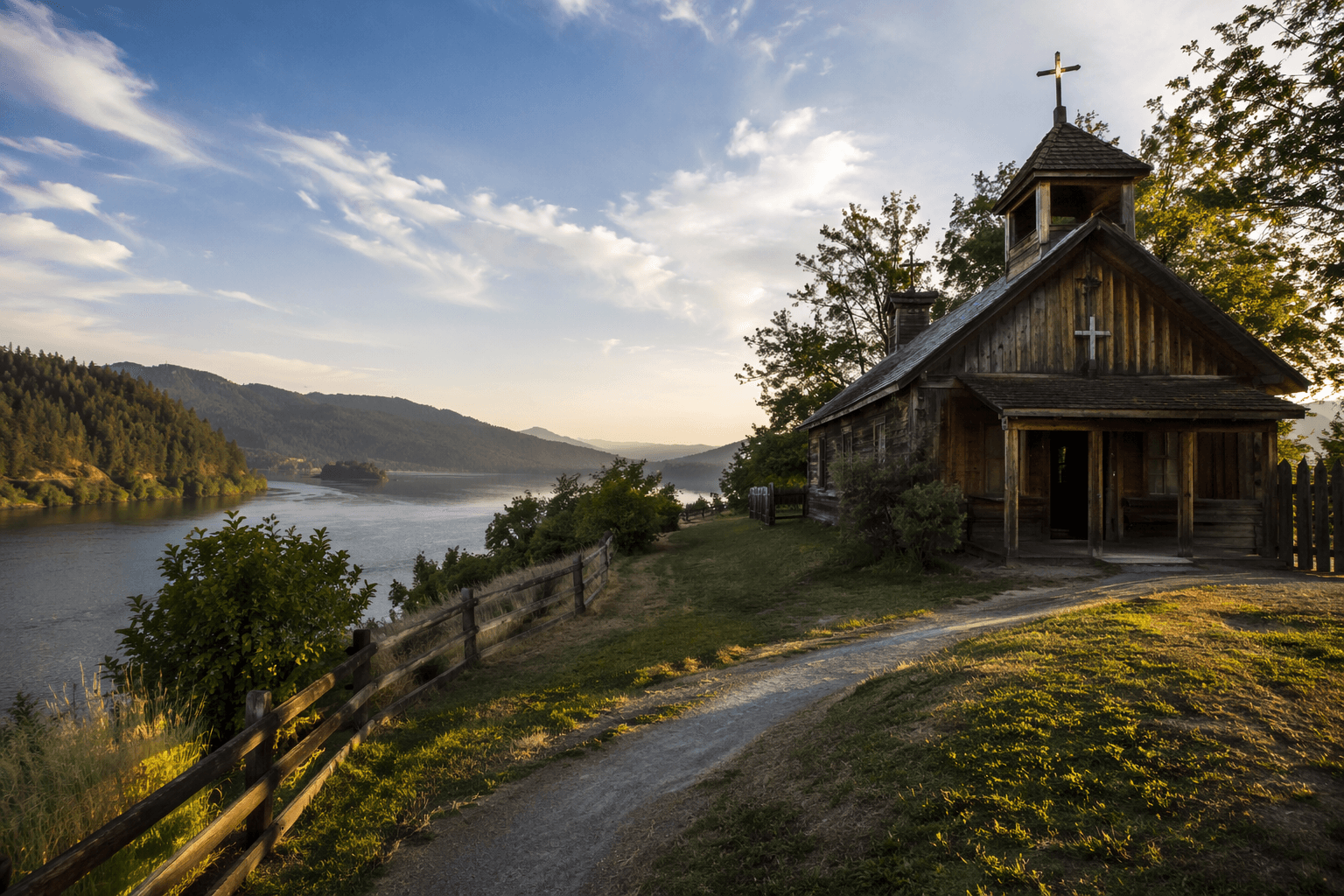
Cataldo’s story did not begin and end in one place. Idaho State Historical Society material says the mission was first established near St. Maries, then moved because the riverside location was vulnerable to flooding. A later historical document says the permanent church was designed in 1848 and remained under construction until 1855, underscoring how long the mission’s early footprint took shape.
The broader mission complex also shifted west. In 1877, after roughly three decades at the Cataldo site, a new mission location was developed at Desmet inside the Coeur d’Alene Reservation. That move matters because it shows the mission’s history was not frozen in the 1850s. It evolved as settlement patterns, tribal life, and institutional needs changed across the region.
Another major transition came in 1974, when the Coeur d’Alene Tribe assumed responsibility for the school and received title to the buildings from the Sisters of Charity of Providence. Tribal leaders wanted to preserve the early mission building as an interpretive center for culture and traditions, and that stewardship helps explain why the site still functions as a place of learning rather than just preservation.
Why the site matters beyond the architecture
Cataldo is listed on the National Register of Historic Places, which signals its recognized historic value, but the deeper reason it resonates is that it sits at the intersection of several histories that still shape Kootenai County. The Mission of the Sacred Heart is a physical reminder of missionary contact and settlement, but it is also tied to Coeur d’Alene tribal land, river travel, and the road systems that opened the inland Northwest.
That broader transportation story is part of the draw. The Mullan Road, the first engineered road connecting the Great Plains with the Northwest, linked Fort Benton, Montana, with Fort Walla Walla, Washington, from 1859 to 1862. Whalen’s ferry tied Cataldo into that route, giving the site a practical role in travel long before modern highways carried visitors past it. Today, the nearby Trail of the Coeur d’Alenes gives the area another layer of movement, this time for cyclists and hikers who want to pair outdoor time with history.
The result is a rare local stop that speaks to multiple audiences at once. Families can walk the grounds and see a building that predates Idaho statehood. Road-trippers can break up an Interstate 90 drive with a meaningful stop that takes very little planning. Residents who want to understand the county they live in can see, in one place, how Indigenous homeland, Catholic mission work, river commerce, and settlement all shaped the Cataldo corridor.
A simple way to plan the visit
A Cataldo trip works best when you give it enough time to slow down. Start with the mission building, then move through the visitor center and the interpretive areas before heading to the cemetery and the trails. If you want the fullest experience, add the ranger-led church tour, because the details of the structure and its setting help connect the architecture to the people who built, used, and preserved it.
The site’s value lies in that combination of low cost, easy access, and real substance. Cataldo is not only one of Kootenai County’s most significant landmarks, it is one of the clearest places to see how the county’s Indigenous history and early settlement history meet in the same stretch of river country.
This article was produced by Prism’s automated news system from verified source data, official records, and press releases, then run through automated quality and moderation checks before publishing. The system is built and supervised by the people who set the standards it runs under. Read our full AI policy.
Did this article answer your question?