Coeur d’Alene removes 3,000 pounds of leaves to curb phosphorus runoff
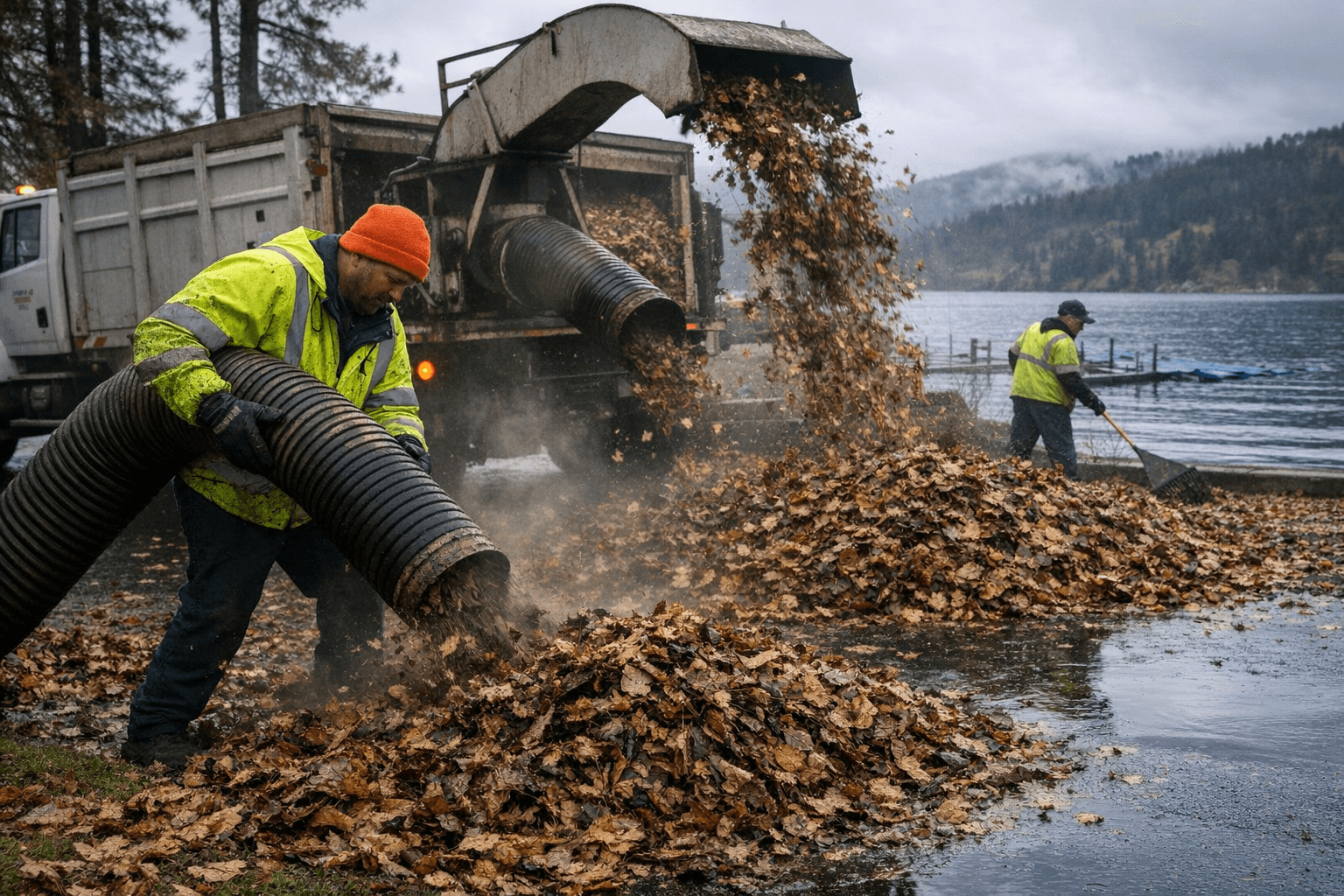
City crews collected roughly 3,000 pounds of leaves during this year’s leaf pickup to keep phosphorus from washing into Lake Coeur d’Alene after recent wet weather.

City of Coeur d’Alene crews removed roughly 3,000 pounds of phosphorus‑worth of leaves during this year’s annual leaf pickup, a targeted effort officials say prevents nutrient loads from reaching Lake Coeur d’Alene following recent wet weather and snowmelt. The city runs the program each autumn as part of its municipal leaf fest to intercept yard waste before it enters storm drains that discharge to the lake.
Sharon Bosley, Executive Director of the Basin Environmental Improvement Project Commission, framed the problem bluntly: “Stormwater is a major contributor. Every time it rains or snow melts, water flows across streets, parking lots, driveways and yards - collecting fertilizers, yard waste, pet waste and soil - before carrying phosphorus straight into the nearest storm drain. Those drains don’t lead to treatment plants; they often lead directly to the lake or another drainage way that leads to the lake.” Bosley has emphasized the leaf pickup program as a practical, locally managed step to reduce phosphorus inputs.
The removal numbers are part of a broader, multi‑partner campaign organized under the Our Gem Coeur d’Alene Lake Collaborative. The University of Idaho’s Idaho Water Resources Research Institute lists Our Gem partners as the Coeur d’Alene Tribe, Idaho Department of Environmental Quality, Basin Environmental Improvement Project Commission, Kootenai Environmental Alliance, Coeur d’Alene Regional Chamber of Commerce, and Kootenai County. IWRRI describes the collaborative as “a team of committed and passionate professionals working to preserve lake health and protect water quality by promoting community awareness of local water resources through education, outreach and stewardship.”
State and agency staff are backing the community approach. Jamie Brunner, listed by IWRRI as Coeur d’Alene Lake Management Supervisor with the Idaho Department of Environmental Quality, said, “I support Our Gem as a community‑based approach to preserving our shared natural resources and our quality of life.” Those coordinated outreach efforts are intended to complement technical work under the IDEQ lake management plan and ongoing USGS studies of basin water quality and the lake water budget.
Lake Coeur d’Alene’s physical setting amplifies the stakes. The lake is glacier‑formed and was deepened by the Post Falls Dam built in 1906; Avista Utilities funded and operates the dam for hydroelectric generation, flood control and irrigation. Major inflows come from the St. Joe, St. Maries and Coeur d’Alene Rivers, and the lake discharges to the Spokane River, which flows about 25 miles into east central Washington. Legacy metal sediments from over a century of upstream mining in the Silver Valley add complexity to current phosphorus concerns.
Regional partners and tribal organizations underline both the cultural and technical urgency. Upper Columbia United Tribes recalls that the Coeur d’Alene Tribe lived on the water “since time immemorial” and was driven offshore as mining expanded; the tribe’s subsequent efforts to identify pollutants and fight for cleanup remain central to basin remediation work. Bosley frames nutrient control as a practical lever amid that longer cleanup: “The combined threat of phosphorus and legacy metal sediments is complex, but the science is clear: managing nutrients is one of our best tools for protecting this lake into the future.”
Residents seeking details on municipal leaf pickup or opportunities to join stewardship efforts should contact Coeur d’Alene Public Works, Kootenai County Community Development Director David Callahan, or the Basin Environmental Improvement Project Commission for schedules and volunteer opportunities.
This article was produced by Prism’s automated news system from verified source data, official records, and press releases, then run through automated quality and moderation checks before publishing. The system is built and supervised by the people who set the standards it runs under. Read our full AI policy.
Did this article answer your question?