Coeur d’Alene robotics leader bridges startups, research and local training
John Shovic’s Coeur d’Alene robotics center is turning campus labs into job training, startup experience and real industry work for North Idaho.
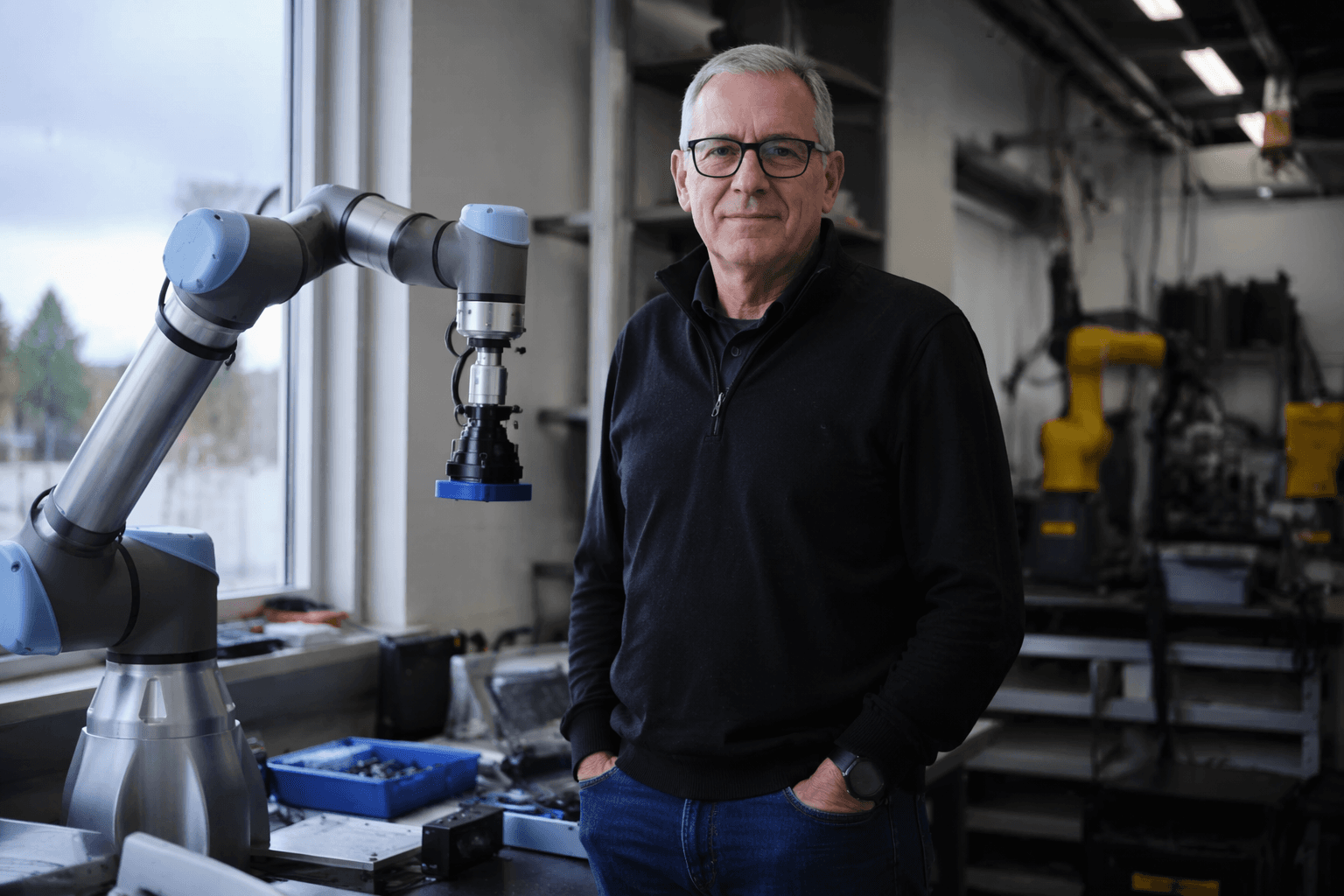
John Shovic has spent years building the kind of local tech ecosystem that usually gets talked about in bigger metro areas, but his work is rooted in Coeur d’Alene. From his office in the Hedlund Building on the North Idaho College campus, he leads the University of Idaho’s Center for Intelligent Industrial Robotics, a role that connects startup know-how, university research and hands-on workforce training in one place.
A Coeur d’Alene tech leader with startup scars and academic reach
Shovic’s path helps explain why the center feels unusually practical. He came up through Central Montana, earned a doctorate at the University of Idaho, then spent a long stretch in industry around Coeur d’Alene before returning to academia in 2017. Along the way, he founded Advance Hardware Architectures, TriGeo Network Security, Blue Water Technologies, InstiComm, SwitchDoc Labs and bankCDA. That mix gives him a rare perspective in North Idaho: he has seen both the messy first years of a company and the slower work of teaching students how to do this kind of work well.
That matters in a place like Kootenai County, where employers want people who can step into technical jobs without waiting years for training to catch up. Shovic’s profile on the University of Idaho site identifies him as research faculty and director of the Center for Intelligent Industrial Robotics in U of I Coeur d’Alene, which keeps the center tied directly to the local labor market instead of floating off as a remote academic project.
Inside the Hedlund Building, the lab looks a lot like the future workplace
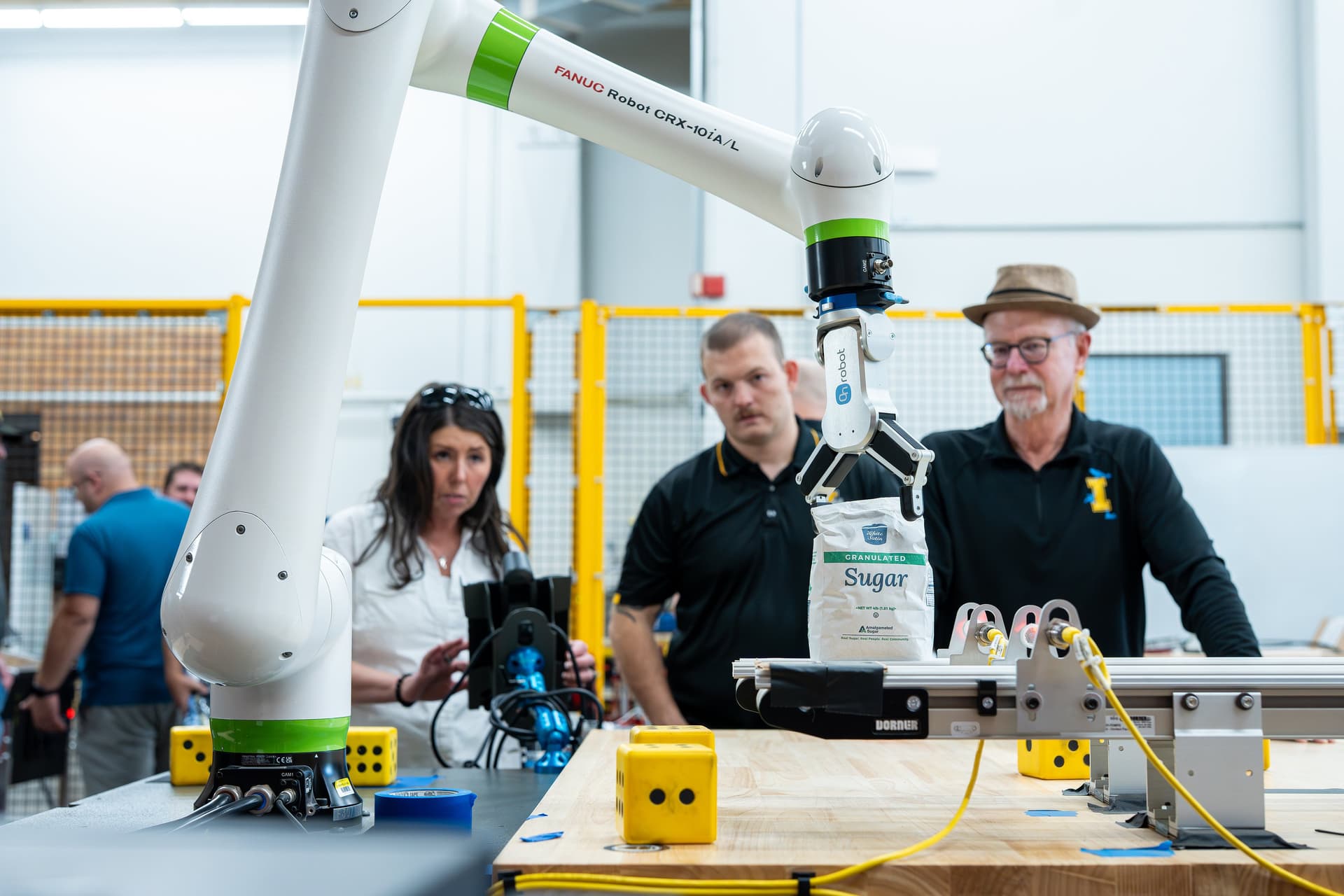
The center is not a side experiment tucked into a corner of campus. It houses more than 20 robots in the Hedlund Building, and those machines are used for industrial and therapeutic applications. University of Idaho materials say the center is built to integrate robotics research and training statewide, with a focus on artificial intelligence, automation, cybersecurity and manufacturing.
That makes the lab useful for more than demonstrations. It gives students a place to work with the same kinds of systems they will encounter on factory floors, in research labs and in specialized technical roles. University of Idaho also reported that the center was expected to graduate seven certificate-holding students by the end of Fall 2023, a sign that the program is producing credentialed talent rather than just showcasing equipment.
North Idaho College’s Industrial Robotics and Automation program, formerly called Mechatronics, now runs at the Coeur d’Alene campus and adds another pathway into the field. Together, the two schools have built a local ladder that starts with technical coursework and extends into higher-level robotics study without forcing students to leave town.
The 2-plus-2 model keeps students in Coeur d’Alene
The strongest local payoff comes from the 2-plus-2 arrangement between NIC and the University of Idaho. NIC handles the first two years of coursework, then the University of Idaho teaches the upper-level classes, all in Coeur d’Alene. The schools also share a robotics and automation lab, which gives students a continuous learning environment instead of separate silos.
X-Labs is where that collaboration becomes visible. North Idaho College describes it as a hub where students, faculty, community members and industry partners work on real-world challenges. NIC says the program launched in 2025 as a mission-driven strategy to connect regional students, instructors and employers, which makes the lab less about abstract innovation and more about keeping local talent linked to local opportunity.
Shovic says that shared setting creates an unusually strong experiential learning opportunity. In practical terms, it means NIC students, University of Idaho undergraduates and graduate students can all be in the same room working on the same problem, which is the kind of cross-training that can help a student move from classroom theory to a paycheck-ready skill set.
More than classroom work: projects already reaching local companies and forests
The center’s value shows up in the projects coming out of it. In 2024, a University of Idaho and North Idaho College capstone project called Project S.P.L.I.N.T.E.R. was reported to save a local company $300,000 annually. That is the clearest example of how robotics and automation training can reach beyond campus and into the balance sheets of North Idaho employers.
Another project, Project Evergreen, is pushing into forestry. In 2025, the University of Idaho said Shovic’s team was teaching autonomous robots to zap weeds in U.S. Forest Service tree nurseries. That work links Coeur d’Alene research to a regional industry that matters throughout Idaho and the Inland Northwest, where forestry and land management remain part of the economic backbone.
The center has also benefited from large-scale equipment that underscores the seriousness of the effort. A 2020 Coeur d’Alene Press report noted a $450,000, 800-pound FANUC industrial robot donated by Boeing to the University of Idaho. That kind of machine is not a classroom novelty; it is the sort of hardware students need to see, program and troubleshoot if they are going to train for real industrial work.
The next step is bigger, and students can already see it
The planned addition of a full-size manufacturing line for students to use in the fall is the clearest sign that the center is moving from advanced lab work into something even closer to industry. A manufacturing line changes the training environment from isolated robotics exercises to a system that looks much more like the production equipment students will encounter in jobs.
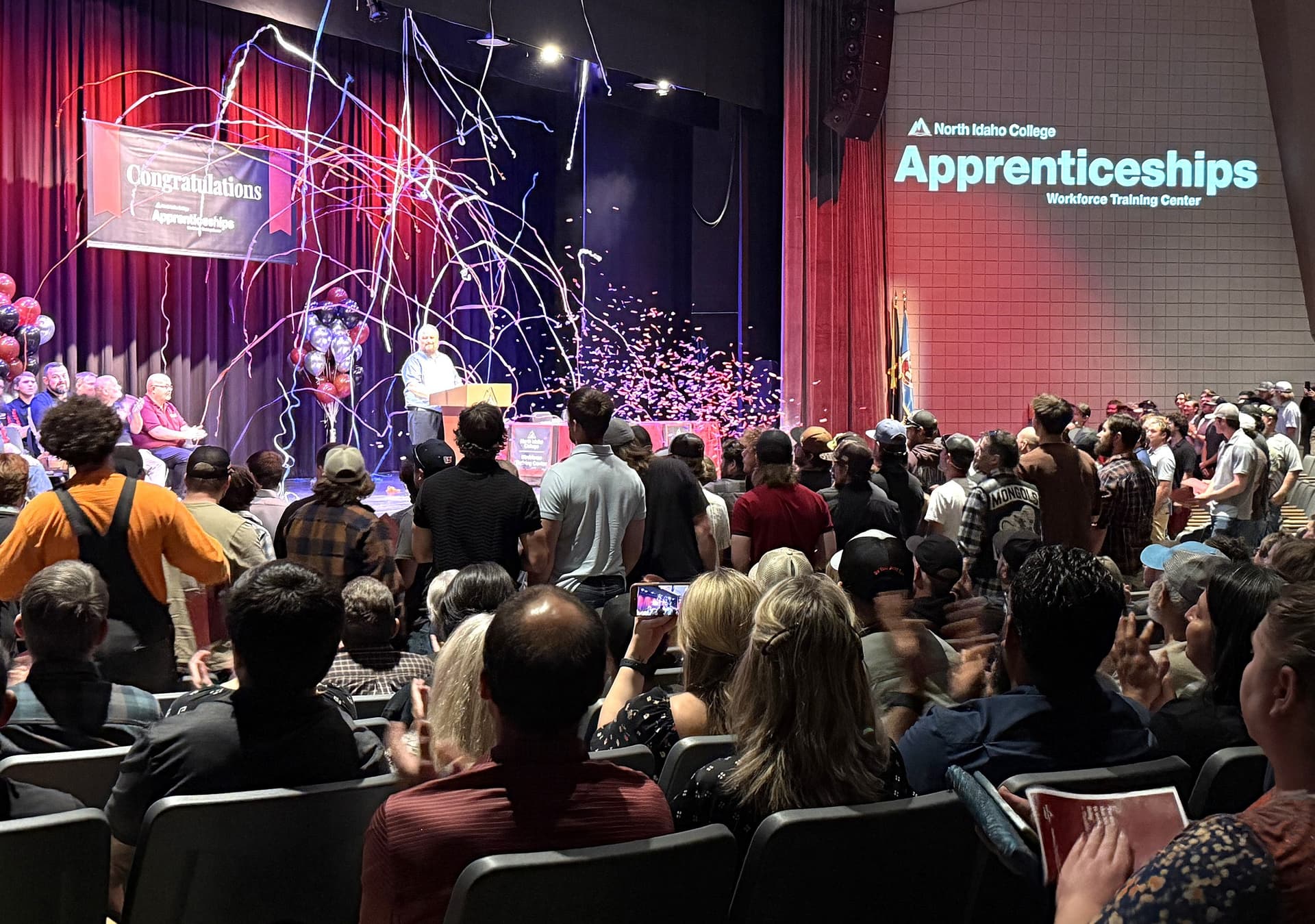
That is why the center has become part of the region’s workforce story, not just its education story. In May 2026, about 70 high school students or recent graduates toured the Hedlund Building’s STEM spaces, robotics lab and NIC X-Labs to learn about career pathways. Those visits show that the pipeline is already reaching younger students who might otherwise think technical careers require leaving North Idaho.
NIC also said in 2025 that it submitted a $4 million federal AI and robotics grant proposal with the University of Idaho’s center as a collaborator. Even without that money in hand, the proposal itself shows how the two schools are positioning Coeur d’Alene as a place where robotics education, manufacturing training and research can overlap.
For Kootenai County, that overlap is the point. Shovic’s work ties a local campus, a university research center, regional employers and student training into one system that keeps technical learning visible in Coeur d’Alene. It gives the city a stronger claim to being a place where the next generation of robotics workers can start, stay and build careers close to home.
This article was produced by Prism’s automated news system from verified source data, official records, and press releases, then run through automated quality and moderation checks before publishing. The system is built and supervised by the people who set the standards it runs under. Read our full AI policy.
Know something we missed? Have a correction or additional information?
Submit a Tip