Coeur d'Alene Writer Says HB 937 Threatens Local Land-Use Control
A Coeur d'Alene writer argues HB 937 would strip cities of public hearings and permit reviews for multifamily housing on church-owned land.

A bill introduced by Rep. Jordan Redman of Coeur d'Alene would force cities to greenlight multifamily housing on religious-owned land while bypassing the public review process those communities have built over decades, according to a Coeur d'Alene writer who published a pointed critique of the legislation last Tuesday.
Thomas Sanner, writing in the Coeur d'Alene Press, argues that Idaho's House Bill 937 "requires cities to approve multifamily housing projects on land owned by religious organizations without the traditional public process," meaning "no meaningful public hearings, no conditional use permits, and no ability for local elected officials to weigh community impacts." If a proposal meets basic criteria, it must be approved.
Redman, a Republican representing Coeur d'Alene, was named chairman of the House Business Committee at the start of the 2026 legislative session. HB 937 would limit the restrictions that cities could impose on new multifamily and mixed-use developments on religious land. The bill is in its first public testimony in the House Business Committee.
Sanner frames the stakes as a direct challenge to local planning authority. "This represents a significant shift away from local decision-making. Our cities have spent decades building comprehensive plans that reflect infrastructure capacity, neighborhood character, and long-term growth strategies. H0937 bypasses that process entirely," he wrote.
The editorial raises a second concern beyond process: the creation of a legally distinct class of property. The bill defines "religious land" to include not only land owned by a religious organization but also "land leased by a religious organization for a term of no less than forty (40) years." Sanner argues that provision opens a significant gap in local oversight. In his words, the bill "allows long-term lease arrangements, which could enable private developers to benefit from streamlined approvals that others do not receive," introducing what he calls "an uneven playing field for property owners and developers."
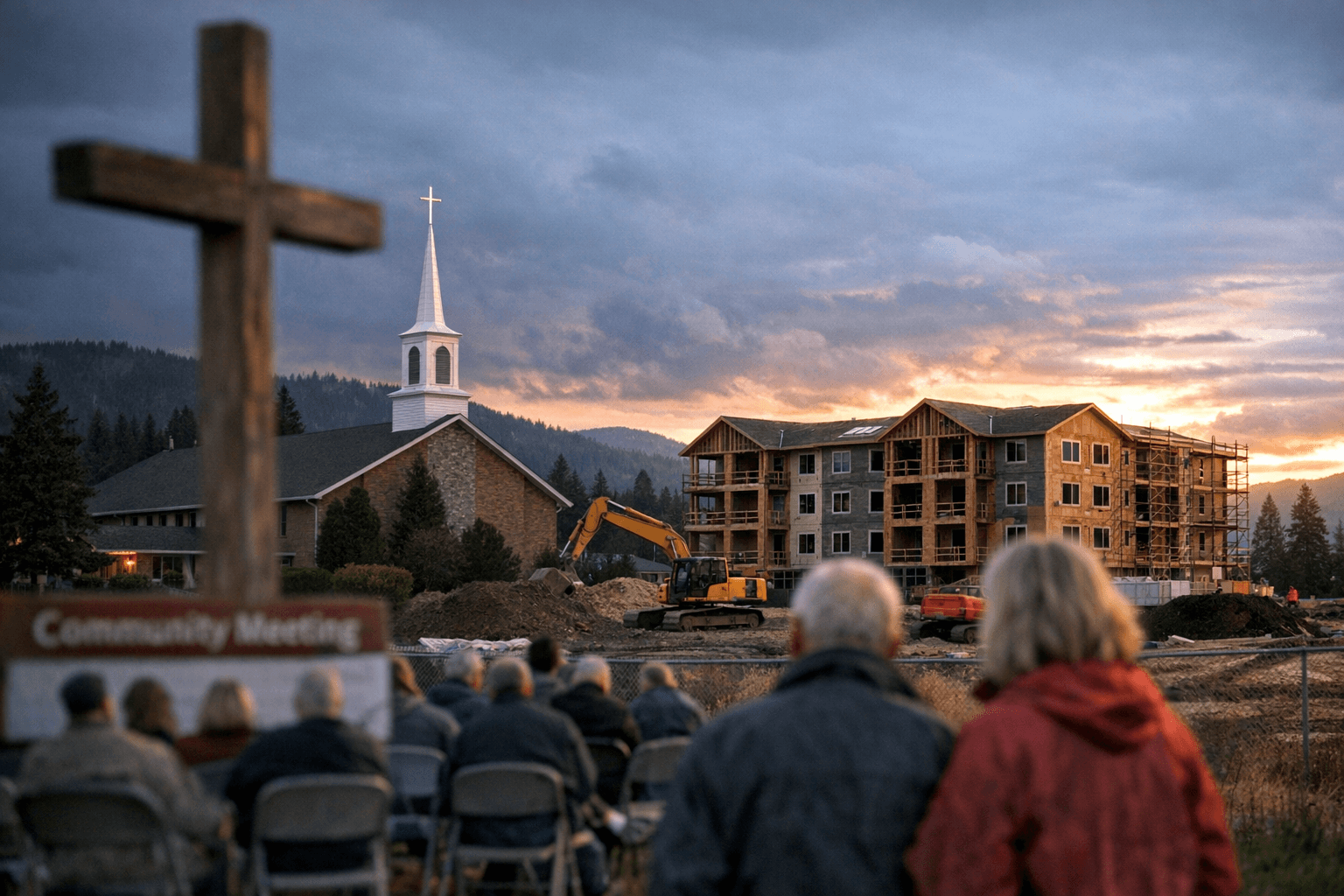
Kootenai County's rapid growth sits at the center of Sanner's argument, though he is careful to separate his concern about process from any opposition to housing itself. "We can support housing while still respecting the voices of local residents and the planning processes that guide responsible growth. House Bill 937 moves us in the opposite direction," he wrote.
His broader warning is about what approval of HB 937 could signal for future legislation. "Once local control is weakened in one area, it becomes easier to do so in others. That is a precedent worth carefully considering," Sanner wrote, urging that housing solutions "come through local collaboration, not state mandates that remove community input."
Redman has not publicly responded to Sanner's editorial. The bill's current status in the House Business Committee, which Redman chairs, means he holds considerable influence over whether HB 937 advances to a full House vote.
This article was produced by Prism’s automated news system from verified source data, official records, and press releases, then run through automated quality and moderation checks before publishing. The system is built and supervised by the people who set the standards it runs under. Read our full AI policy.
Did this article answer your question?