Farragut State Park offers year-round recreation, wartime history in Kootenai County
Farragut State Park pairs year-round recreation with a rare World War II footprint, from 223 campsites to the preserved Brig and its naval-training past.

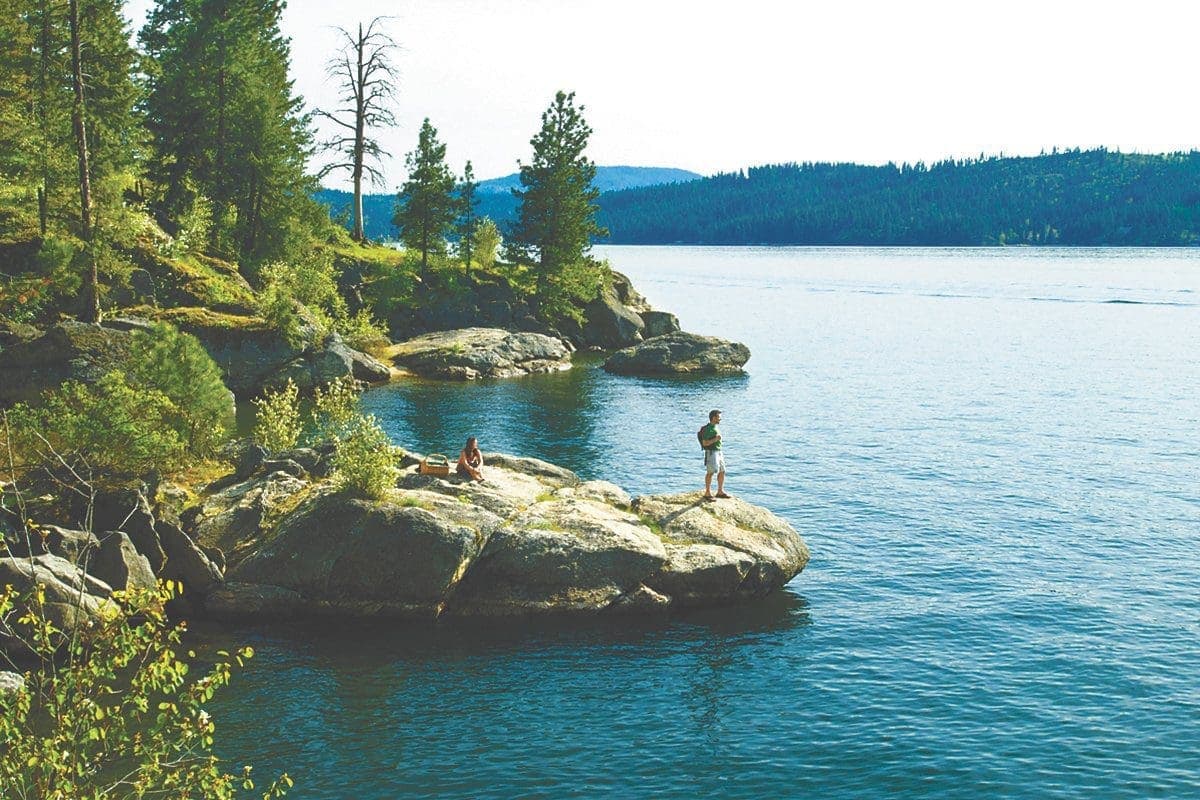
Farragut State Park gives Kootenai County two payoffs in one trip: a big outdoor playground on Lake Pend Oreille and a physical remnant of one of the Navy’s largest wartime training sites. Spread across 4,000 acres on the southern tip of the lake in the Coeur d’Alene Mountains, the park is built for camping, day use and history-minded stops that fit easily into the same visit.
A park that works in every season
Farragut is open year-round, which makes it a reliable base for lake-country weekends, shoulder-season hikes and winter day trips when many mountain destinations quiet down. Idaho Department of Parks and Recreation keeps day-use areas open from 7 a.m. to 10 p.m. unless posted otherwise, and the visitor center is open daily in winter from 9 a.m. to 4 p.m.
That long season matters because the park is not a single-purpose site. It is the largest and busiest camping park in the state park system, and it is built to absorb everything from family campouts to larger group stays. With 223 individual campsites, 10 camping cabins and 7 group camps, Farragut offers options that range from tent space to cabin convenience without leaving the park footprint.
What to do once you get there
The recreation list is broad enough to support a full day or a full weekend. Official park materials point to disc golf, a radio-controlled airplane field, fishing, hiking, biking and equestrian facilities, plus a non-motorized commuter trail system that adds another way to move through the property. The park also has dedicated horseback accommodations, which makes it unusual among Idaho state parks for riders who want an overnight base.
That mix is part of Farragut’s appeal for Kootenai County residents planning something practical. A single destination can handle a multi-family reunion, a trail outing, a fishing stop or a riding trip without requiring separate reservations across multiple venues. The park’s group camping demand reflects that reality, especially for larger gatherings that need space, shared amenities and easy lake access.
The Brig and the wartime history still visible on site
Farragut’s most distinctive feature is the Museum at the Brig, which turns a recreation trip into a history lesson. The Brig is one of only a few structures left from the 776 buildings that once stood on the Farragut Naval Training Station, and it is dedicated to the 293,381 naval recruits who received their basic training there.
The building itself carried a harder purpose during the war. Idaho Department of Parks and Recreation’s release on the Brig’s ribbon cutting says it served from 1942 to 1946 as a confinement facility for unruly naval recruits, with barred windows, gates, jail cells and support facilities. Today, the museum uses that preserved space to display boot camp, naval and war memorabilia, giving visitors a concrete way to understand how the base operated.
The bigger story starts with the base’s construction. Kootenai County’s history notes say the Farragut Naval Training Base was built in 1942 by a workforce of about 22,000 and eventually housed as many as 55,000 service personnel. Idaho State Parks says the training station operated from 1942 to 1946, after which the site was decommissioned and later converted into Farragut State Park.
Why the road to Farragut was widened
The park’s postwar life was shaped by more than camping. Highway 54 was widened in the mid-1960s between Athol and Farragut State Park to handle National and International Scout Jamborees, and the largest of those gatherings drew 42,000 Boy Scouts. That kind of traffic left a mark on the region’s infrastructure and helps explain why the park’s access routes and open spaces are sized the way they are.
Farragut’s scouting history includes major events that went far beyond routine summer programming. The 1967 World Scout Jamboree ran from August 1 to 9 and brought 12,011 Scouts from 105 countries, while the Boy Scouts of America’s host-country allotment was 4,282 Scouts. Earlier and later events also kept the site in the national spotlight, including the National Girl Scout Senior Roundup in 1965 and National Scout Jamborees in 1969 and 1973.
That reuse is part of the park’s identity. A site built for wartime training, then adapted for massive youth gatherings, now functions as a year-round public recreation area. The layers are still visible in the road network, the surviving buildings and the way the land can still hold large crowds without losing its identity as open space.
How to plan the visit
The easiest way to think about Farragut is as a split-screen destination. On one side are the practical amenities: campsites, cabins, group areas, trails, fishing, biking, horseback riding and day-use space. On the other is the museum and the preserved naval history that sets the park apart from ordinary campgrounds.
For a straightforward visit, the seasonal details matter. The Museum at the Brig typically opens Memorial Day through Labor Day, and in spring 2026 it was open daily from 10 a.m. to 4 p.m. until Labor Day weekend. That makes summer the best time to pair a recreation day with the museum interior, while the rest of the year still leaves the park open for hiking, fishing and camping.
Why Kootenai County still uses Farragut
Farragut remains a major public asset because it sits at the intersection of lake access, camping demand and local history. Kootenai County says the county has about 20,000 registered boaters and more than 44,000 navigable acres, a reminder that water recreation is not a niche interest here. A lake-adjacent park with broad access and overnight capacity fits that local pattern better than a small specialty site would.
The result is a place that works on two levels at once. Families can come for an easy outdoor weekend, then leave with a clearer picture of how 293,381 recruits, 22,000 wartime workers and a decommissioned naval base shaped the land they are using now. That combination is what keeps Farragut useful, visible and worth revisiting in every season.
This article was produced by Prism’s automated news system from verified source data, official records, and press releases, then run through automated quality and moderation checks before publishing. The system is built and supervised by the people who set the standards it runs under. Read our full AI policy.
Know something we missed? Have a correction or additional information?
Submit a Tip