Farragut State Park reveals Kootenai County’s World War II naval history
A concrete building in Farragut State Park reveals how Kootenai County helped train more than 293,000 sailors, and why the Museum at the Brig is worth the trip now.
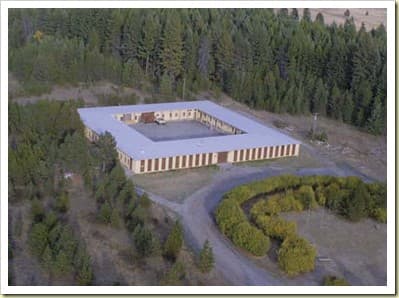
The surprise inside Farragut State Park is not a campground or a boat ramp. It is the Museum at the Brig, a surviving concrete-block building from Farragut Naval Training Station, the inland base that helped turn Kootenai County into part of America’s World War II war effort. For locals heading to the south tip of Lake Pend Oreille near Athol, the stop shows how a recreation park still carries the footprint of a naval training station built in a hurry after Pearl Harbor.
What the Brig shows visitors
The Brig is the most visible piece of the old training station still standing, which is exactly why it matters. The Idaho Department of Parks and Recreation brochure describes it as a “World War II sentinel,” a phrase that fits the building’s role today as the place where the park interprets the naval station’s history. Visitors do not have to imagine the past from a distance here; they can stand in front of the same concrete-block structure that survived from the military era.
That physical survival gives the museum unusual force. Farragut State Park may now be known for camping, hiking, boating and lake access, but the Brig reminds visitors that the park was once a land-locked seaman training facility spread across more than 4,000 acres on the southern end of Lake Pend Oreille. The museum’s setting explains why the park does not feel like a typical recreation area. Its roads, open spaces and preserved structures still reflect the scale of the wartime base.
The Museum at the Brig also carries living memory, not just archived history. Jim Stephens first came to Farragut Naval Training Station in 1943 as a new recruit, then returned as a centenarian for the museum reopening after a remodel in 2025. That connection between a former sailor and the restored museum gives the site a human dimension that goes beyond plaques and displays.
How Farragut was built, and why it grew so large
Farragut Naval Training Station rose in direct response to the December 7, 1941 attack on Pearl Harbor. The Idaho Parks and Recreation brochure says the station was hurriedly constructed in just 11 months by 22,000 workers, a pace that turned open land in North Idaho into a major wartime installation in less than a year. That speed alone makes the site one of the most striking examples of wartime mobilization in the inland West.
The scale was even larger than many visitors expect. The brochure describes Farragut as the world’s second largest naval training facility, and more than 293,000 men passed through for basic training during World War II. Historical entries from Intermountain Histories also identify it as a World War II-era inland naval training site, while a PBS and KSPS documentary on the subject uses the title “America’s Landlocked Navy: Farragut’s WWII Memories.” Together, those details make the station stand out not just as a local landmark, but as a national military story planted in Idaho.
That inland location is what made Farragut memorable then and now. Naval Station Great Lakes is the more familiar comparison on the Great Lakes, but Farragut performed similar work far from any coast, in a part of Idaho that most people now associate with pine forests, lake recreation and weekend drives. The contrast helps explain why the station drew attention in wartime coverage as Idaho’s inland naval base.
Why it still shapes Kootenai County identity
Farragut’s legacy is not confined to museum walls. The park sits in one of the county’s most heavily used outdoor areas, so residents and visitors encounter that history while they are there to recreate. The old military footprint is still part of the landscape, which means the park tells two stories at once: one of public leisure and one of wartime service.
That dual identity matters in Kootenai County because it connects a familiar place to a far larger national event. Tourism materials from Visit Idaho, Visit Sandpoint and Visit North Idaho continue to frame Farragut as part of Idaho’s wartime contribution, and the Idaho Military Museum has treated the site as a key piece of the state’s military heritage. The result is a local landmark that belongs both to the county’s present-day outdoor culture and to the history of the generation that trained there.
The museum’s reopening keeps that history in circulation instead of freezing it behind glass. The Brig is still the most concrete reminder that Farragut State Park began as a naval training station built at wartime speed, staffed by thousands of workers and used by hundreds of thousands of recruits. That is why the stop at the Museum at the Brig is one of the clearest ways to understand how Kootenai County was pulled into the national war effort, and why the park remains one of North Idaho’s most distinctive public places.
This article was produced by Prism’s automated news system from verified source data, official records, and press releases, then run through automated quality and moderation checks before publishing. The system is built and supervised by the people who set the standards it runs under. Read our full AI policy.
Did this article answer your question?