Idaho House Committee Delays Vote on Kratom Ban After Hours of Testimony
Idaho lawmakers refused to vote on a kratom ban Thursday, holding House Bill 864 until March 25 after dozens testified the substance keeps veterans and chronic pain sufferers functional.

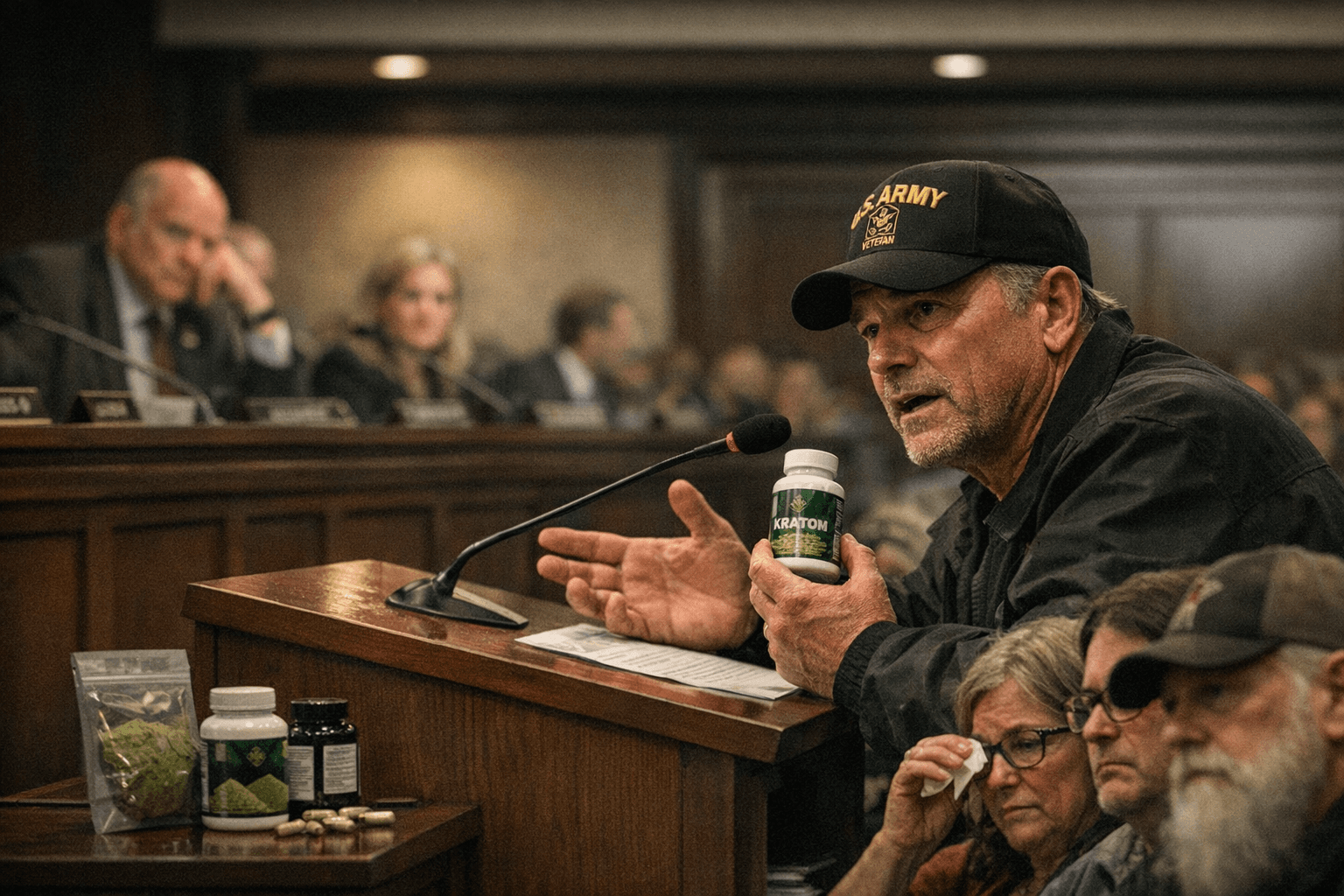
Dozens of Idahoans crowded into the House Health and Welfare Committee room Wednesday and Thursday to plead their case on a bill that would criminalize a substance many say keeps them functional each day, and the committee blinked. Faced with hours of conflicting testimony, the panel declined to act on House Bill 864 on March 20 and instead held the bill until March 25.
The legislation would classify derivatives of Mitragyna speciosa, the plant known as kratom, as a Schedule I controlled substance under Idaho's Uniform Controlled Substance Act starting July 1. That designation would place kratom alongside marijuana in Idaho's most restrictive drug category and make it illegal to sell or buy anywhere in the state, criminalizing both users and distributors.
The testimony split sharply. Former military members and chronic pain sufferers described kratom, sold in powder and capsule form at gas stations and smoke shops across Idaho, as a lifeline. Lora Romney told the committee she has taken kratom daily for nine years to manage a severe facial nerve condition. "I woke up at about an eight level, and with the help of kratom, I'm able to pull that down to a livable level and to be able to function," Romney said. She warned that a July 1 ban would leave her facing criminal charges for the same routine. "For me to know that literally, within a month or something, I could be a criminal for just trying to control my pain," she said.
A speaker identified only by surname Mathes echoed that sentiment. "Natural kratom has been different. It has helped me reduce my pain in a way that allows me to live a normal, functional and productive life."
The American Kratom Association urged the committee to pursue regulation rather than an outright ban. Spokesperson Bramble told lawmakers the organization fully supports tighter controls. "We would like to see labeling requirements, content disclosures, warnings and age limits for violations. It absolutely needs to be regulated, because of the bad actors," Bramble said.
On the other side, law enforcement, physicians and family members who lost relatives to kratom-related harm testified in support of the bill. Rep. Erin Bingham argued the regulatory path has already failed elsewhere. "Kratom has not been successfully regulated in other states and it should be classified as a Schedule I drug," Bingham said. Those opposing kratom focused particularly on deaths linked to synthetic derivatives, and cautioned about the substance's susceptibility to abuse.
Much of the debate turned on a single technical question: whether Idaho law could meaningfully distinguish between natural kratom leaf products and synthetic alternatives, including the compound 7-hydroxymitragynine. The FDA has said it is "not focused on natural kratom leaf products," a position at odds with that of U.S. Sen. Mike Crapo, who signed a letter urging the agency to add both whole-leaf kratom and the synthetic derivative to the federal Controlled Substances Act. Utah addressed that line in its 2019 Kratom Consumer Protection Act, which banned products containing more than 2% of the synthetic compound while adding labeling, testing and product registration requirements.
Committee deliberations exposed how unprepared the panel was for the debate. Several members said they had not heard of kratom before this session. Rep. Megan Egbert, D-Boise, brought the first motion, proposing to send the bill to the House floor with no recommendation. Though she prefers a regulatory approach, Egbert said she feared the legislative session would end without any action at all.
Rep. Rob Beiswenger, R-Horseshoe Bend, pushed back, warning the committee against making a "bigger mistake" by recommending a full ban. Beiswenger noted that Schedule I classification carries an implicit finding of no medical value, a conclusion he said directly contradicts what witnesses described under oath.
Rep. Ilana Rubel, D-Boise, captured the committee's paralysis most precisely. "I feel that the current status quo is totally unacceptable," she said. "I'm not comfortable with making felons out of army veterans who are dealing with severe chronic pain, but I'm also really not comfortable with leaving it for sale unregulated in gas stations."
The committee returns to House Bill 864 on March 25 with no clear consensus on whether to pursue an outright ban, a narrower targeting of synthetic derivatives, or a consumer protection framework modeled on what other states have tried.
This article was produced by Prism’s automated news system from verified source data, official records, and press releases, then run through automated quality and moderation checks before publishing. The system is built and supervised by the people who set the standards it runs under. Read our full AI policy.
Did this article answer your question?