Kootenai County pushes local action to curb lake pollution
Runoff from roads, yards, septic systems and construction sites keeps feeding Coeur d’Alene Lake. Kootenai County’s answer is local action, not a single silver bullet.
Why the lake is still vulnerable
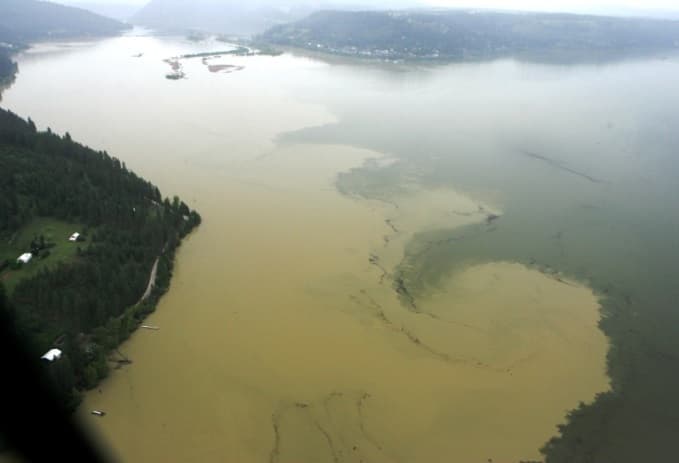
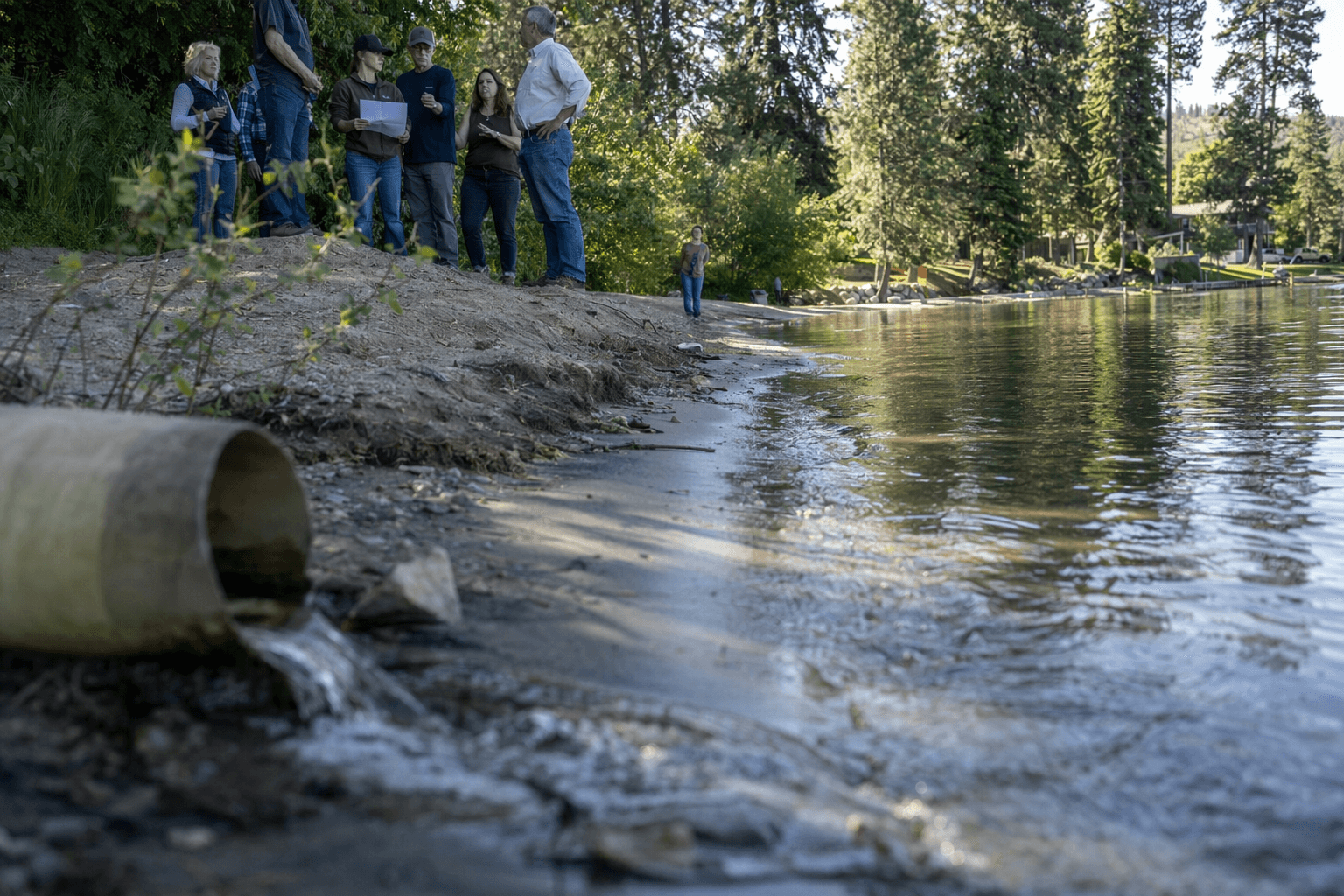
Runoff from everyday places around Kootenai County keeps feeding Coeur d’Alene Lake, even when no single pipe, spill or smokestack is to blame. That is the core challenge of nonpoint source pollution: rain and melting snow move across roads, farms, forests, yards and neighborhoods, picking up contaminants before carrying them into streams, the Coeur d’Alene River and eventually the lake.
The Coeur d’Alene Lake subbasin covers 651 square miles and includes the lake, the river and several tributaries. Idaho Department of Environmental Quality says the dominant land uses are forestry, agriculture and urban development, which means the watershed is shaped by logging roads, fields, subdivisions, storm drains, driveways and construction sites as much as by any formal treatment plant. The problem is cumulative, and that is what makes it so hard to see until the water quality has already changed.
What is getting washed downhill
Idaho DEQ’s nonpoint source program points to a broad mix of pollutants that show up in runoff: fertilizers, pesticides, oil, antifreeze, sediment, salts, and bacteria and nutrients from livestock, pet waste and faulty septic systems. In practice, that means a fertilized lawn in a subdivision, a muddy job site, a leaking car, an eroding hillside or a failing drain field can each contribute a little pollution that becomes a much larger basin-wide burden.
That is why the issue is not limited to one industry or one jurisdiction. It reaches into the habits of homeowners, the practices of developers, the maintenance routines of local governments and the permitting decisions that shape how land gets built out in North Idaho.
A long record of warning signs
The water-quality debate around Coeur d’Alene Lake is not new. Idaho DEQ says the 1999 subbasin assessment found 18 water bodies in the basin impaired by at least one pollutant, including temperature, sediment and bacteria. DEQ also says a Coeur d’Alene Lake metals TMDL was developed in 2000 through the state and the U.S. Environmental Protection Agency, then overturned by the Idaho Supreme Court in 2003.
The monitoring history runs even deeper. A National Academies review notes that EPA sampling on the lake began in 1977, with U.S. Geological Survey watershed studies in 1991 and 1992, then again from 2003 to 2006. That long record matters because it shows the basin has been watched for decades, and the signals of stress have been persistent enough to demand repeated study.
Legacy mining adds another layer. A report summarized in local coverage says nearly 80 million metric tons of heavy-metal-contaminated sediment sit at the bottom of Coeur d’Alene Lake. That is the backdrop for today’s phosphorus reduction work: the lake is dealing with modern runoff and an inherited burden at the same time.
The local coalition behind the cleanup
The response is built around collaboration rather than a single agency fix. The Our Gem Coeur d’Alene Lake Collaborative includes experts from the University of Idaho’s Idaho Water Resources Research Institute, the Coeur d’Alene Tribe, Idaho DEQ, the Basin Environmental Improvement Project Commission, Kootenai Environmental Alliance, the Coeur d’Alene Regional Chamber of Commerce and Kootenai County.
That coalition is trying to connect science to public behavior. Its 2021 community survey drew more than 1,000 responses, a sign that lake health is not just a technical issue for engineers and scientists. It is also a civic issue, tied to how people see the lake, how they use it and how they think growth should be managed around it.
Where state money is going now
Gov. Brad Little established the Coeur d’Alene Lake Advisory Committee in 2021 and directed $2 million for projects aimed at reducing phosphorus from wastewater, stormwater runoff, erosion and other sources. In March 2023, the committee recommended $31 million for 19 water-quality projects in the basin, and later reporting said the state was putting that money toward projects designed to pull phosphorus out of the Coeur d’Alene River Basin, with work required to finish by the end of 2026.
One of the most concrete examples is a wastewater treatment plant upgrade in the Silver Valley. It is expected to remove about 7,000 pounds a year of phosphorus from reaching the South Fork Coeur d’Alene River, while also cutting some metals tied to the region’s legacy mine waste. That kind of project shows why the current cleanup strategy focuses on both water chemistry and the systems that move pollution downstream.

What local action looks like in practice
The City of Coeur d’Alene says its drainage utility was created to manage stormwater in a way that protects public health and water quality while meeting federally mandated stormwater discharge rules. That is a reminder that nonpoint source pollution still depends on local infrastructure choices, from curb and gutter maintenance to stormwater treatment and drainage planning.
Homeowners, builders and local agencies can each make measurable cuts in runoff with routine actions:
- Keep fertilizer use limited, targeted and out of the path of rain.
- Pick up pet waste and dispose of it before it reaches ditches or storm drains.
- Fix septic problems early and maintain systems on schedule.
- Sweep sediment, leaves and yard waste away from driveways and gutters instead of washing them into the street.
- Stabilize bare soil at construction sites, stockpiles and newly disturbed lots.
- Use erosion controls, vegetation and buffer areas to slow runoff before it reaches waterways.
- Maintain storm drains, culverts and drainage features so they move clean water, not sediment, into the lake system.
These are small tasks, but the lake’s pollution problem is built from small failures added together. That is why the solution has to be equally cumulative.
Why the issue matters beyond the shoreline
Coeur d’Alene Lake is not just a scenic asset. It is part of the region’s identity, its recreation economy and daily life in Kootenai County and across North Idaho. The Our Gem effort frames the lake as a shared natural resource, while state and local officials continue to link water quality to tourism, recreation and long-term economic health.
The lesson of this basin is straightforward: there is no single polluter to stop, no one-time fix to announce and no shortcut around stewardship. Protecting the lake means managing land use, reducing polluted runoff, upgrading infrastructure, monitoring tributaries and keeping pressure on every level of government to treat water quality as a permanent responsibility, not a seasonal campaign.
This article was produced by Prism’s automated news system from verified source data, official records, and press releases, then run through automated quality and moderation checks before publishing. The system is built and supervised by the people who set the standards it runs under. Read our full AI policy.
Did this article answer your question?