Kootenai County voters face key primary choices in Tuesday ballot
Fire and school levies, plus a tight District 4B contest, could change what Kootenai County families pay and who carries their priorities to Boise.
What Tuesday’s ballot means in plain terms
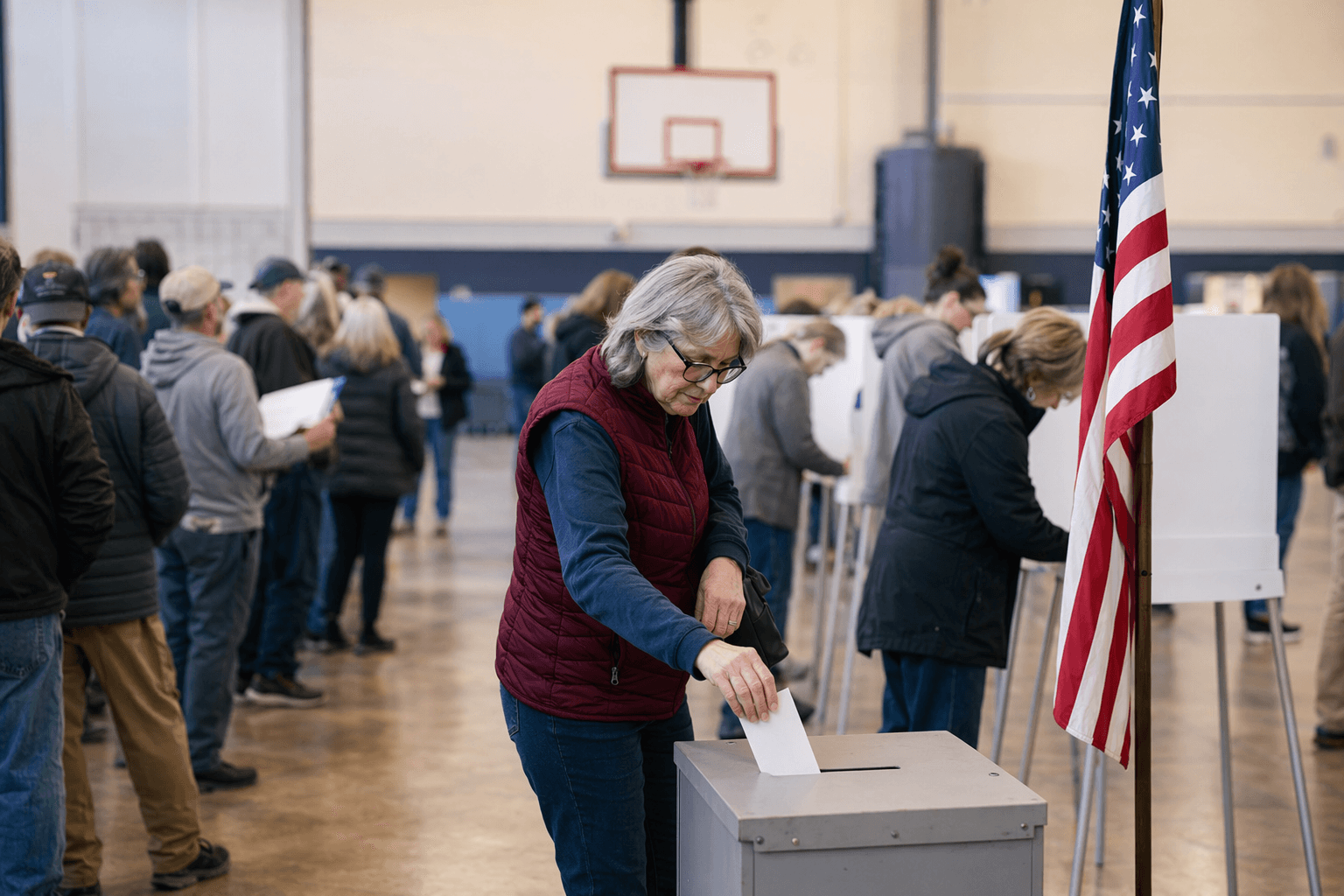
Kootenai County voters are not just choosing names on a primary ballot. They are deciding whether local taxes support fire protection and schools, and whether District 4B sends a Republican to Boise who emphasizes public-school funding or government spending restraint. In a county where a handful of votes can decide both party power and public budgets, the practical stakes are immediate: more or less money for services, and a different voice on the issues that shape North Idaho’s future.
District 4B is the race with the widest ripple effect
The sharpest legislative contest is the District 4B matchup between incumbent Rep. Elaine Price and challenger Christa Hazel. Local coverage has treated it as competitive and potentially close, which matters because the winner will help determine how Kootenai County is represented in the Idaho House and how its priorities are carried into Boise.
Price is running on a platform that includes updating Idaho’s public-school funding formula and rolling back government spending. Hazel, a former Coeur d’Alene School District trustee, brings a local education background and a different kind of Republican résumé. Her candidacy was announced in March, and an endorsement later described her as someone with Idaho roots and campaign experience with Republicans including Dirk Kempthorne, Phil Batt, and Butch Otter.
That contrast is more than personality. If Price prevails, voters are backing a lawmaker centered on school finance reform and fiscal restraint. If Hazel wins, the county sends a candidate with school-board experience and deep ties to long-running Idaho Republican politics. For families watching classroom funding, levy pressure, and state budget debates, the outcome matters far beyond the district boundary.
The levy questions are the most direct pocketbook issue
The May 19 primary ballot also includes local taxing-district questions that can be felt immediately in county budgets and public services. These are the sorts of measures that show up in household tax bills and in the money available for fire coverage and school operations.
The ballot questions include:
- Kootenai County Fire & Rescue levy
- Lakeland Joint School District No. 272 levy
- Kellogg Joint School District No. 391 levy
If voters approve those levies, the affected districts gain the revenue they are asking for. If they fail, those districts have to work with existing resources, which can mean tighter budgets for staffing, equipment, programs, or day-to-day operations. For parents, that can translate into school funding uncertainty. For homeowners and taxpayers, it is a direct vote on whether to accept more local tax support for services.
This is why the ballot is worth reading carefully. Even voters who are mostly focused on the legislative race should understand that the levy choices can shape what they pay and what their local districts can do after the votes are counted.
Small races can still steer county politics
Kootenai County is divided into 74 precincts, and that alone tells you how finely balanced local politics can be here. Precinct committeeman races can be decided by a handful of votes, which means the county’s political direction is often set in contests that many people overlook until after the fact.
That matters because precinct-level leadership feeds into the broader structure of county Republican politics for the next two years. The Kootenai County GOP has also said recommended candidates for the May primary needed at least 50% support from the central committee to appear on the sample ballot, giving party insiders a meaningful role in shaping what voters see when they make their choices.
For voters who care about influence inside the party as much as in public office, these smaller contests can be just as consequential as the marquee House race. They determine who gets organized support, who helps steer local messaging, and how much control the party’s central machinery has over the next cycle.
Turnout shows these primaries are not ignored
The numbers from recent primary cycles show that absentee voters already play a major role in Kootenai County. Ahead of the 2024 primary, 8,364 voters requested absentee ballots and 7,101 returned them. Ahead of the 2022 primary, 6,954 requested absentee ballots and 6,019 returned them.
That pattern is a reminder that primary elections here are often decided by people who plan ahead, study the races, and vote early. With party control, school funding, and local levies all on the line, a relatively small shift in participation can change outcomes. In a county this politically engaged, low-turnout assumptions are a mistake.
How to make sure your ballot is complete
Kootenai County Elections provides voter registration information, absentee voting access, and sample ballot lookups through its election information pages. Idaho election results and historical data are also tracked publicly through VoteIdaho.gov, which makes it easier to compare this primary with previous cycles and understand how Kootenai County has moved over time.
The practical checklist is simple: confirm your registration, review the ballot questions before you vote, and look closely at the District 4B race if you care about how North Idaho is represented in Boise. Tuesday’s ballot is not a formality. It is a set of choices about taxes, schools, local services, and political power that will shape county life long after the polls close.
This article was produced by Prism’s automated news system from verified source data, official records, and press releases, then run through automated quality and moderation checks before publishing. The system is built and supervised by the people who set the standards it runs under. Read our full AI policy.
Did this article answer your question?