Kootenai County's Best Easy Hikes for Families This Spring
Kootenai County's trails are greening up, and the best family-friendly routes this spring are shorter, flatter, and closer to home than most people realize.
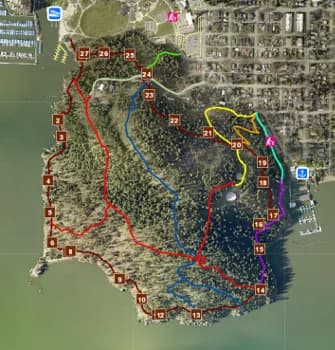
Spring arrives decisively in Kootenai County. The snowpack retreats from lower elevations by late March, wildflowers push through the duff on south-facing slopes, and the lakes that define this corner of North Idaho shift from steel-grey to a luminous blue-green. For families with young children, older adults looking for manageable outings, or anyone who has never laced up a pair of hiking boots before, this is the county's most forgiving season to start exploring on foot.
The hikes described here share a few qualities: short enough to finish before afternoon thunderstorms build over the Selkirks, easy enough that a five-year-old or a grandparent with a bad knee can complete them without misery, and rewarding enough that nobody will feel cheated. Think loops that return you to your car without retracing every step, lakeside paths where the view does most of the work, and modest viewpoints that deliver a genuine sense of arrival without a brutal climb.
What Makes a Hike "Family-Friendly" Here
The standard varies by family, but for the purposes of this guide the target is trails under five miles round-trip with minimal elevation gain, well-marked paths, and a clear payoff, whether that is water, a viewpoint, or a meadow. Kootenai County sits at a favorable elevation band: trailheads near Coeur d'Alene and Hayden often shed snow weeks before routes higher in the Panhandle, making them reliably accessible by late March or early April without requiring snowshoes or microspikes.
Accessibility matters beyond fitness. The best family hikes have trailheads with parking areas large enough to accommodate a weekend crowd, pit toilets or vault toilets nearby, and surfaces that hold up through the wet shoulder season without turning into a boot-swallowing mud pit.
Lakeside Strolls
Coeur d'Alene's waterfront trail system is the most accessible starting point in the county. The paved paths hugging the northern shoreline of Lake Coeur d'Alene connect city parks, public beaches, and open lawn areas that double as rest stops for small children who run out of steam. Distance is flexible: turn around whenever the group is done, which makes this format ideal for toddlers or adults recovering from injury.
The appeal here is immediate. Lake Coeur d'Alene is one of the largest natural lakes in Idaho, and its spring surface reflects the surrounding mountains in a way that feels disproportionately dramatic for a flat walk. Waterfowl, including osprey and mergansers, begin returning in March, giving kids a reliable wildlife-spotting target without requiring binoculars or luck.
Short Loops in the County's Green Corridors
Loop trails solve one of the practical headaches of hiking with kids: nobody wants to walk the same stretch twice in the same direction. Kootenai County's network of forested green corridors, many of them managed by Coeur d'Alene city parks or the Idaho Department of Lands, includes several routes that circle back to their starting point through varied terrain.
A well-designed short loop offers a second act. The outbound leg might follow a creek drainage through cottonwood and alder, while the return leg climbs briefly to a bench with open views before dropping back to the trailhead. That structural variety keeps children engaged and gives adults a reason to pay attention to their surroundings rather than watching the clock.
Spring specifically rewards these lower-elevation loops. Trillium, bitterroot, and shooting stars bloom in sequence through April and into May, and the creeks that feed into the Spokane River watershed run full and loud with snowmelt, providing the kind of ambient sound that makes a walk feel like an event.
Easy Viewpoints Without the Grind
Not every worthwhile viewpoint requires a long climb. Several ridgelines in Kootenai County sit close enough to county roads that a modest hike of one to two miles delivers a genuine panorama. These routes work particularly well for families where fitness levels vary: the strongest hiker can push to the actual summit or overlook while others rest on a log or explore the surrounding forest at their own pace.
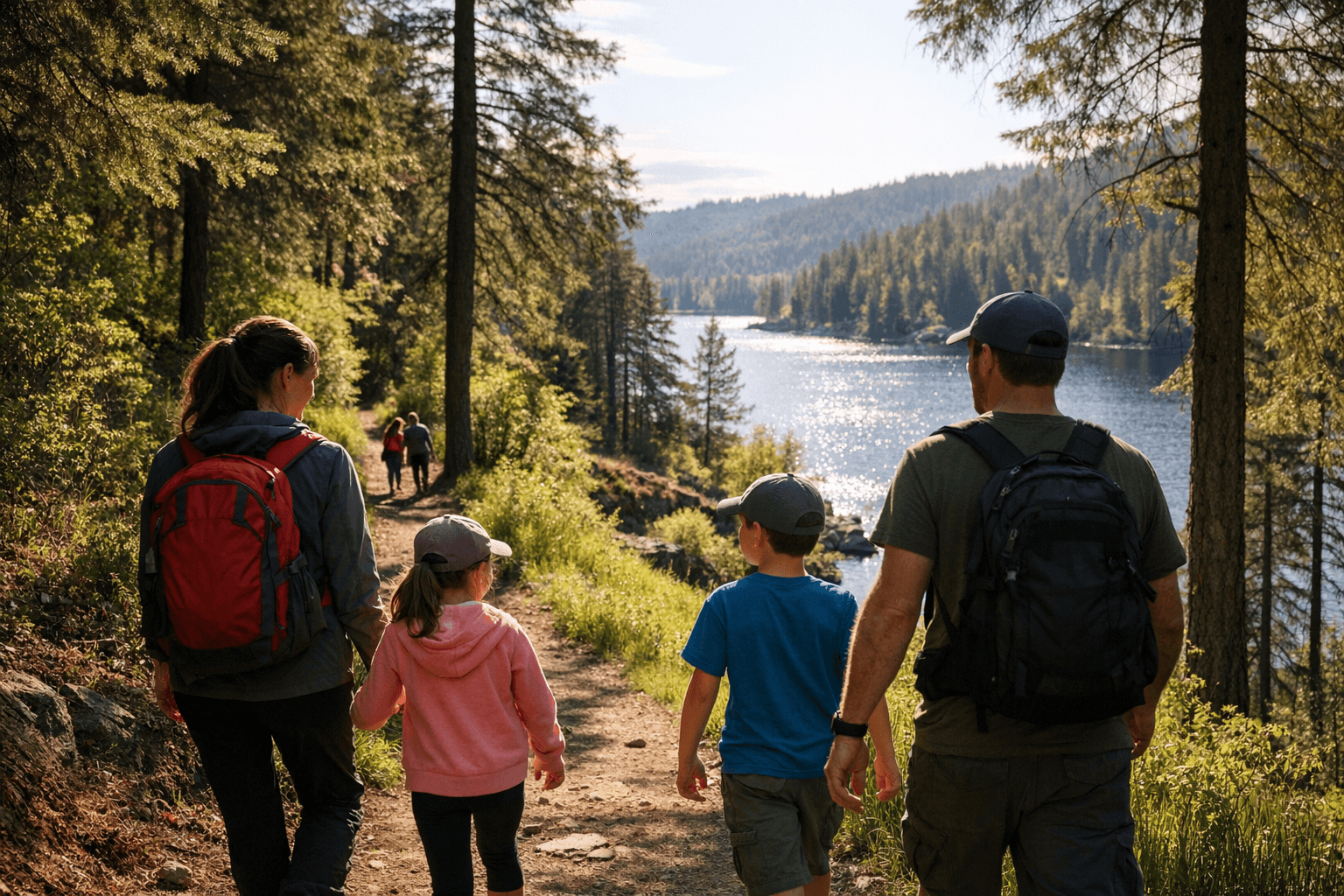
The visual reward at these spots is specific to the season. In late March and April, the lakes below are still ringed with bare deciduous trees, which actually improves long sight lines into the valley. By June, the canopy fills in and some of these views are partially obscured. Spring visitors get a version of the landscape that summer hikers miss entirely.
What to Bring
Spring hiking in Kootenai County requires preparation for weather that changes quickly. A morning that starts at 45 degrees and sunny can turn overcast and windy by early afternoon, particularly at any elevation above the valley floor.
Pack with that variability in mind:
- Water: At least 16 ounces per person for any hike over one mile, more for children who are likely running rather than walking
- Layers: A wind shell or light fleece packs small and earns its weight the moment conditions shift
- Snacks: Caloric motivation is real; trail mix, crackers, or fruit dramatically extend how far children will willingly walk
- Sunscreen: Spring sun reflects off water and late snowfields more intensely than it appears
- Traction: Lightweight waterproof boots or trail runners with grip handle the muddy sections that inevitably appear near creek crossings in April
- First aid basics: Moleskin for blisters and a few adhesive bandages cover the majority of minor trail incidents
Trekking poles are optional but worth considering for older adults on any trail with wet roots or uneven rock, both common in Kootenai County's spring conditions.
Trailhead Logistics
Idaho's Recreational Access Program and most Kootenai County parks do not require a day-use fee for trail access, which distinguishes this county from many recreation destinations farther west. However, some trailheads near national forest boundaries require a Northwest Forest Pass or a self-issue permit during peak season. Check current requirements before driving out, because enforcement has increased as trail use has grown.
Arrive early on weekends. Popular trailheads near Coeur d'Alene can fill their parking areas by 9 a.m. on a sunny Saturday in April, and parking on the roadside shoulder creates hazards and generates complaints from neighboring landowners. A 7:30 a.m. start solves this problem and also puts hikers on trail during the coolest, clearest part of the day.
Timing the Season Right
The window between "too muddy" and "too crowded" is real but navigable. Lower-elevation lakeside routes are typically hikeable by late March in a normal snow year. Forested loop trails at slightly higher elevation, particularly those on north-facing slopes, may hold snow or deep mud through mid-April. Higher viewpoint routes often do not fully clear until late April or early May.
A practical approach: start with the flattest, most exposed routes in late March, then work upward in elevation as the season progresses. By mid-May, nearly every trail in the county that qualifies as "easy" is in excellent condition, dry enough for comfortable walking but before summer heat and weekend crowds arrive in force.
Kootenai County's spring hiking season is brief precisely because it is so good. The combination of snowmelt creeks, returning wildlife, wildflowers, and uncrowded trails makes April and early May a distinct and underappreciated window for getting outside with the people you care about.
This article was produced by Prism’s automated news system from verified source data, official records, and press releases, then run through automated quality and moderation checks before publishing. The system is built and supervised by the people who set the standards it runs under. Read our full AI policy.
Did this article answer your question?