Kootenai Environmental Alliance Green Summit Spotlights North Idaho Restoration Efforts
Two miles of Westslope cutthroat trout habitat reopened in Shoshone County after a dam removal — one of several North Idaho conservation wins spotlighted at KEA's Green Summit.
Work in the Big Creek watershed in Shoshone County has already freed up two miles of rearing and spawning habitat for Westslope cutthroat trout — and that milestone was just one of several delivered to the roughly 50 people who filled a Coeur d'Alene church on Saturday for the Kootenai Environmental Alliance's third annual Green Summit.
"These professionals and volunteers are doing some amazing work," KEA board president Dave Muise said as he welcomed the crowd to the organization's third annual gathering. The half-day event ran from 8 a.m. to noon at First Presbyterian Church, 521 E Lakeside Avenue. The format featured 10-minute TED Talk-style presentations from Pacific Northwest environmental leaders, followed by three separate 30-minute breakout sessions covering topics that included sustainable food systems, renewable energy, climate action, aquifer protection, responsible recreation and waste management.
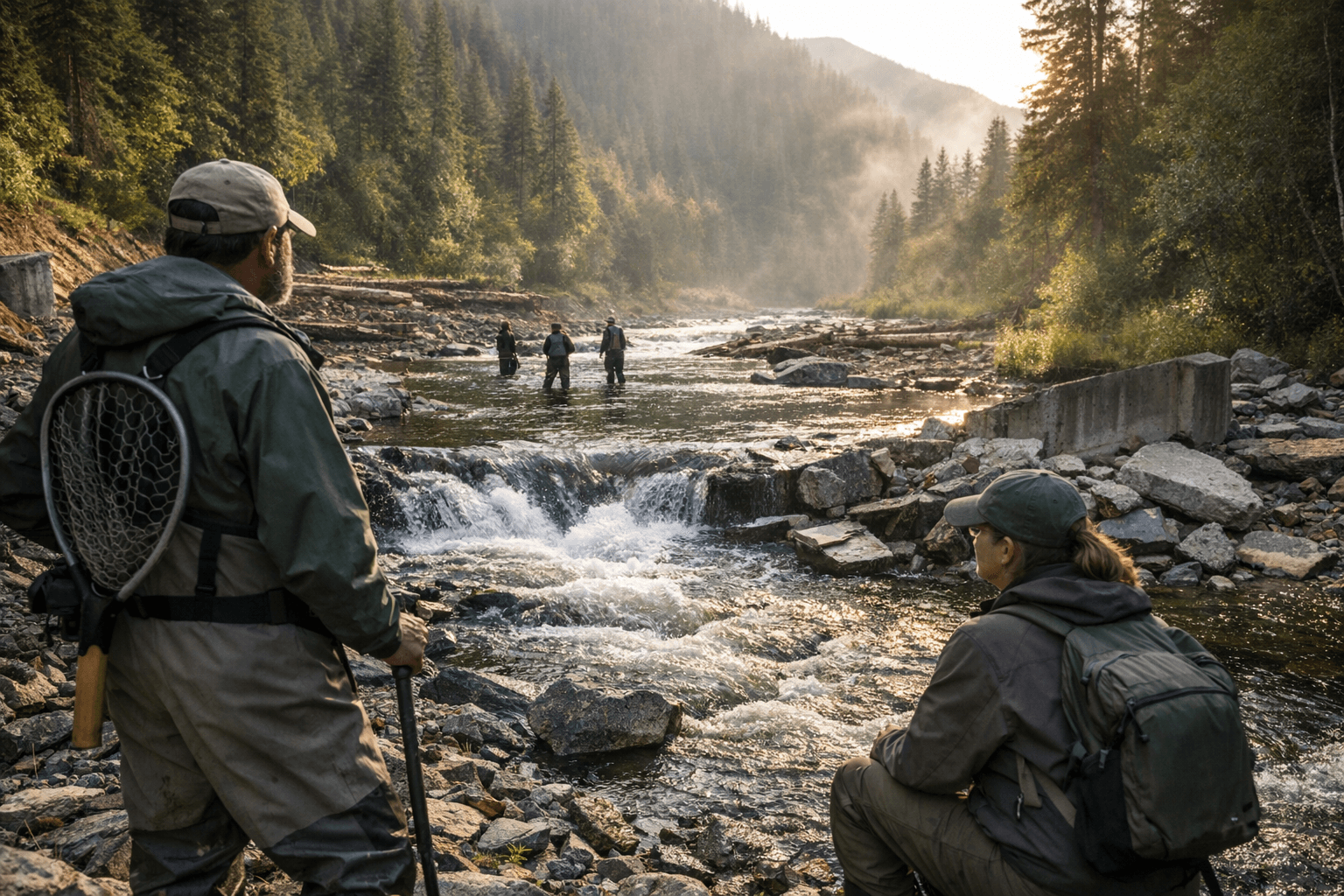
The Big Creek project drew some of the morning's closest attention. Following the full removal of a dam in October, Laura Cannon and Kayla Kassa with HMH Engineering reported that the "stream is naturalizing, realigning, and fine sediments have been flushed out." The work is supported through the Restoration Partnership, whose members include the U.S. Fish and Wildlife Service, the Bureau of Land Management, the Coeur d'Alene Tribe, Idaho Fish and Game, the U.S. Forest Service and the Idaho Department of Environmental Quality. Trout Unlimited and the Central Shoshone Water District will also be involved in the removal of a second dam. The restoration effort is part of the broader push to reverse environmental damage from historic mining contamination across the Coeur d'Alene Basin.
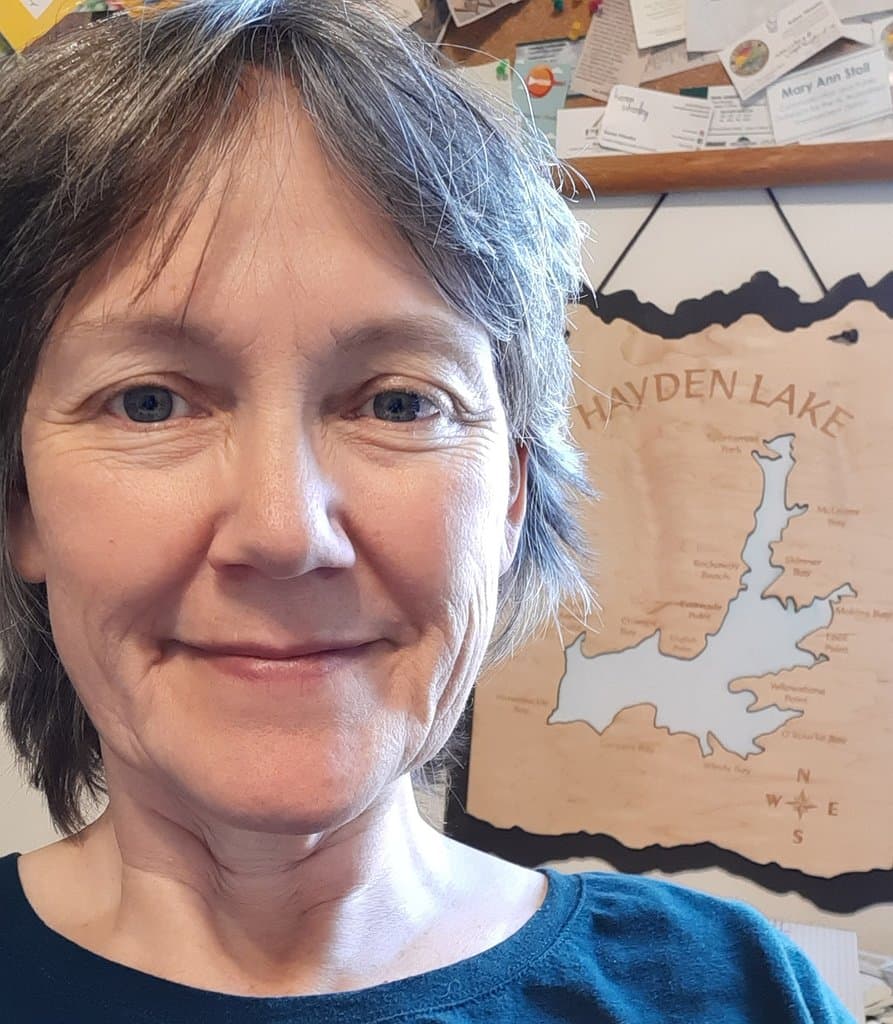
On the water-quality front, Mary Ann Stoll of North Idaho Small Waterways told attendees that Hayden Lake, along with Fernan, Hauser, Upper and Lower Twin, Spirit, and Cocolalla lakes, as well as the Spokane River, have all experienced declining water quality, with about 75% of these small waterways recording wake-related damage, 50% showing eroding shorelines, and 30% now dealing with invasive aquatic plants.
Through a partnership with the Kootenai County Sheriff's Department, the public, and several local organizations, 37 no-wake-zone buoys were placed in the waters of Hayden Lake for a trial run last year, and outreach to residents and boaters has helped encourage better behavior on the lake. "Hayden Lake boaters are the best informed," Stoll said, adding that she is advocating for the creation of a regional small waterways alliance to "amplify the needs and voice of the underserved lakes," with a workshop planned for this spring. "We're committed to bringing advocates together to collaborate on ideas," she said.
Just outside Osburn, a wildlife overpass spanning I-90 was also highlighted: completed in 2025, Idaho Fish and Game repurposed an existing bridge and installed new fencing to funnel wildlife toward a designated crossing point designed to reduce collisions and reconnect habitat.
Carol Corbin of the Inland Northwest Land Conservancy, which provided complimentary coffee, pastries and charcuterie to attendees, framed the stakes plainly: "The Idaho Panhandle is arguably one of the most beautiful places to live in the lower 48! The crystalline rivers and lakes, towering forests, verdant meadows, and big skies make this a special haven for those wanting to live close to nature. But with the increasing population and the resulting environmental impact, the natural resources that support our quality of life here need protection more than ever before."
The summit is part of KEA's ongoing mission, which the organization has pursued since its founding in 1972. Saturday's event highlighted both the progress stakeholders have made and the work that remains on projects aimed at restoring and protecting North Idaho's natural resources and wild places. For Stoll's spring workshop on small waterways, and for the second Big Creek dam removal yet to come, the morning's presentations made clear the conservation calendar ahead is full.
This article was produced by Prism’s automated news system from verified source data, official records, and press releases, then run through automated quality and moderation checks before publishing. The system is built and supervised by the people who set the standards it runs under. Read our full AI policy.
Did this article answer your question?