Montana angler sets Idaho catch-release burbot record on Kootenai River
A Troy, Montana angler landed a 26.75-inch burbot on the Kootenai River, setting Idaho’s catch-and-release record and highlighting a rebuilt winter fishery.
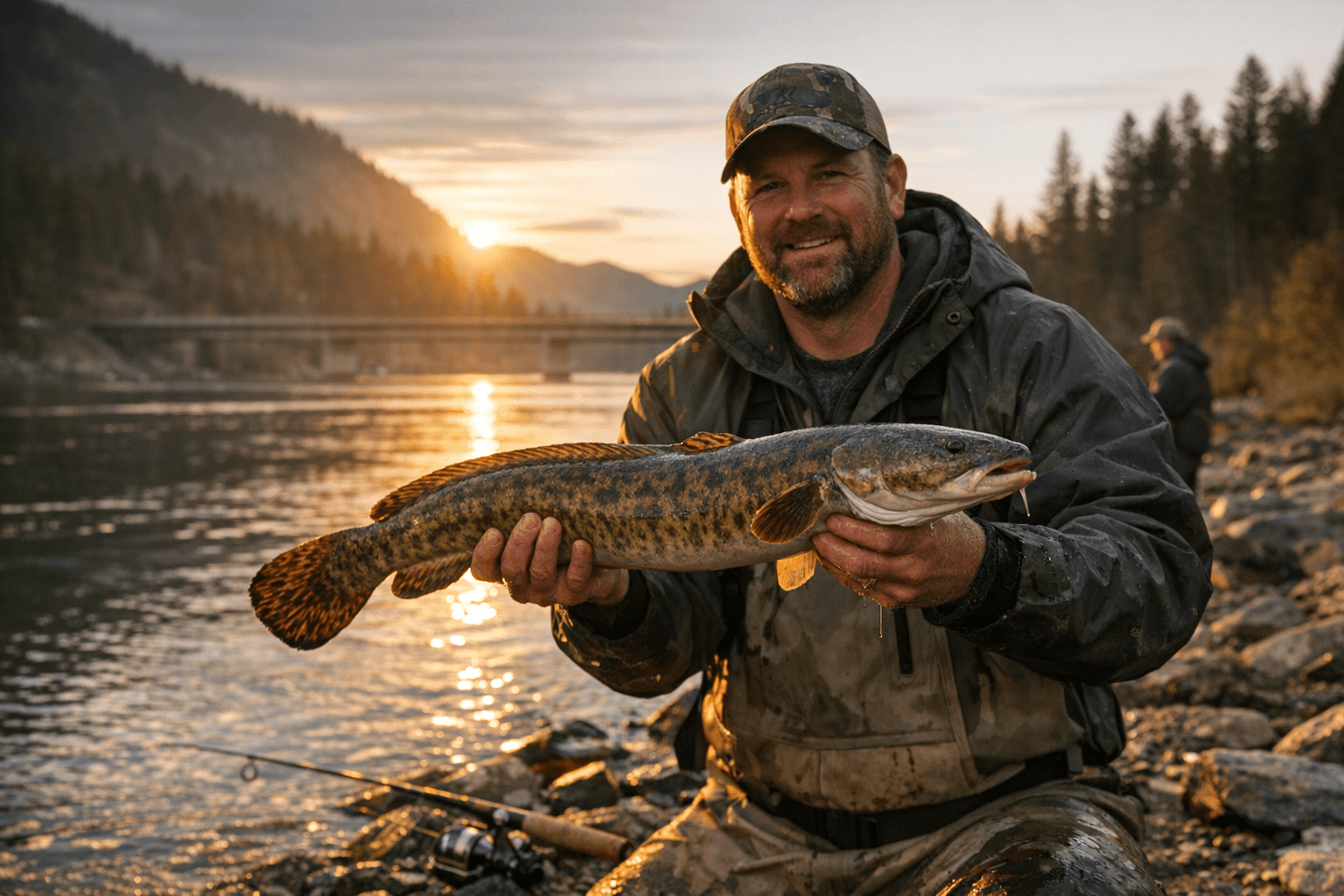
A Troy, Montana angler pulled a 26.75-inch burbot from the Kootenai River and pushed Idaho’s catch-and-release record a little farther into the record book.
Caleb Wilson landed the fish on March 19 while fishing on the Idaho side of the river, then released it alive. Idaho Fish and Game’s catch-and-release records page lists Wilson’s burbot record at 26.75 inches, though the record system shows the date as March 23. The fish qualified because Wilson kept it alive and documented the catch with the required application, witness signature and photos of the fish, the angler and the measurement.
The size alone made the catch stand out, but the species makes it more than a one-off brag. Burbot are the only freshwater cod species in North America, and in the Kootenai Basin they are known by other names, including cusk, freshwater cod, ling, lingcod and eelpout. Idaho anglers have long called them Kootenai leopards because of their mottled skin and long, eel-like shape.
The record also points to a fishery that has been rebuilt over decades. Idaho Fish and Game says Kootenai Basin burbot declined sharply beginning in the 1960s because of overfishing, dam operations and land-use changes. The harvest fishery was closed in 1992, and biologists estimated only about 50 burbot remained in the Kootenai River in 2004. The fishery reopened in January 2019 after the population recovered.
That rebound did not happen by accident. Idaho Fish and Game says restoration work has involved British Columbia fisheries officials, the Kootenai Tribe of Idaho, Bonneville Power Administration funding and years of research by University of Idaho aquaculture scientists. The river’s burbot are most productive in winter, when they move from deep pools into shallower spawning areas, feed at night and spend much of the day in slow-moving water. Wilson realized he had something unusual when he measured the fish by headlamp after dark.
For Kootenai County and the broader North Idaho recreation economy, the record serves as a reminder that the river is not just a scenic corridor. It is a managed winter fishery with cross-border interest, one that still draws anglers from Montana and benefits from the kind of restoration work that can keep guides, visitors and local businesses watching the Kootenai River closely through the cold months.
This article was produced by Prism’s automated news system from verified source data, official records, and press releases, then run through automated quality and moderation checks before publishing. The system is built and supervised by the people who set the standards it runs under. Read our full AI policy.
Did this article answer your question?