North Idaho teen finds new path through Youth ChalleNGe Academy
Bryson Kimball-Romero traded gang life for structure at Idaho Youth ChalleNGe Academy after his friend Robert died. Its reach now includes teens statewide, including Kootenai County.
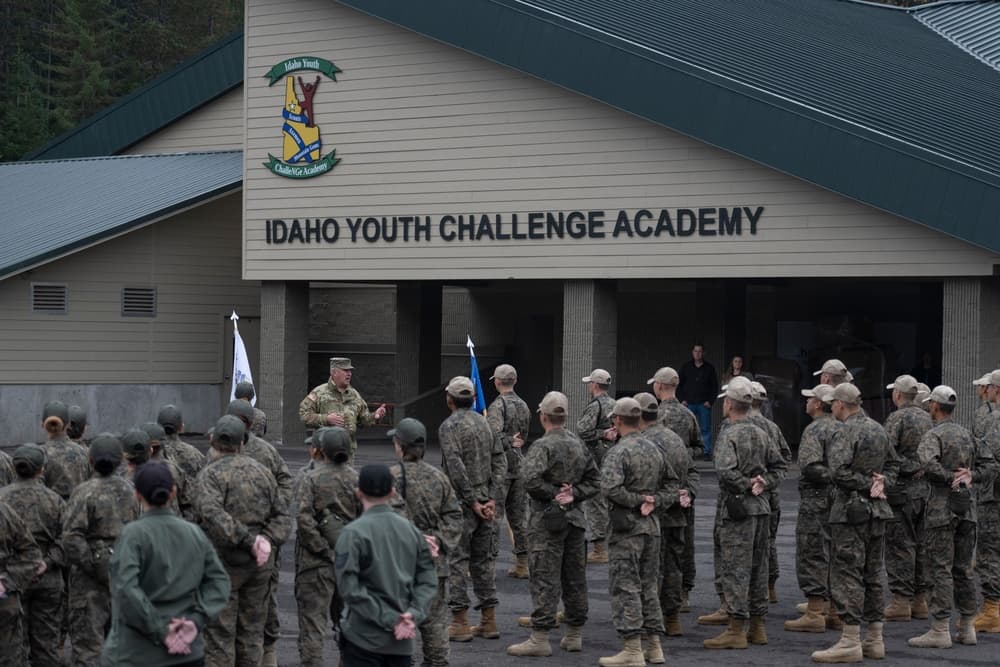
Bryson Kimball-Romero joined a gang in seventh grade, then lost a close friend to gun violence. About a month after Robert died, he entered the Idaho Youth ChalleNGe Academy and found a daily rhythm built on discipline, schoolwork and accountability. For a North Idaho teen already far off the standard school track, that reset changed his options.
A hard reset for a North Idaho teen
His story works because it is not just about getting tough on bad behavior. It is about how a structured residential school can interrupt a downward spiral and give a teenager a different way to spend each day, from class time to life-skills training. In Bryson Kimball-Romero’s case, the academy became a place where credits could be recovered and habits could be rebuilt before the damage became permanent.
That is the larger promise of the Idaho Youth ChalleNGe Academy. It is designed for teens who have already drifted away from a traditional school path, and its model combines academics, discipline and support in a setting that is deliberately more controlled than a typical high school.
Who the academy is built for
The academy says its mission is to intervene in and reclaim the lives of 16- to 18-year-old high school dropouts. It describes itself as a holistic, quasi-military, fully accredited residential high school, and it frames itself as a volunteer program for teens ages 15.5 to 18. Its materials also say admission is open to students regardless of race, sex, religious affiliation or household income.
That matters for families in Kootenai County because the program is not limited to one school district or one type of student. It is aimed at young people who need a second chance and enough structure to use it. For some teens, that means a residential reset is a better fit than another warning, another suspension or another patchwork of credits from a conventional school.
What cadets actually get
Cadets do not just enter a stricter school day. They live inside a program that is built around routine, accountability and a defined path back toward graduation. The academy is set up to help at-risk young people recover credits, rebuild habits and finish high school with a clearer sense of purpose.
Idaho Education News reported that the academy operates as an alternative public high school within the Orofino Joint 171 School District, at no cost to cadets. That same reporting said the experience includes a 12-month post-residential phase after the initial residential period, which extends support beyond the first intensive stretch and gives cadets a longer runway as they transition back to ordinary life.
A program with a long paper trail
The academy opened in 2014 in Pierce, Idaho, with its first class beginning in January 2014 under Maj. Gen. Gary Sayler. Since then, state sources say it has helped more than 2,000 Idaho youth earn traditional or GED diplomas. That puts the program in the category of a durable public intervention, not a one-off experiment.
The numbers behind the program have also grown over time. Idaho Education News reported that in nine years, nearly 2,000 Idaho students had graduated, almost 28,000 credits had been recovered, 248 diplomas had been issued and 187 students had earned GEDs. Public academy materials later said Class 25-1 had 111 cadets and that the program had graduated 2,437 cadets while recovering more than 35,189 academic credits.
Recent graduation cycles show the same pattern of scale. A June 2024 KTVB report said 124 cadets graduated that month, and academy materials scheduled a June 19, 2026 commencement for Class 26-1 at Calvary Chapel Boise, with 106 cadets set to graduate. The repeated triple-digit classes suggest a program that keeps cycling new cadets through a formal structure, rather than relying on isolated success stories.
What Kootenai County families need to know
For families in Kootenai County, the key question is whether a teen needs a more intensive, residential setting to get back on track. The academy is one of Idaho’s few publicly supported second-chance education pathways, and it is designed for young people who are already behind in school or have left school altogether. Because it is a volunteer program and open regardless of income, it offers a route that is not supposed to depend on family wealth or a child’s place in the social hierarchy.
That is where the North Idaho story becomes more than a personal turnaround. A teenager who had been pulled toward gang life after a friend’s shooting found a path that replaced chaos with structure and opened a door to a diploma. For communities that worry about school disengagement, youth violence and the long-term cost of letting teenagers disappear from the system, the academy is a concrete public option with a record now large enough to measure.
This article was produced by Prism’s automated news system from verified source data, official records, and press releases, then run through automated quality and moderation checks before publishing. The system is built and supervised by the people who set the standards it runs under. Read our full AI policy.
Know something we missed? Have a correction or additional information?
Submit a Tip