Post Falls Approves Spokane Street Zoning: Taller Buildings, Less Parking
Post Falls approved Spokane Street zoning that allows taller buildings and reduces parking minimums to spur redevelopment and encourage walkable, mixed-use projects.
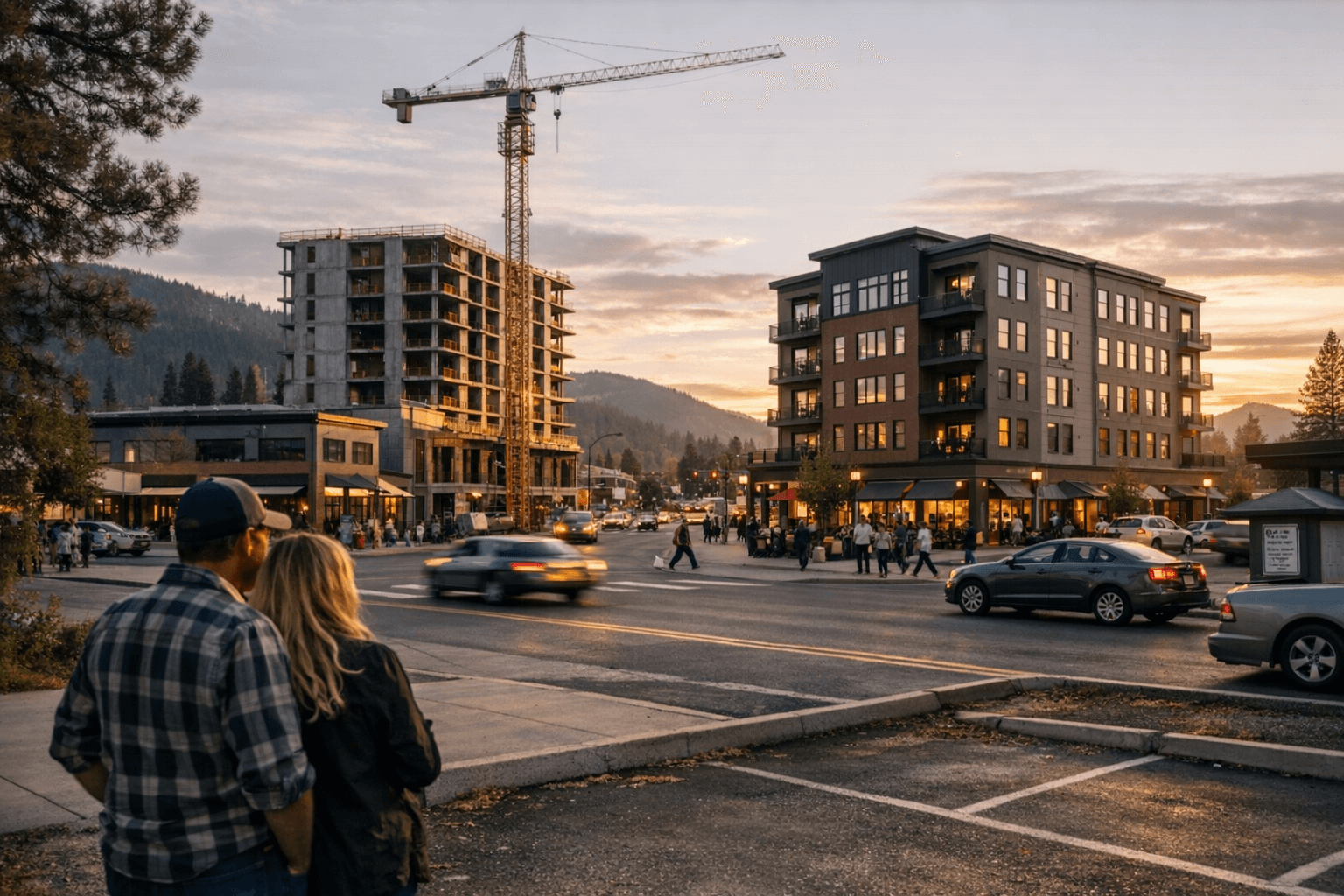
Post Falls moved to reshape the Spokane Street corridor by approving zoning amendments that increase allowable building heights, reduce minimum parking requirements for mixed-use developments, and add design standards to encourage ground-floor retail and pedestrian activity. The City Council voted to adopt the ordinance on Jan. 26, 2026, a decision city officials said responds to developer interest and aims to catalyze redevelopment of aging strip-mall parcels.
Under the new rules, developers can propose taller structures and fewer surface parking spaces in exchange for design features and community benefits. Incentives in the ordinance reward projects that include affordable housing units or public improvements such as sidewalks and street trees. City staff will begin accepting redevelopment concept plans immediately under the revised code, opening the door to near-term proposals along the corridor.
The changes are intended to activate street-level storefronts and make Spokane Street more pedestrian friendly. Design standards emphasize ground-floor retail and pedestrian activity, signaling a shift away from exclusively car-oriented redevelopment toward a denser, mixed-use pattern. City officials framed the amendments as a tool to encourage private investment in properties that have remained underused for years.
The ordinance also preserves transitional buffers to adjacent residential neighborhoods, addressing a common local concern about compatibility between higher-density commercial projects and single-family areas. Those buffers are intended to manage scale, sightlines, and potential parking spillover into neighborhood streets while still permitting greater intensity along the corridor.
For residents, the immediate impacts could include new retail options, sidewalks and street trees, and the prospect of some affordable units embedded in private developments. Reduced minimum parking may lead to smaller surface lots and more compact sites, which can improve walkability but may also shift parking demand onto side streets if not carefully managed. The city’s emphasis on design standards and buffers suggests officials are attempting to balance those trade-offs.
The policy shift in Post Falls reflects broader trends in urban planning that favor walkable, mixed-use corridors as a path to economic renewal. For Spokane Street property owners and developers, the new rules create clearer incentives and a faster pathway to submit concepts. For neighbors, the changes raise questions about traffic, neighborhood character, and how quickly new construction will appear.
What comes next is a round of redevelopment concepts and project proposals to be reviewed under the new standards. Residents and property owners with an interest in Spokane Street should monitor filings with city staff and upcoming planning meetings as projects begin to take shape under the updated zoning.
Know something we missed? Have a correction or additional information?
Submit a Tip

